
Liposuction Revision in Boca Raton
Liposuction Revision with Dr. Vincent Riccelli
Liposuction revision helps improve irregularities, asymmetry, or contour concerns from a previous liposuction procedure through thoughtful corrective planning.
At Ennis Plastic Surgery in Boca Raton, Dr. Vincent Riccelli offers liposuction revision for patients who are unhappy with uneven contours, dents, waviness, asymmetry, residual fat, or overtreated areas after a previous liposuction procedure. Revision liposuction requires a careful, conservative approach because the tissues may already have scar tissue, uneven fat thickness, or reduced elasticity.

Liposuction Revision Quick Facts
Corrective Body Contouring After Previous Liposuction
Procedure Type
Revision body contouring for patients with concerns after a prior liposuction procedure.
Common Concerns
Uneven contours, dents, waviness, asymmetry, residual fullness, scar tissue, or overtreated areas.
Possible Techniques
Selective liposuction, contour blending, fat transfer, scar tissue release, or staged correction when appropriate.
Surgeon
Dr. Vincent Riccelli, a plastic surgeon focused on advanced body contouring and breast aesthetic surgery.
Understanding Revision Liposuction
When a Previous Liposuction Result Needs Correction
Liposuction is a powerful body contouring procedure, but the result depends on surgical planning, technique, skin quality, healing, compression, and the patient’s anatomy. When too much fat is removed, too little fat is removed, or the transition areas are not blended well, the result may look uneven or unnatural.
Patients may notice dents, grooves, hard areas, lumpy texture, waviness, or asymmetry between the two sides of the body. Others may feel that the first procedure did not remove enough fat or left one area looking out of balance with the rest of the body.
Liposuction revision is different from first-time liposuction. Scar tissue may make the tissues firmer. The fat layer may be thinner in some areas and thicker in others. Skin quality may be limited. Dr. Riccelli evaluates these details carefully before recommending what can be improved safely and what expectations are realistic.
Tour Ennis Plastic Surgery
Take a brief tour of Ennis Plastic Surgery and learn more about the boutique Boca Raton setting where patients receive personalized surgical care.
Common Concerns
What Can Liposuction Revision Improve?
Liposuction revision is customized to the specific problem. Some patients need more fat removed from areas that were undertreated. Others need contour blending, fat transfer, or correction of irregularities caused by over-removal. In some cases, loose skin may be the true issue and a skin-removal procedure may be more appropriate than more liposuction.
Contour Irregularities
Revision planning may help improve dents, grooves, uneven transitions, or lumpy areas after prior liposuction.
Asymmetry
Some patients have one side that looks different from the other, creating imbalance in the waist, flanks, thighs, arms, or abdomen.
Residual Fat
Areas that were undertreated may still have localized fullness that can sometimes be improved with careful secondary liposuction.
Overtreated Areas
When too much fat was removed, fat transfer or contour blending may be discussed to soften the transition.
Scar Tissue
Scar tissue can make revision surgery more complex and may require a slower, more detailed surgical approach.
Dr. Riccelli’s Focus
Improve balance, soften irregularities, refine shape, and create a more natural-looking body contour when possible.
Candidate Overview
Who Is a Candidate for Liposuction Revision?
A good candidate for liposuction revision is usually someone who has fully healed from a previous liposuction procedure and remains bothered by contour concerns. In most cases, patients should wait several months after their original surgery before considering revision, since swelling and tissue firmness can take time to improve.
Revision candidates should be close to a stable weight, in good overall health, and realistic about what can be corrected. Some irregularities can be improved, but not every issue can be completely erased. Revision surgery is often about improvement, not perfection.
During consultation, Dr. Riccelli will evaluate your prior procedure, treatment areas, scar tissue, skin quality, remaining fat thickness, asymmetry, and overall body contour before recommending a plan.
Revision may be considered for:
- Uneven liposuction results
- Dents, grooves, or depressions
- Waviness or lumpy contour
- Asymmetry between sides
- Residual fat after prior liposuction
- Overtreated areas
- Scar tissue or firmness
- Concerns that remain after full healing
Procedure Details
How Liposuction Revision Works
Liposuction revision begins with a detailed evaluation. Dr. Riccelli examines the contour, skin quality, tissue thickness, scar tissue, and how the treatment area relates to surrounding body areas. The correction plan depends on whether the problem is too much fat, too little fat, loose skin, scar tissue, or a combination.
Contour Mapping
Dr. Riccelli evaluates the irregularities and marks the areas that need blending, correction, or support.
Selective Liposuction
Residual fullness may be treated with careful liposuction to improve balance and reduce remaining fat deposits.
Contour Blending
Transition areas may be softened to help reduce sharp edges, grooves, or uneven contours.
Fat Transfer
In select cases, fat transfer may be used to improve depressions or areas where too much fat was removed.
Skin Assessment
If loose skin is the main issue, Dr. Riccelli may recommend tummy tuck, arm lift, thigh lift, body lift, or another procedure instead.
Conservative Correction
Revision work requires careful planning, patience, and realistic goals to avoid creating new irregularities.
Procedure Comparison
Revision Liposuction, Fat Transfer, or Skin Removal?
Liposuction revision is not the same procedure for every patient. The right correction depends on the reason the result looks uneven or incomplete.
Revision Liposuction
May help when residual fat or uneven fat removal leaves fullness or imbalance in the treated area.
Fat Transfer
May be discussed when there are dents, depressions, or overtreated areas that need volume support.
Skin Removal
May be needed when the true concern is loose skin rather than remaining fat or contour irregularity.
Staged Correction
Some patients need correction in phases, especially when scar tissue, thin tissues, or multiple problem areas are present.
Recovery & Results
What to Expect After Liposuction Revision
Recovery after liposuction revision depends on the treatment areas and the techniques used. Patients should expect swelling, bruising, soreness, firmness, and gradual improvement over time. Because revision areas may contain scar tissue, swelling and tissue changes can take longer to settle than after first-time liposuction.
A compression garment may be recommended to support healing and help manage swelling. Patients should follow activity restrictions, garment instructions, and follow-up care closely. Some contour changes may appear early, while others become more visible as swelling improves and the tissues soften.
Results after revision surgery are usually gradual. The goal is to improve contour, balance, and smoothness when possible. Dr. Riccelli will explain realistic expectations and whether one procedure is likely to be enough or whether a staged correction may provide a safer, more controlled path.
Liposuction revision may help improve:
- Uneven body contour
- Asymmetry after liposuction
- Residual fullness
- Dents or depressions
- Waviness or contour irregularities
- Overtreated or undertreated areas
- Transition zones between treated areas
- Overall body balance and proportion
Safety & Surgical Planning
Why Liposuction Revision Requires Careful Planning
Revision liposuction requires a different mindset than first-time liposuction. The tissues have already been treated, and the fat layer may not be even. Scar tissue can make the area firmer and more difficult to sculpt. Skin may also have less ability to retract after a second procedure.
Dr. Riccelli will assess whether the concern can be safely improved with surgery and whether the correction should be conservative. In some cases, doing less is safer and produces a better result than trying to aggressively correct every detail in one procedure.
If loose skin, poor elasticity, or significant tissue laxity is the main issue, more liposuction may not help. In those cases, Dr. Riccelli may recommend a different procedure, such as tummy tuck, arm lift, thigh lift, bra line lift, or body lift, depending on the area involved.
Why Ennis Plastic Surgery
Liposuction Revision in a Boutique Surgical Setting
Ennis Plastic Surgery is known for refined aesthetic care, personalized treatment planning, and natural-looking results. With Dr. Riccelli joining the practice as a body contouring and breast rejuvenation specialist, patients seeking liposuction revision have access to a surgeon whose approach is built around artistry, precision, safety, and individualized care.
Meet Your Surgeon
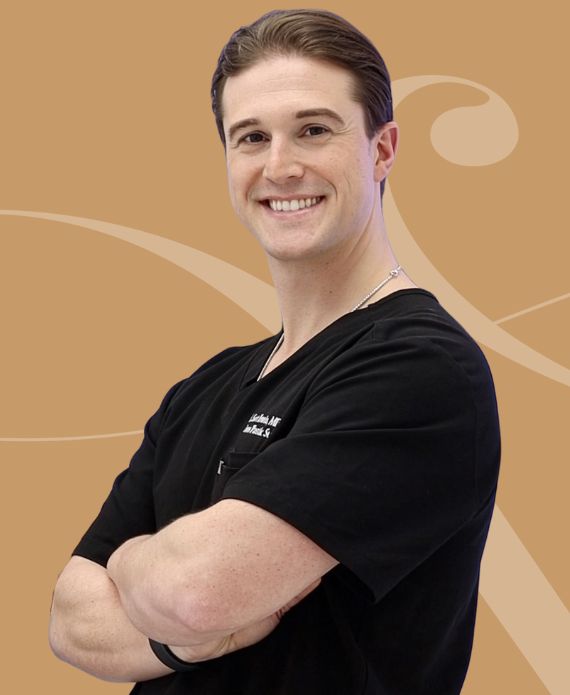
Dr. Vincent Riccelli
Dr. Vincent Riccelli is a plastic surgeon specializing in body contouring and breast aesthetic surgery. His training includes Vanderbilt University School of Medicine, plastic surgery residency at UT Southwestern, and advanced international exposure to body contouring techniques in Colombia.
For revision liposuction patients, Dr. Riccelli designs each plan around the original result, scar tissue, fat distribution, skin quality, asymmetry, and realistic improvement. His goal is to help patients move closer to a smoother, more balanced contour through careful corrective planning.
Liposuction Revision FAQs
Frequently Asked Questions
What is liposuction revision?
Liposuction revision is corrective body contouring designed to improve irregularities, asymmetry, residual fat, dents, or contour concerns after a previous liposuction procedure.
When can I consider revision after liposuction?
Many patients should wait until swelling has resolved and the tissues have fully healed before considering revision. Dr. Riccelli will evaluate timing during consultation.
Can uneven liposuction be corrected?
Some uneven liposuction results can be improved, but not every irregularity can be completely corrected. The plan depends on skin quality, scar tissue, fat thickness, and anatomy.
Can dents after liposuction be fixed?
Dents or depressions may sometimes be improved with fat transfer, contour blending, or staged correction, depending on the tissue quality and severity of the concern.
Can more liposuction fix my result?
Sometimes, but not always. More liposuction may help residual fullness, but it may worsen loose skin or overtreated areas. Dr. Riccelli will recommend the safest option.
Is liposuction revision more difficult than first-time liposuction?
Yes. Revision liposuction can be more complex because scar tissue, uneven fat thickness, and prior contour changes can make correction less predictable.
Can liposuction revision be combined with other procedures?
Sometimes. Revision may be combined or staged with tummy tuck, arm lift, thigh lift, bra line lift, body lift, fat transfer, or other body contouring procedures depending on safety and anatomy.
Will liposuction revision make my contour perfect?
The goal is improvement, not perfection. Dr. Riccelli will explain what is realistic based on your tissue quality, prior surgery, and current contour concerns.
Begin Your Consultation
Schedule a Liposuction Revision Consultation with Dr. Riccelli
If you are unhappy with irregularities, asymmetry, residual fat, dents, or contour concerns after a previous liposuction procedure, Dr. Vincent Riccelli can help you understand whether revision body contouring may improve your result.

About US
Our Procedures
Photos & Videos
contact
Select LAnguage
©2026 Ennis Plastic Surgery in Boca Raton, FL.