
Ennis Plastic Surgery · Boca Raton
Blepharoplasty in Florida
Upper & Lower Eyelid Surgery
Explore an approach with Dr. L. Scott Ennis that respects the character of your eyes.

Procedure at a glance
- Surgeon
- Dr. L. Scott Ennis, MD, FACS
- Location
- Boca Raton, Florida
- Approach
- Upper & lower blepharoplasty
- Consultation
- In-office or virtual
Dr. Ennis explains
A closer look
at eyelid surgery.
Upper eyelid hooding and bags beneath the eyes call for different conversations. Begin with Dr. Ennis’s upper eyelid guide, then explore the patient photographs and options below.
Explore upper & lower eyelids Watch the upper eyelid guide
In the words of our patients
A patient’s perspective.
Three days into recovery.
A patient of Dr. Ennis shares an early update after upper and lower blepharoplasty.
This film documents early healing. Individual experiences, recovery timelines and results vary.
Explore before & after photographs Watch the patient story
Patient of Dr. Ennis
Actual patient results
Eyelid surgery.
Before & after.
Actual patients of Dr. Scott Ennis
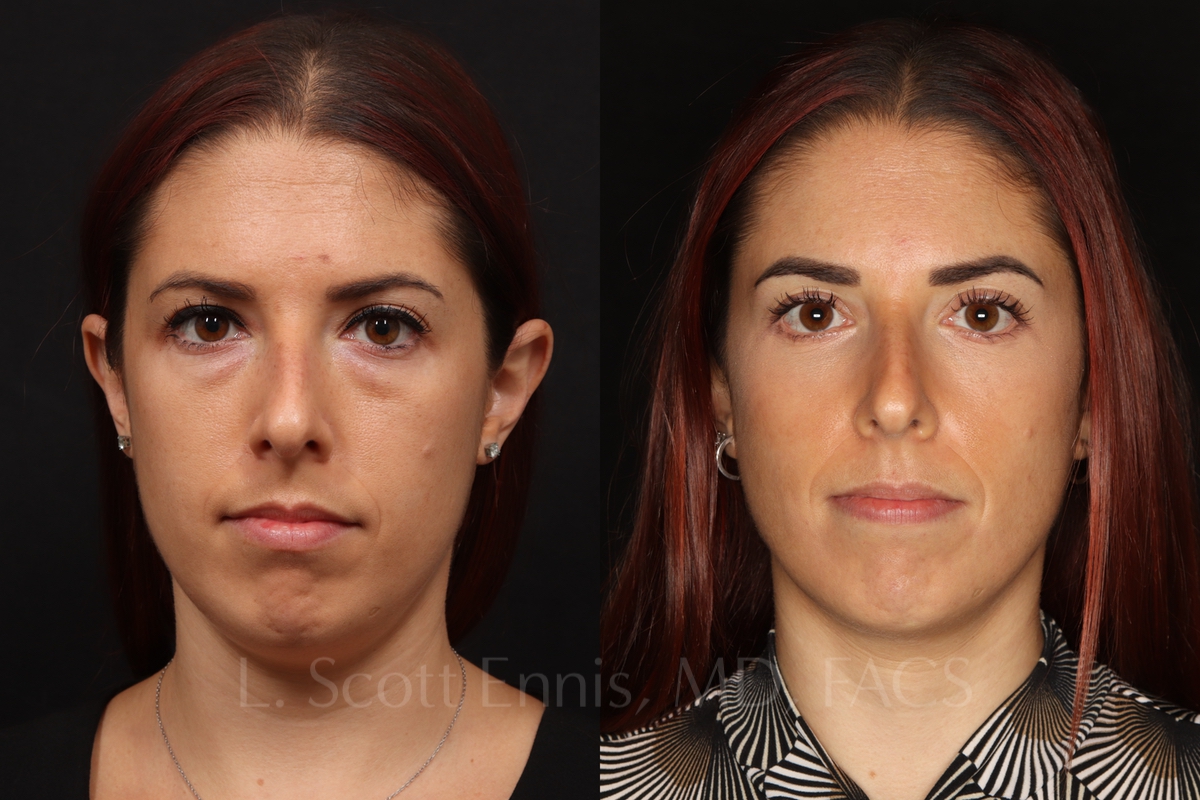
Lower blepharoplasty
A closer look at the lower eyelids in front-facing views.
Actual patient of Dr. Scott Ennis
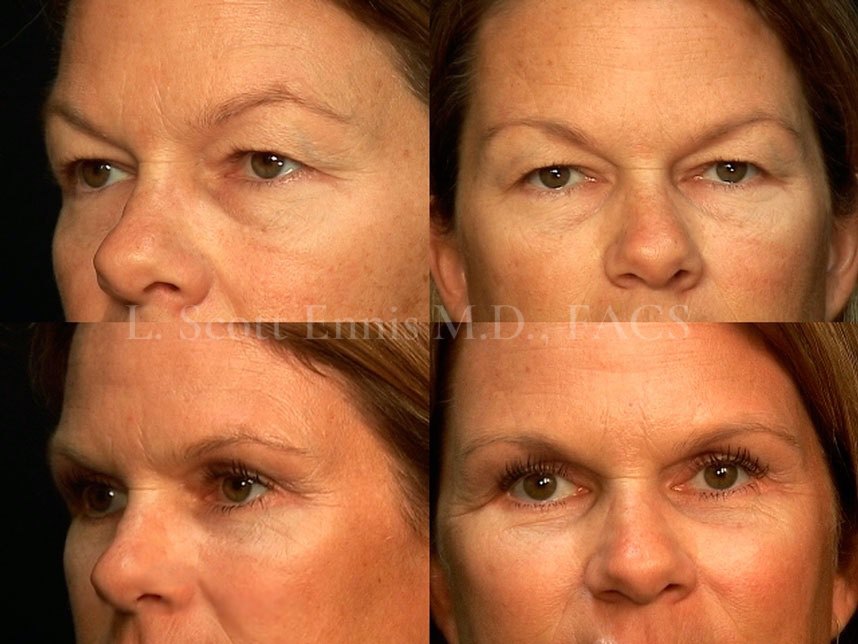
Upper & lower blepharoplasty
The upper and lower eyelids shown from two angles.
Actual patient of Dr. Scott Ennis
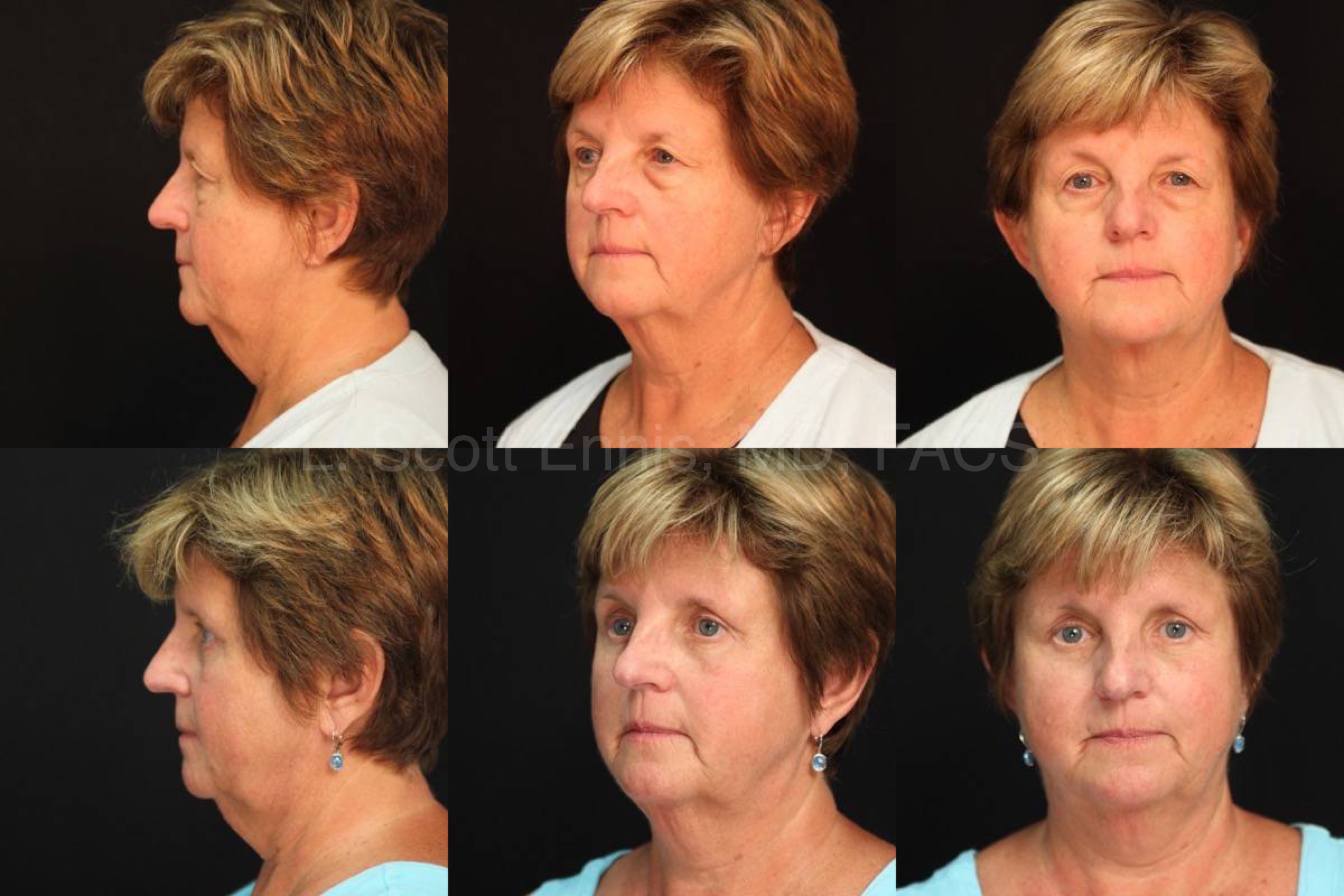
Upper & lower blepharoplasty
Front and three-quarter views from the practice’s published gallery.
Actual patient of Dr. Scott Ennis
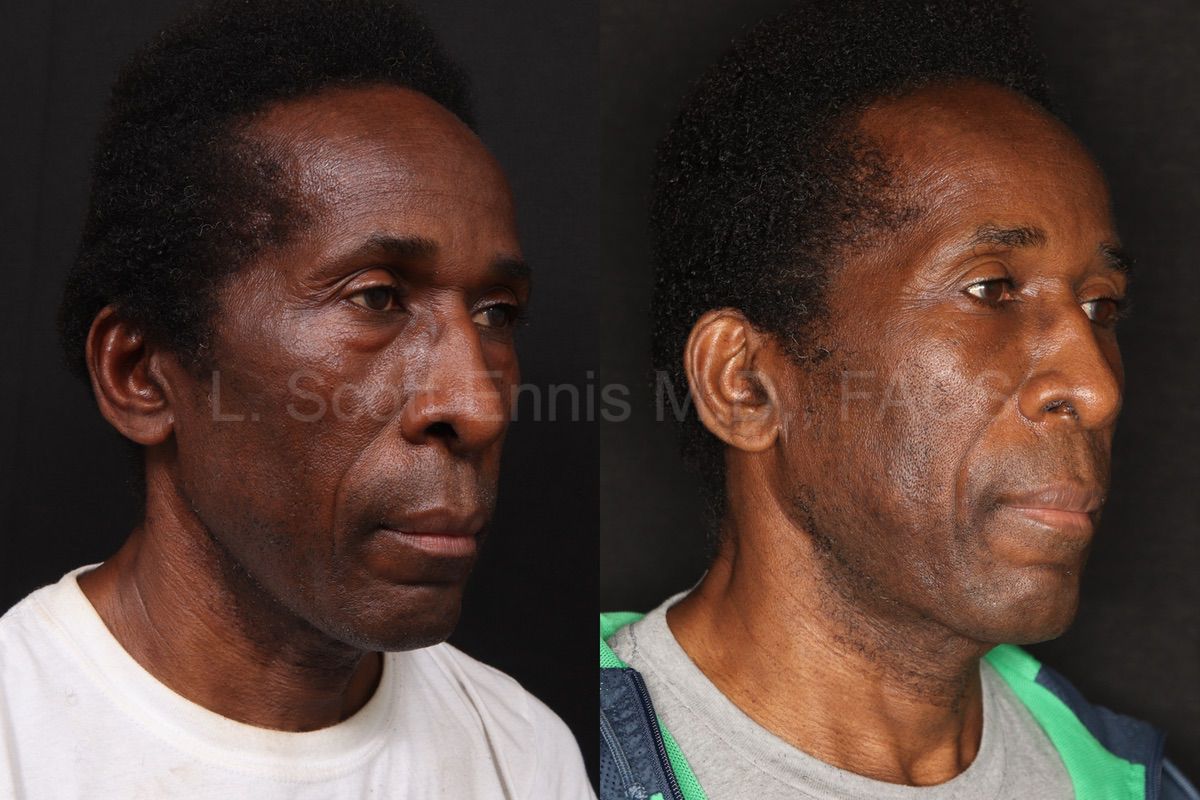
Lower blepharoplasty
Lower eyelid surgery shown in three-quarter views.
Actual patient of Dr. Scott Ennis
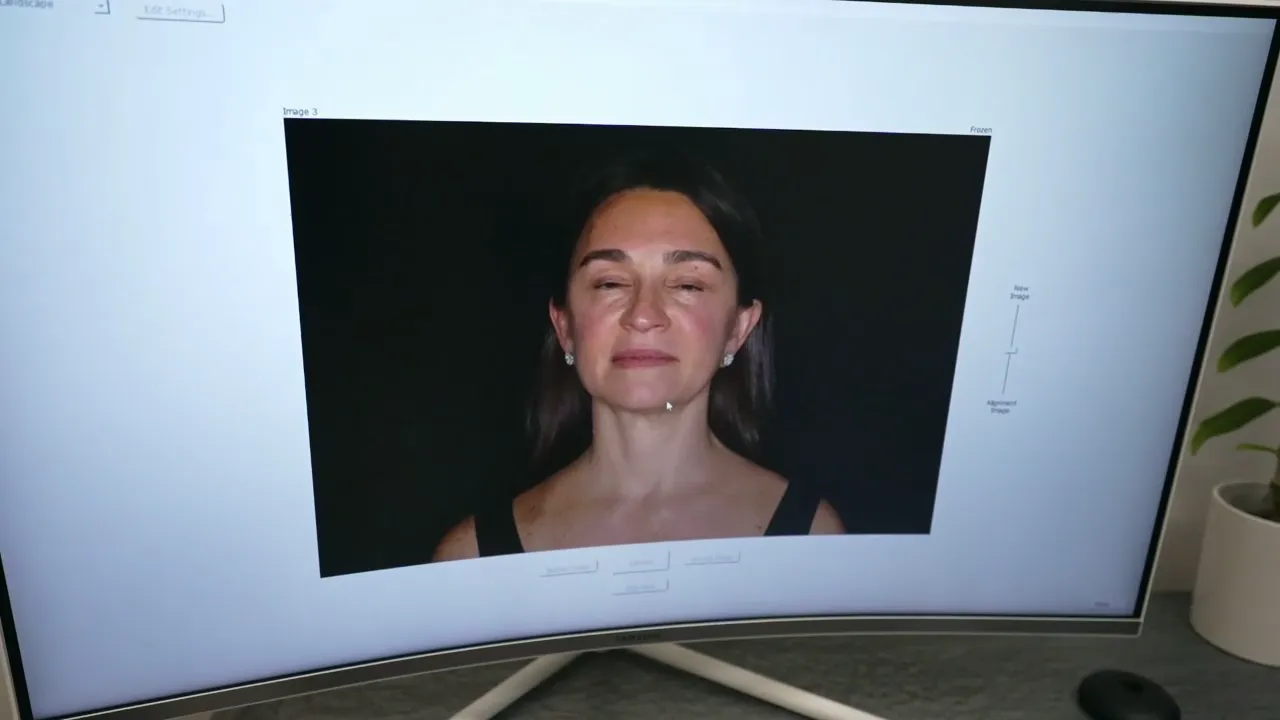

A personal decision
Is eyelid surgery
right for you?
Blepharoplasty may be considered when excess eyelid skin or bags beneath the eyes concern you. Your eye health, medical history and expectations matter as much as the change you hope to see.
Discuss dry eyes, previous eye surgery and any visual symptoms at your consultation. Brow position and true eyelid drooping also need assessment; eyelid skin removal alone does not address every cause of heaviness.
Read ASPS guidance on candidacyYour treatment options
Upper eyelids.
Lower eyelids.
A considered plan.
Blepharoplasty is tailored to the tissues that contribute to your concern, with attention to the eye area as a whole.
Upper blepharoplasty
Excess upper eyelid skin can fold over the natural crease and create a hooded appearance. Surgery may remove selected skin and address fat or muscle through an incision planned within the crease. The incision may extend toward the outer corner when needed; closure can use fine sutures or surgical adhesive.
The amount of treatment should account for your anatomy and how the eyelids close. If skin affects your field of view, discuss an appropriate examination rather than assuming the concern is purely cosmetic.
Lower blepharoplasty
Bags and loose skin beneath the eyes require an assessment of fat, skin and eyelid support. The plan may involve repositioning or removing fat and addressing excess skin, depending on what is contributing to the appearance.
An incision may be placed beneath the lashes or inside the lower lid. The internal, or transconjunctival, approach provides access to fat without an external skin incision; it does not directly remove excess skin. If an external incision is used to treat loose skin, fine sutures close the incision.
Treating both together
Upper and lower eyelid surgery may be combined when both areas contribute to your concerns. The consultation should make clear what each part of the plan is intended to change and how the combined procedure affects recovery.
Sometimes the more useful conversation includes brow lift surgery, the cheek or skin resurfacing. A recommendation should follow the examination, rather than assume that treating more areas will be better.
Understanding the lower eyelid
The eyelid and cheek.
Considered together.
Explore Dr. Ennis’s discussions of lower eyelid surgery, the cheek pad and middle facelift. For broader facial concerns, see the deep plane facelift guide.
 Watch the lower eyelid discussion
 Watch the midface discussion
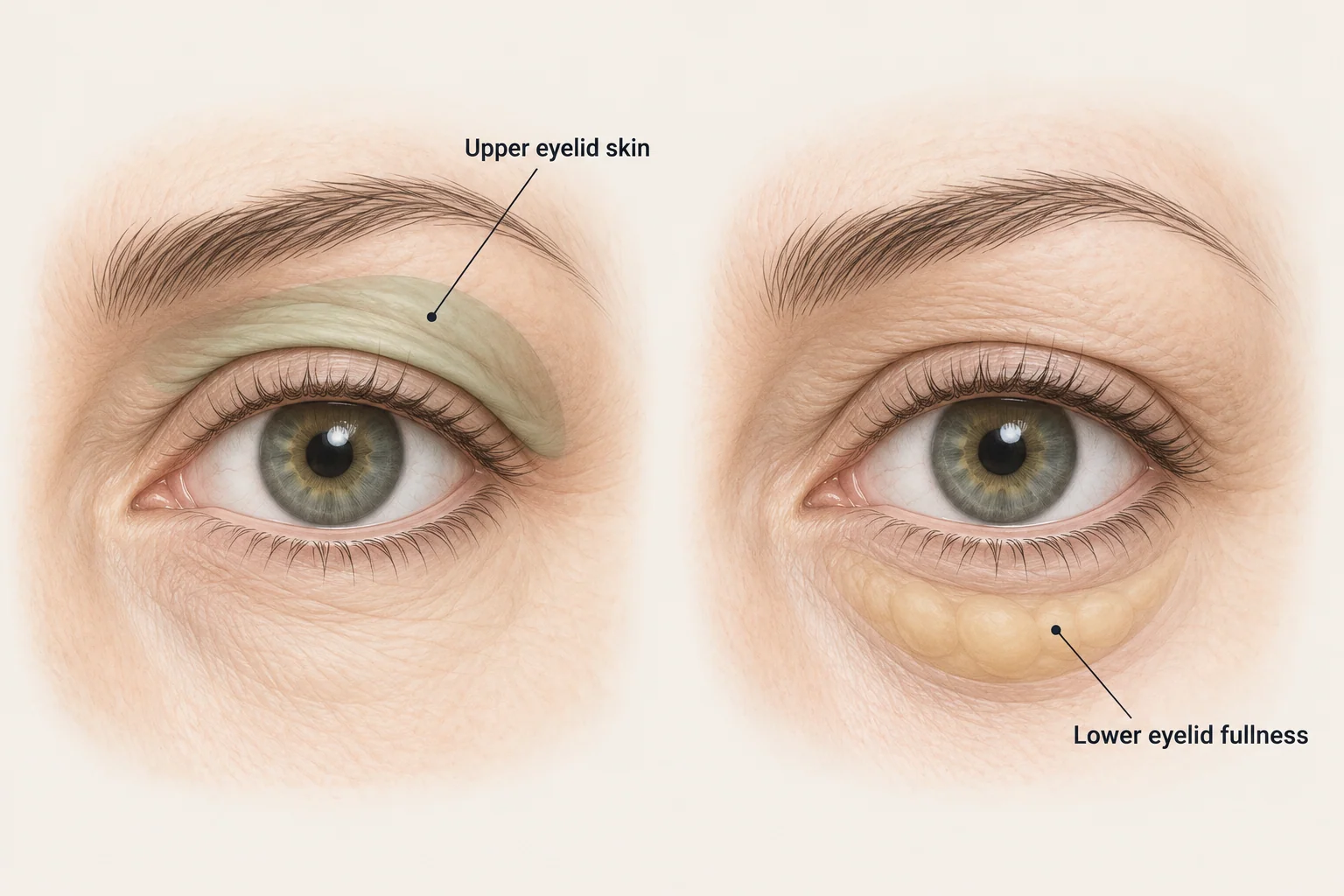
Upper and lower eyelids have different concerns
Eyelid surgery may address excess skin, bulging fat or a combination. Brow position is assessed separately.
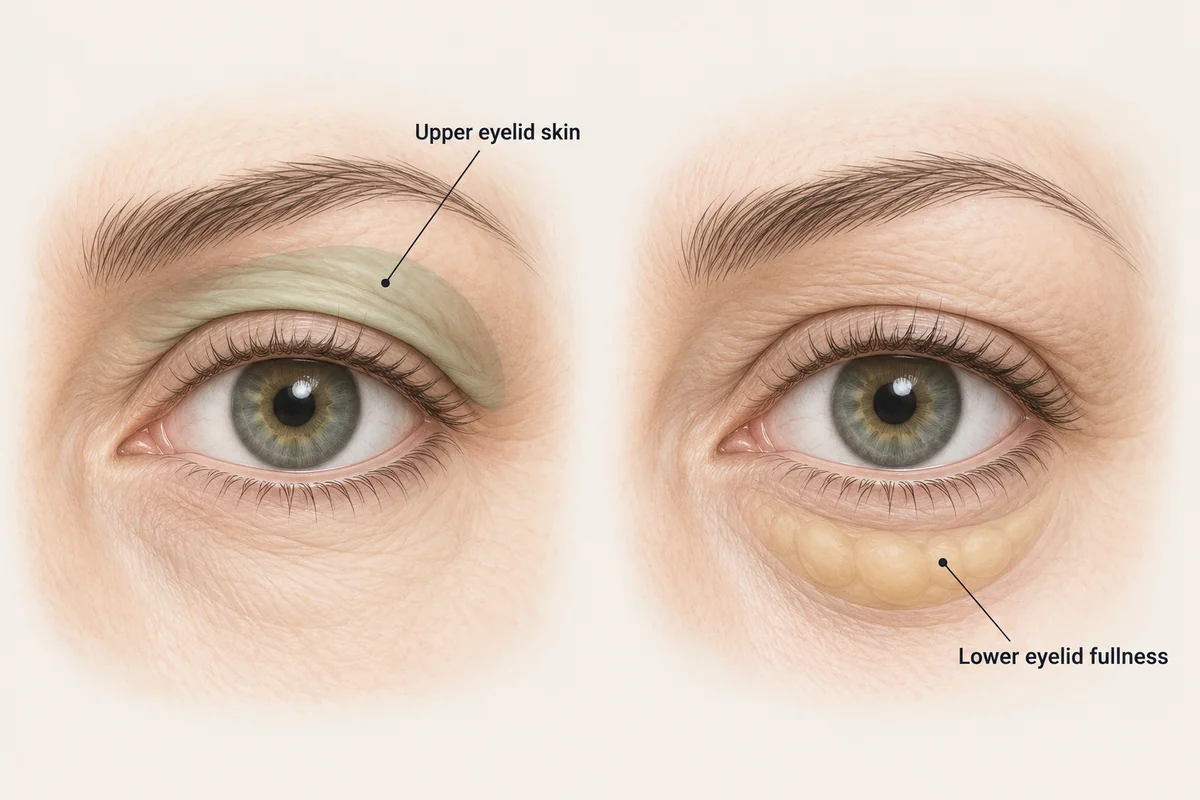
Upper eyelid folds can hide excess skin.
Lower eyelid fullness may involve fat beneath the eye.
Meet your surgeon
Dr. L. Scott Ennis,
MD, FACS.
Board-certified plastic surgeon.
Founder of Ennis Plastic Surgery.
At Ennis Plastic Surgery, the discussion begins with your features and the change you hope to make. Dr. Ennis’s background in art informs his interest in proportion and individual facial character.
Meet Dr. Ennis & explore his credentials Meet the Surgeon
Your procedure guide
Know what to expect.
Leave room to heal.
Preparation and follow-up
are part of the plan.

Your consultation
Discuss the changes you notice, previous eye or facial procedures, medications and your medical history. Dr. Ennis assesses the eyelids in relation to the brows and cheeks; photographs and, when indicated, an eye or visual-field examination help inform the plan.
A question to bringIs my concern related to eyelid skin, fat, brow position or another issue?
Preparing thoughtfully
Follow the preparation plan provided for you, including any medical testing and review of medications or supplements. Arrange a ride home and help for early recovery. Medication changes should be coordinated with the clinician who prescribed them.
A question to bringWhat should I arrange before surgery and for my first days at home?
The day of surgery
Upper eyelid surgery generally uses an incision in the natural crease. Lower eyelid incisions may be placed just below the lashes or inside the lid, depending on the treatment needed. The anesthesia plan and any accompanying procedures are discussed beforehand.
A question to bringWhere will my incisions be, and which tissues will be treated?
Early healing
Expect a period of swelling and bruising. Irritation, sensitivity to light or temporary blurred vision from ointment may occur. Your surgical team will explain eye and incision care, follow-up, suture removal if needed, and which symptoms require prompt attention.
A question to bringHow do I contact the team if my eyes or vision concern me?
Returning to your routine
Discuss work, driving, contact lenses, eye makeup and exercise as separate milestones. Follow-up visits help assess healing as swelling subsides. Protect the area from sun exposure and follow your own instructions instead of another patient’s timetable.
A question to bringWhen can I safely return to each part of my usual routine?
Recovery unfolds
in stages.
Early swelling can temporarily change how the eyelids look, and the two sides may settle at different rates. The point at which you feel ready for some activities is different from the point at which healing is complete.
Your instructions may include eye lubrication, compresses and incision care. Follow the directions provided for your procedure, including when to attend follow-up and when to seek urgent advice about pain or a change in vision.
Read ASPS recovery guidanceUnderstand
the risks.
Eyelid surgery risks include bleeding, infection, dry eyes, difficulty closing the eyes, lid malposition, scarring and the need for further surgery. Anesthesia complications, changes in sensation or vision, and very rarely loss of vision can occur.
This is not a complete list. Discuss your individual risks, how complications would be recognized and managed, and who to contact if symptoms concern you.
Read ASPS risk information Watch the recovery guide
Learn about recovery with Dr. Ennis, then discuss how the timeline applies to your own procedure and healing.
A closer look
Understanding blepharoplasty.
Explore the distinctions behind an individualized eyelid surgery plan.
Why the eye area changes
Skin elasticity and the support around the eyes change with age. Upper eyelid folds may become more noticeable, while lower eyelid bags and skin looseness can alter the transition between the eye and cheek. Inherited features also play a role, so similar concerns can occur at different ages.
Many people explore blepharoplasty in midlife, but there is no single age that makes surgery appropriate. An examination helps separate normal variation, age-related change and an issue that needs evaluation for eye health. The aim is to understand your concern before selecting a treatment.
Respecting your
eyelid crease
The eyelid crease is part of your individual appearance. Incision planning should account for its existing shape, the amount of skin present and the relationship between your eyes and brows. Creating or defining an upper eyelid crease is sometimes called double eyelid surgery. For patients of Asian heritage, this discussion should center on their own anatomy, preferences and the features they wish to preserve.
Bring photographs or examples if they help explain your goals, while recognizing that another person’s eyes cannot define your own surgical plan. Ask what can be changed, what should be preserved and what would be unrealistic.
Skin quality &
the limits of surgery
Fine lines, pigment and skin texture do not necessarily respond to the same treatment as eyelid bags or excess skin. Selected resurfacing treatments may be discussed separately or as part of a combined plan, with attention to suitability and healing.
Dark circles can reflect several factors, so blepharoplasty should not be presented as a universal solution. Ask which changes are expected from surgery, whether another treatment is relevant and whether some of the appearance is likely to remain.
Learn about skin resurfacingAnesthesia, timing
& surgical planning
The practice’s published guide discusses local numbing with sedation; some treatment plans may call for general anesthesia. The choice depends on your health, the operation and any accompanying procedures. Confirm the surgical setting and who will provide anesthesia.
Operating time varies with upper, lower or combined treatment. Allow separately for preparation, anesthesia and observation before discharge. Your consultation should provide a realistic schedule and explain what assistance you will need afterward.
Longer-term results
& ongoing care
Swelling and incision appearance continue to change after the initial recovery period. Review progress at follow-up rather than judging the final result too early. Sun protection and appropriate care for the eye area remain part of the longer-term conversation.
Blepharoplasty does not stop the aging process. Changes in the brow, cheek and skin may influence your appearance over time, and no outcome or duration can be guaranteed. Discuss any later concerns in the context of your original procedure and current anatomy.
 Watch the eyelid & brow comparison
Related, but distinct
The eyelid
or the brow?
A low brow can create heaviness above the eyes, while true eyelid drooping may involve the muscle that raises the lid. These concerns deserve separate assessment from excess eyelid skin. Read Dr. Ennis’s brow lift vs. upper blepharoplasty comparison to explore the distinction.
Explore brow lift surgeryMaking an informed choice
Choosing the Best Eyelid Surgeon in Florida for You
Look for relevant qualifications, an explanation of the anatomy and patient cases that help you understand the proposed approach.
Dr. L. Scott Ennis, MD, FACS
View credentials & recognition
Board certification
American Board of Plastic Surgery
Listed in Dr. Ennis’s Florida Department of Health profile.
View physician recordSelected recognition · 2024
The Boca Raton Observer
Featured in the publisher’s Castle Connolly Top Docs 2024 special advertising section.
View publisher’s profileVerify the qualifications.
Confirm the surgeon’s relevant board certification and training. Ask about their experience with facial surgery and with the specific technique being recommended.
Look at comparable cases.
Review actual patients with concerns similar to yours. Ask which procedures were performed together and when the photographs were taken. A single image cannot predict your own result.
Understand the recommendation.
Ask the surgeon to connect the proposed approach to your anatomy and goals. A useful consultation should explain alternatives, limitations and the option of postponing treatment.
Ask about safety and aftercare.
Discuss the surgical facility, anesthesia team, risks and follow-up arrangements. Know whom to contact after surgery and how concerns would be assessed.
Questions worth asking
Understand more.
Decide in your own time.
Eyelid surgery questions to bring
to your consultation.
What is blepharoplasty?
Blepharoplasty is eyelid surgery. Depending on your concerns, it may address excess skin and the position or amount of fat in the upper eyelids, lower eyelids or both. A consultation distinguishes those changes from brow descent, eyelid muscle problems and concerns primarily related to skin quality.
Do I need upper or lower eyelid surgery?
Upper blepharoplasty addresses the upper eyelid, including excess skin that creates hooding. Lower blepharoplasty addresses concerns such as bags and selected skin changes beneath the eyes. Some patients consider both; the recommendation should explain what each procedure adds.
Is eyelid surgery the same as a brow lift?
No. A brow lift changes brow position; blepharoplasty treats the eyelids. A low brow can contribute to upper-eye heaviness, so removing eyelid skin alone may not address the cause. The examination should also distinguish true eyelid drooping, or ptosis, which may require a different treatment.
Can blepharoplasty improve vision?
Excess upper eyelid skin can sometimes obstruct the visual field. If that is a concern, an appropriate examination and testing are needed to determine the cause and whether treatment may help. Cosmetic eyelid surgery should not be assumed to treat an unrelated vision problem.
Will eyelid surgery remove dark circles?
Not every dark circle is caused by eyelid fat or excess skin. Pigment, skin quality and the contours around the eye can contribute to the appearance. Ask which part of your concern surgery could change and which features may remain or call for a separate discussion.
Where are the incisions and will there be scars?
Upper incisions are generally planned within the natural eyelid crease. Lower eyelid access may be beneath the lashes or through the inner surface of the lid. External incisions leave scars, and healing varies; an internal approach has a different scope and does not directly remove excess skin.
What anesthesia is used for eyelid surgery?
The plan depends on the extent of surgery, accompanying procedures and your health. Local numbing with sedation or general anesthesia may be discussed. Confirm the arrangements, who provides anesthesia and the expected time at the surgical facility.
How long is blepharoplasty recovery?
Allow for bruising, swelling and follow-up care, with the timing of work and social commitments discussed before surgery. Returning to an activity does not mean all swelling has resolved. Your surgeon should guide driving, exercise, contact lenses and makeup based on your healing.
How much does eyelid surgery cost in Boca Raton?
The estimate depends on whether upper, lower or combined surgery is planned and whether other procedures are included. Ask for a written breakdown of surgeon, anesthesia, facility and follow-up charges. If a functional concern is being evaluated, clarify any insurance requirements rather than assuming coverage.
How long do eyelid surgery results last?
Surgery changes the tissues treated, but aging continues. Skin quality, anatomy and changes in the surrounding face affect how the area looks over time. Discuss realistic expectations without relying on a lifetime promise or a fixed number of years.
How do I choose the best eyelid surgeon in Florida for me?
Review relevant board certification, experience with upper and lower eyelid anatomy and comparable patient cases. Ask about eye health, procedure limitations, anesthesia and follow-up. A useful consultation should explain why the proposed approach fits you and leave time to consider your decision.
Further reading
Explore the American Society of Plastic Surgeons’ guidance on eyelid surgery, procedure steps, consultation and cost considerations. This guide provides general information; a consultation addresses your individual circumstances.
Keep exploring
The face as a whole.

Ennis Plastic Surgery · Beautiful Medicine™
A considered plan starts
with a conversation.
Or call 561-405-9020