

Ennis Plastic Surgery · Beautiful Medicine™
Skin Resurfacing in Boca Raton
A considered approach to tone and texture.
Skin resurfacing focuses on the surface of the skin. Donna helps connect your concerns, skin history and recovery plans with an appropriate treatment option.
Explore Your OptionsA personal approach
Your goals. Your comfort.
Uneven tone, rough texture and fine lines can have different causes. A consultation begins with your skin history and an examination, then considers the treatment and aftercare that fit your goals.
Ennis Plastic Surgery offers the Obagi Blue Peel, most often alongside other procedures to complement the overall result. Explore how a peel fits into a coordinated plan, and how its role differs from injectables or facial surgery.
 Watch the film
Start with the skin surface
Understanding Skin Resurfacing
Resurfacing is a broad term for treatments that renew selected layers of skin. A chemical peel uses a chosen solution to produce controlled exfoliation. Treatment depth and your skin’s response influence both the change you may see and the time needed to recover.
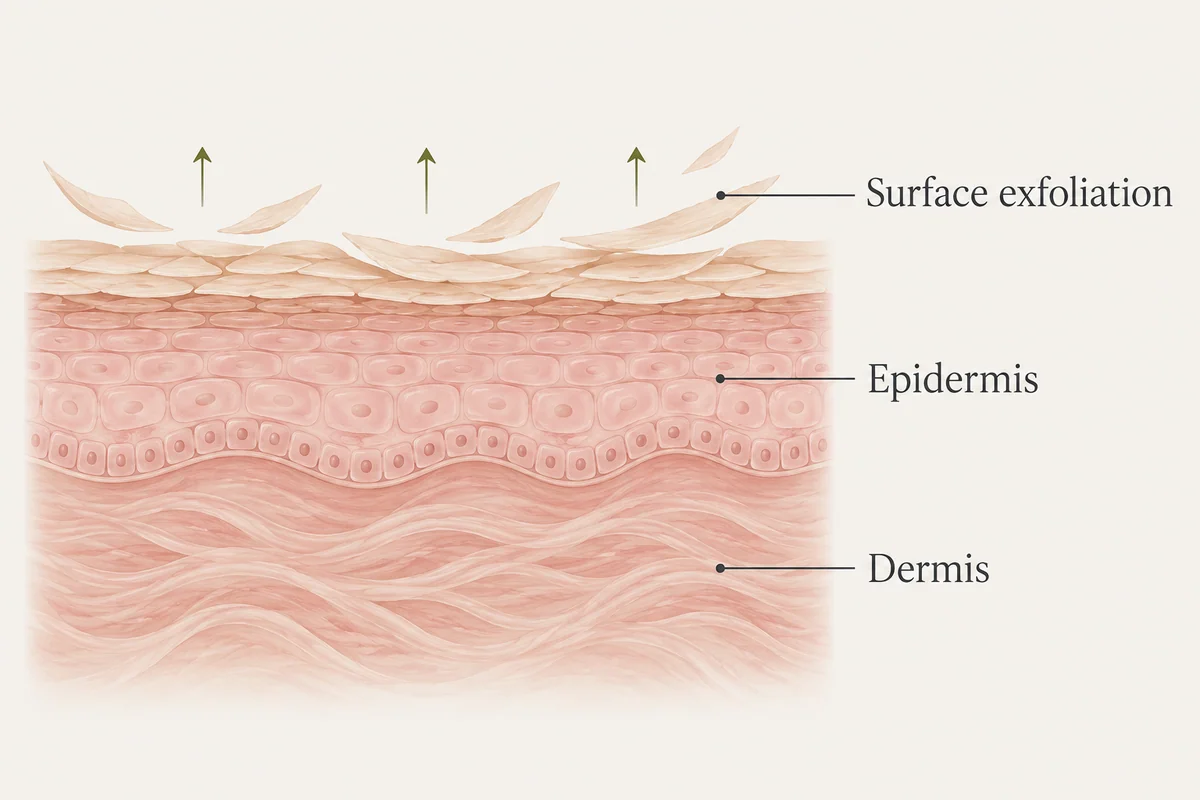
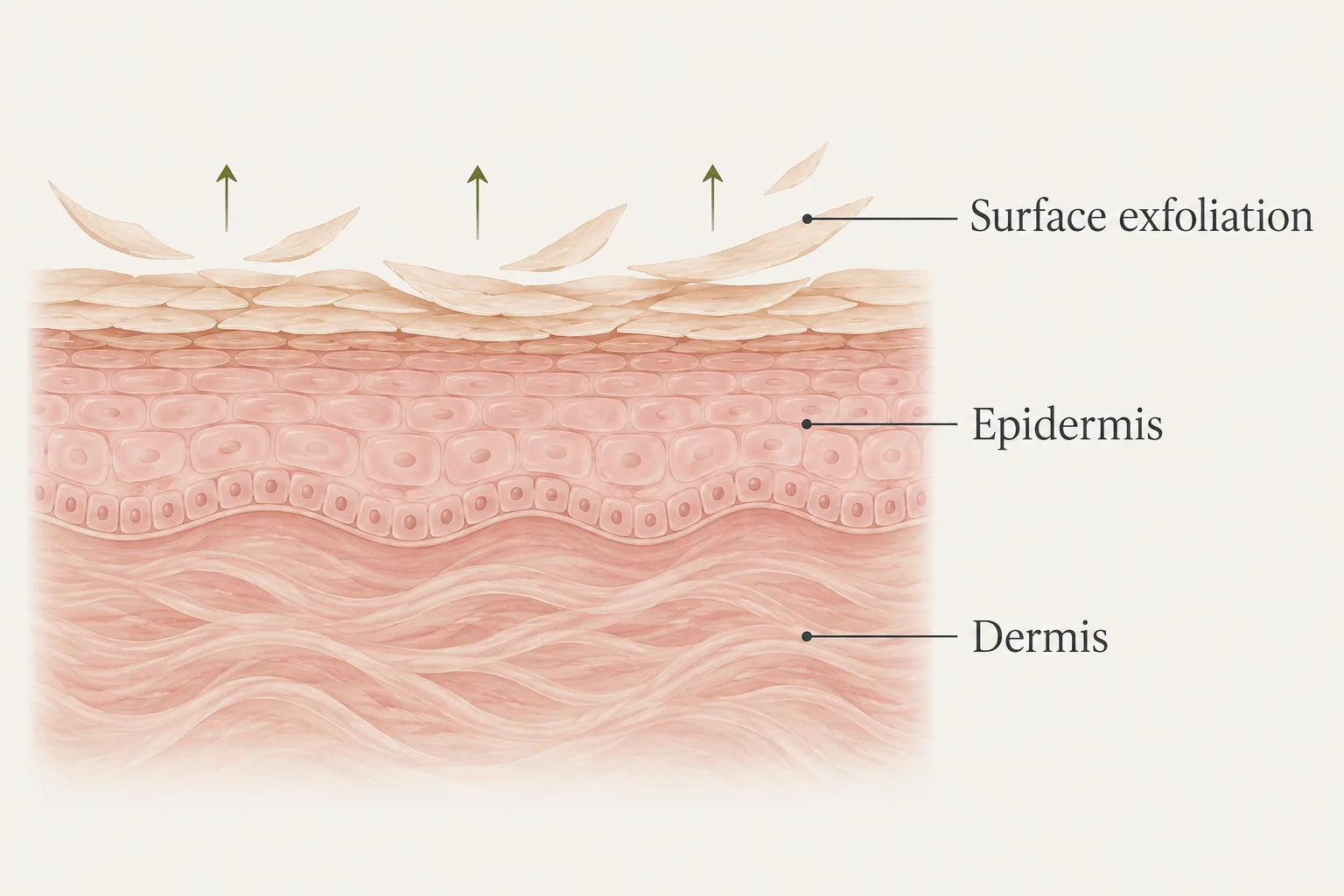
The illustration below shows superficial exfoliation. It is an explanation of the basic concept, not a depiction of every peel depth. Donna and your surgical team will explain the specific approach proposed for you.
A closer look at superficial exfoliation
This simplified diagram shows surface cells shedding above the epidermis and dermis. Peel depth and recovery vary by treatment; the illustration represents superficial exfoliation only.
Surface exfoliation is different from adding volume.
The selected formula and your skin guide aftercare.
A finishing touch for the skin
Blue Peel as Part of Your Treatment Plan
A procedure that improves facial contours and a peel that addresses the skin surface have different roles. At Ennis Plastic Surgery, the Obagi Blue Peel is most often considered alongside other procedures to enhance the overall result.
The Blue Peel uses trichloroacetic acid (TCA) for professional skin resurfacing. It may help refine texture, uneven tone and the appearance of fine lines. Your treatment team determines whether your skin is suitable, which areas to treat and how to coordinate healing.
One coordinated plan
If you are considering a facelift or eyelid surgery, discuss a Blue Peel during your surgical consultation. Combining treatments is an individual decision; the peel may be performed together with another procedure or scheduled separately.
Allow for skin recovery
A Blue Peel has its own preparation, aftercare and recovery needs. Your team will explain how these fit with your other procedures, including sun protection, skin care and follow-up. A combined result cannot be attributed to the peel alone.
Different goals, different tools
Match the Treatment to the Concern
Tone & texture
A chemical peel may be considered for selected surface concerns. Discuss pigment changes, sensitivity and previous treatments before choosing a formula or depth.
Movement-related lines
Neuromodulators have a different role: they temporarily reduce selected muscle activity. They do not exfoliate the skin, and a peel does not replace their function.
Volume & facial contours
Dermal fillers add volume in selected areas. A facelift addresses underlying tissues and laxity. Discuss these separate goals if you are planning more than one treatment.

Before choosing a peel
Your Skin History Matters
Skin tone & pigment response
Tell Donna about melasma, dark marks after inflammation, previous burns or pigment changes. All skin tones need individual assessment; the wrong peel can worsen discoloration.
Medicines & allergies
Discuss isotretinoin use, cancer treatment, retinoids and allergies, including aspirin or salicylates when relevant to the formula. Do not stop a prescribed medicine without guidance from the clinician who manages it.
When to postpone
Pregnancy, active cold sores, infection, a recent sunburn or irritated skin may affect suitability. Recent waxing, laser treatment or other exfoliation also matters; the team will explain the appropriate timing.
GO-Tox · Mobile concierge care
Injectables & fillers,
in the comfort of home.
Donna Ennis, ARNP, brings personalized injectable and dermal filler care to your home through GO-Tox, our in-home concierge service.
Explore In-Home CareYour visit, thoughtfully planned
A private appointment with Donna.
Tell us your location and the treatment you’re considering. Our team will confirm availability, suitability and visit details with you.
Prefer to call? 561-405-9020
Your consultation
A Plan Before a Product
Talk about your goals
Describe your concerns about tone, texture or sun-related changes. Donna reviews your skin type, pigment history, current products and prior treatments, along with the time you can allow for healing.
Review your health
Bring your medication and supplement list. Discuss allergies, prior reactions, cold sores, recent procedures, pregnancy or breastfeeding, and any active skin infection. Do not stop a prescribed medicine unless the clinician who manages it advises you to.
Choose the treatment together
Discuss the proposed solution, treatment depth, expected changes, limitations, risks and cost. Ask why this peel fits your skin and whether a different treatment or postponing treatment would be appropriate.
Plan comfort and follow-up
Ask about sensations during treatment, skin care before and after the peel, sun protection and follow-up. Know who to contact if pain, redness or other symptoms are greater than expected.
Aftercare
Protect the Skin as It Recovers
Allow time
Redness, dryness and flaking vary by peel and skin response. Recovery can range from little visible shedding to a longer healing period. Confirm a realistic schedule before work, travel or an event.
Keep care gentle
Use the recommended cleanser and moisturizer, avoid picking or pulling skin, and ask when to restart retinoids, acids, makeup and exercise. Protect treated skin from the sun as instructed.
Review before repeating
Assess the result after healing. A series may be considered, but treatment intervals should follow the product and your skin’s recovery rather than a fixed universal schedule.
An informed choice
Understand the Risks and Limits
Irritation & healing
Peels can cause redness, swelling, crusting or prolonged irritation. Infection, cold-sore reactivation, scarring and lighter or darker pigment changes are possible. Depth and individual skin response affect risk.
Know when to call
Contact the practice promptly for worsening pain, spreading redness, unexpected blistering, discharge or healing concerns. Ask how to reach the team after hours.
Professional assessment
A peel does not diagnose a changing skin lesion. A suspicious spot needs medical evaluation first. Do not attempt to reproduce an office-strength peel at home.
Your care at Ennis Plastic Surgery
Meet Donna Ennis
Donna Ennis is a family nurse practitioner whose work at Ennis Plastic Surgery focuses on nonsurgical aesthetic care, including injectables, fillers and skin treatments.
Known as “The Gentle Injector,” she welcomes questions about your goals, comfort and treatment choices. Your consultation includes a review of the proposed product, its limits and the care you will need afterward.
Explore Donna’s Profile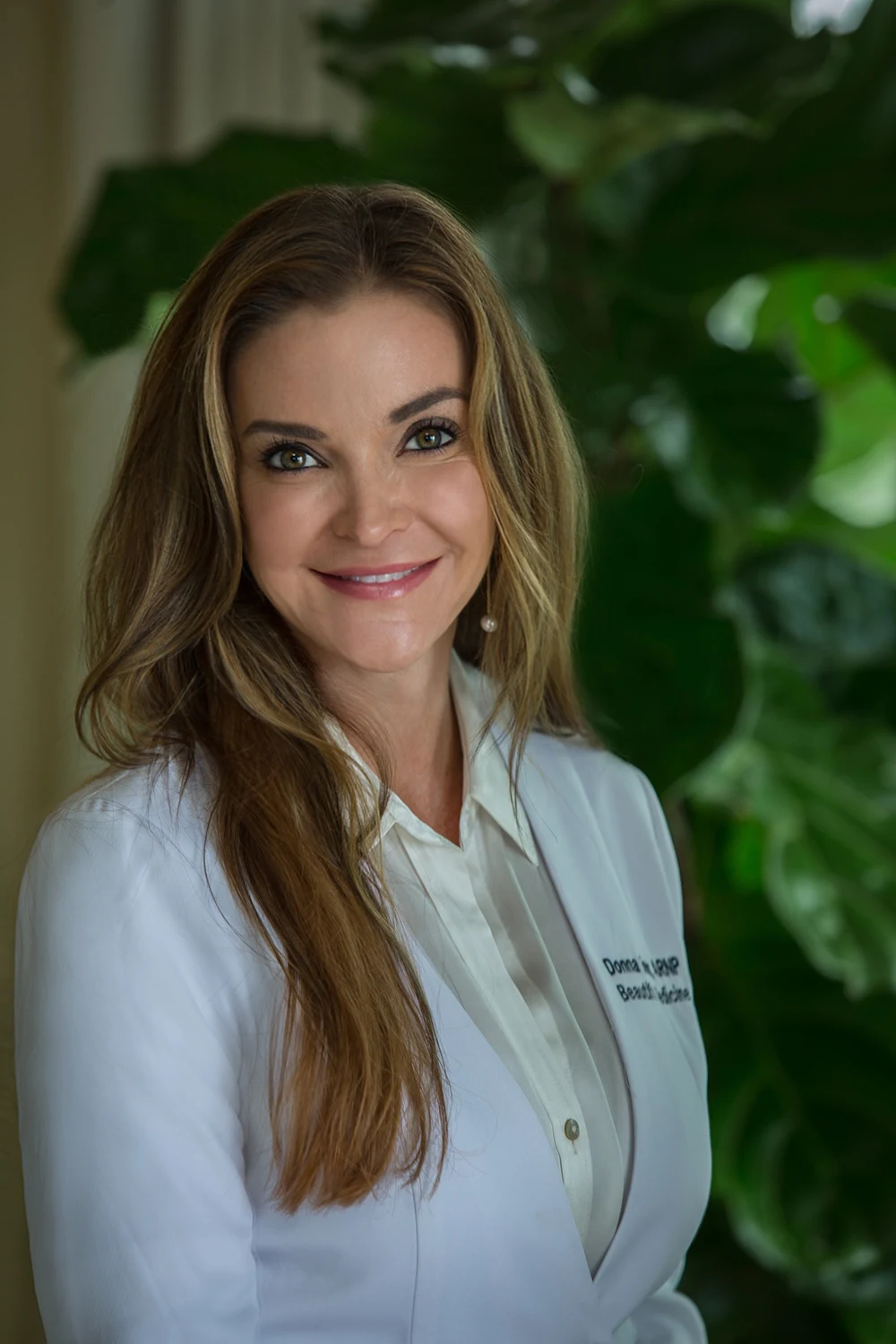
Plan with confidence
Questions About Resurfacing
Is resurfacing always a laser treatment?
No. Chemical peels are one form of resurfacing. Different methods have different uses and risks. Ask the practice which treatments are currently available and which suit your skin.
Can I add Blue Peel to facial surgery?
The practice often considers Blue Peel as part of a combined plan. Your team decides whether treatments should occur together or separately based on your anatomy, skin and healing needs.
Will I need to take time off?
Recovery depends on treatment depth and skin response. Plan for the specific aftercare and healing period your clinician explains; do not assume every peel has minimal downtime.
What should I bring to consultation?
Bring your skin-care routine, medication and supplement list, prior treatment history and any photographs that help explain your goals. Mention cold sores, pigment changes, allergies and upcoming travel or events.
Keep exploring
Compare your options.

A private consultation
Let’s talk about
your goals.
Bring your questions and the changes you would like to explore. Donna will help you understand your options, the proposed treatment and the care you will need afterward.
Or call 561-405-9020