

Ennis Plastic Surgery · Boca Raton
Deep Plane Facelift in Florida
Explore a deeper approach to facial rejuvenation with Dr. L. Scott Ennis, beginning with your anatomy, your goals and a conversation about what you would like to change.
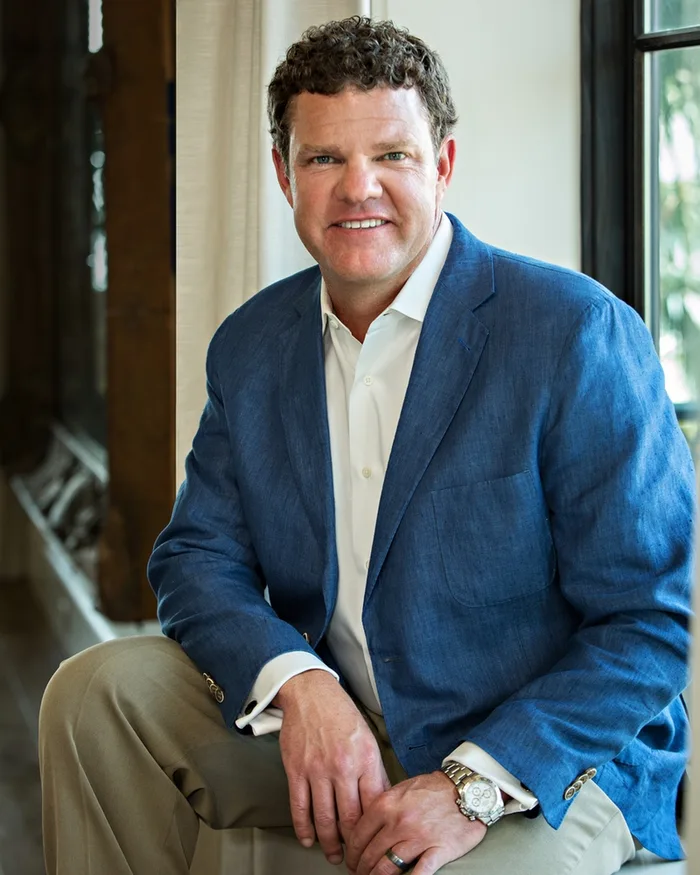
Procedure at a glance
- Surgeon
- Dr. L. Scott Ennis
- Location
- Boca Raton, Florida
- Approach
- Deep Plane Facelift
- Consultation
- In-office or virtual
Understanding the approach
More than skin deep.
What makes a deep plane facelift different?
Facial aging involves changes in skin, volume and the tissues that support facial contours. The folds beside the mouth, changes along the jawline and looseness in the neck may be part of that conversation. A useful assessment considers how those changes relate to one another. If your main concern is the neck, explore the neck lift guide.
The support beneath the skin
The superficial musculoaponeurotic system, or SMAS, is a supporting tissue layer beneath the skin. A deep plane approach works beneath this layer to mobilize and reposition deeper facial tissues, instead of relying on skin tightening alone.
The surgical plan depends on which areas need attention and how the tissues will be treated. Ask Dr. Ennis to explain the proposed lift in terms of your own facial anatomy.
Compare facelift approaches Watch Dr. Ennis explain
An introduction to the procedure from Dr. L. Scott Ennis. Watch alongside the written guide, then bring your own questions to your consultation.
Understanding the supporting layers of the face
A deep plane facelift works with the deeper supporting tissues as part of repositioning facial tissue. This simplified layer diagram helps distinguish those tissues from the skin.
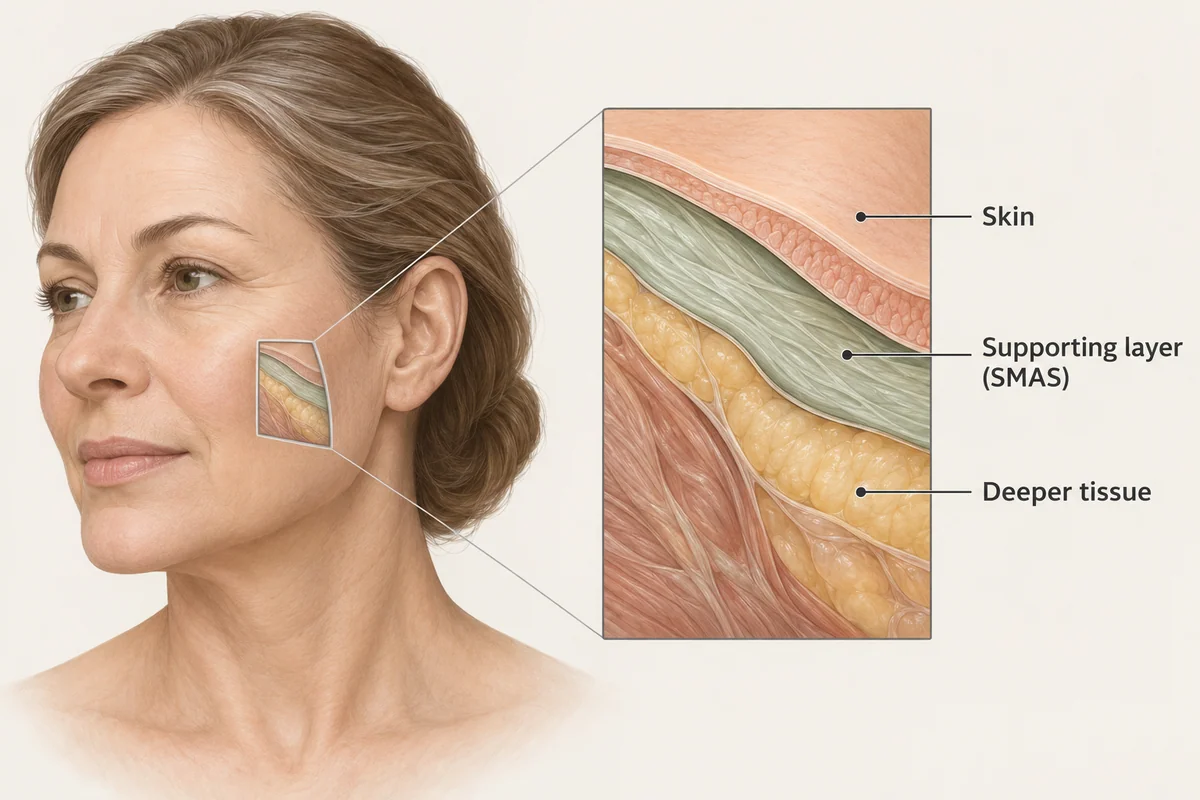
Skin and the supporting layer are separate structures.
The chosen approach determines which tissues are repositioned.
A personal decision
Is a deep plane facelift
right for you?
Start with your concerns.
Explore the options.
When this approach may be considered
If changes in your cheeks, jawline or neck concern you, a consultation can help establish whether surgery could address them. Candidacy also involves your overall health, smoking history, healing risks and expectations. The American Society of Plastic Surgeons emphasizes good health and realistic goals when considering facelift surgery.
When another approach may be more appropriate
Concerns about skin texture, lost volume or a specific feature may call for a different discussion. Nonsurgical care, including injectable treatments, a more focused procedure, or postponing treatment may be appropriate. A facelift does not stop aging or address every aspect of skin quality.
Your assessment should explain both what the proposed procedure could change and what it would leave unchanged. Concerns around the eyes may call for a separate discussion of blepharoplasty or brow lift surgery.
Read ASPS guidance on candidacyIn the words of our patients
The experience,
in their own words.
 Watch patient story
Patient of Dr. Ennis
A patient shares her experience with Dr. Ennis and Ennis Plastic Surgery.
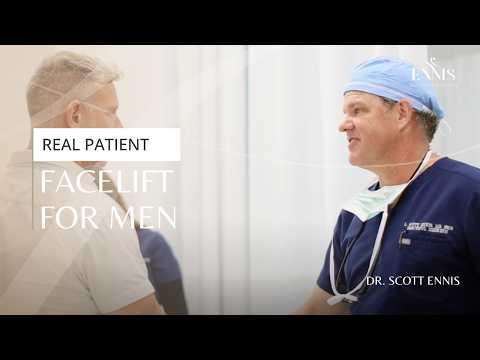 Watch patient story
Patient of Dr. Ennis
A male patient’s perspective on his facial surgery experience.
Individual experiences and results vary.
Actual patient results
Deep plane facelift.
Before & after.
Actual patients of Dr. Scott Ennis
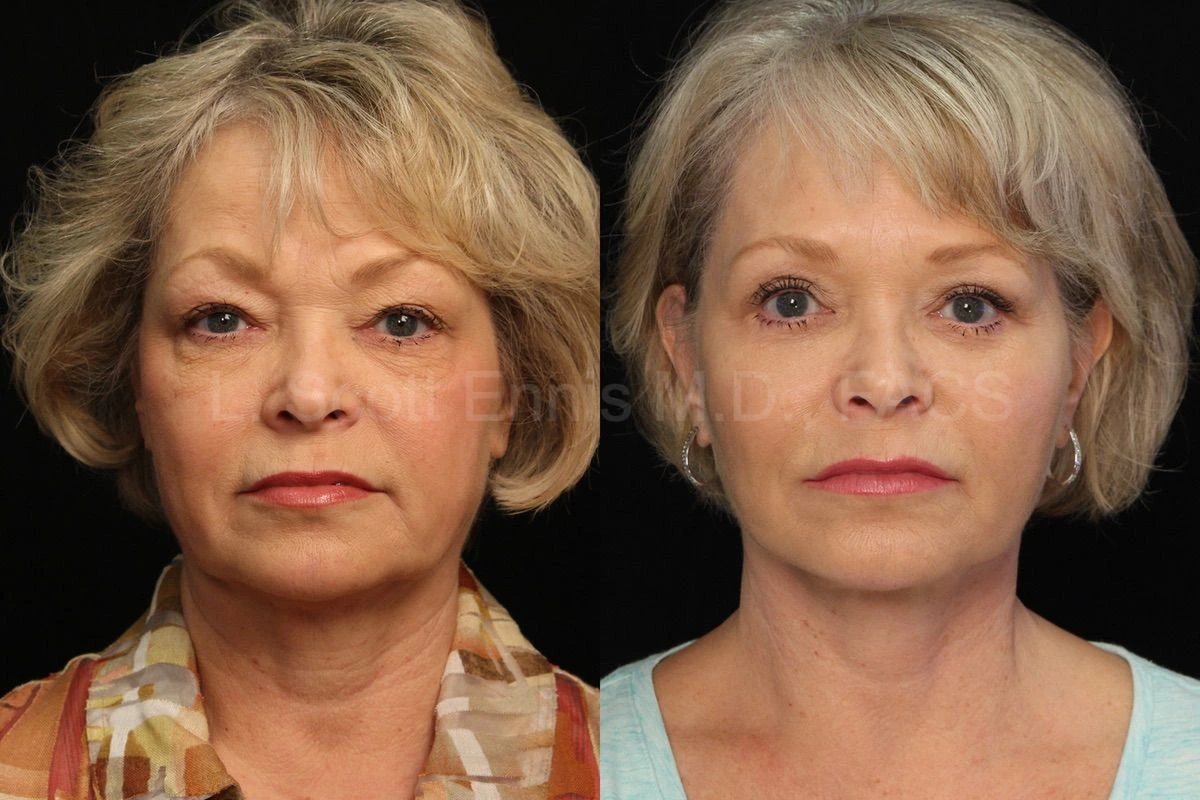
Deep plane facelift & lower eyelid surgery
A combined procedure: deep plane facelift and lower blepharoplasty.
Actual patient of Dr. Scott Ennis
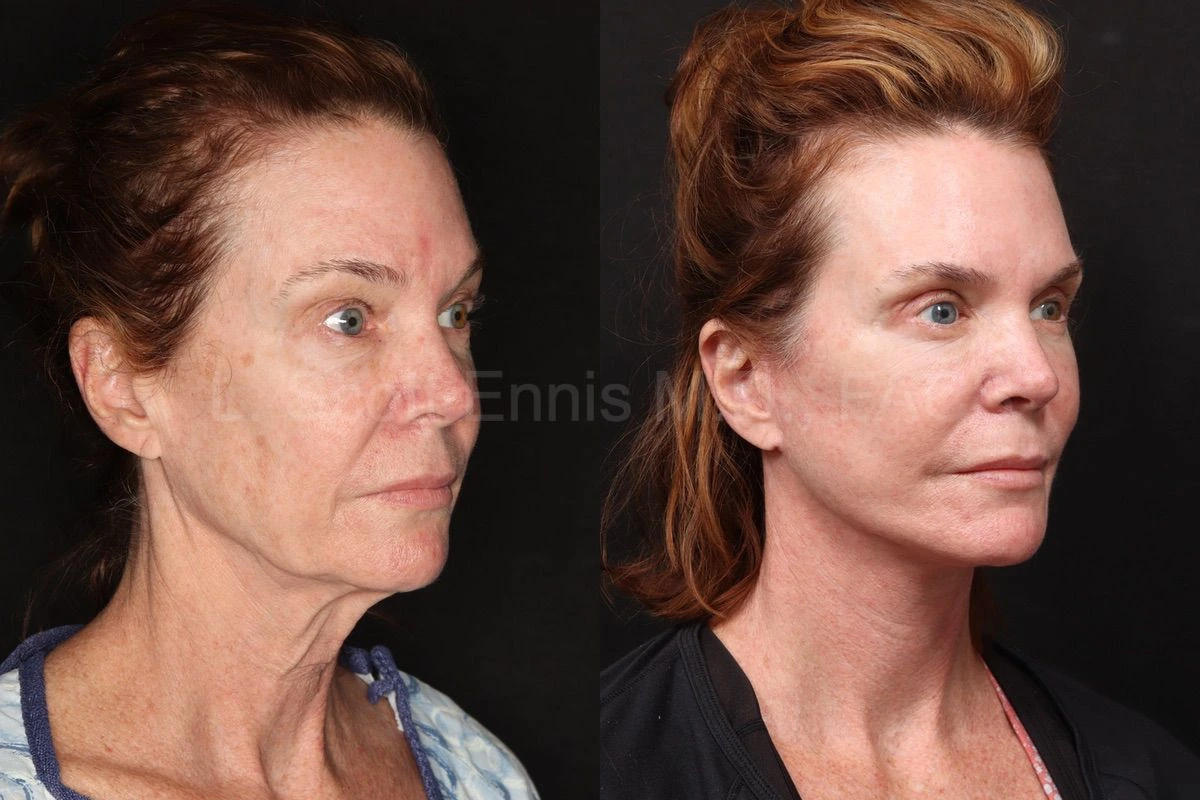
Deep plane facelift & complementary procedures
Combined with buccal fat pad removal, lower blepharoplasty and an Obagi Blue Peel.
Actual patient of Dr. Scott Ennis
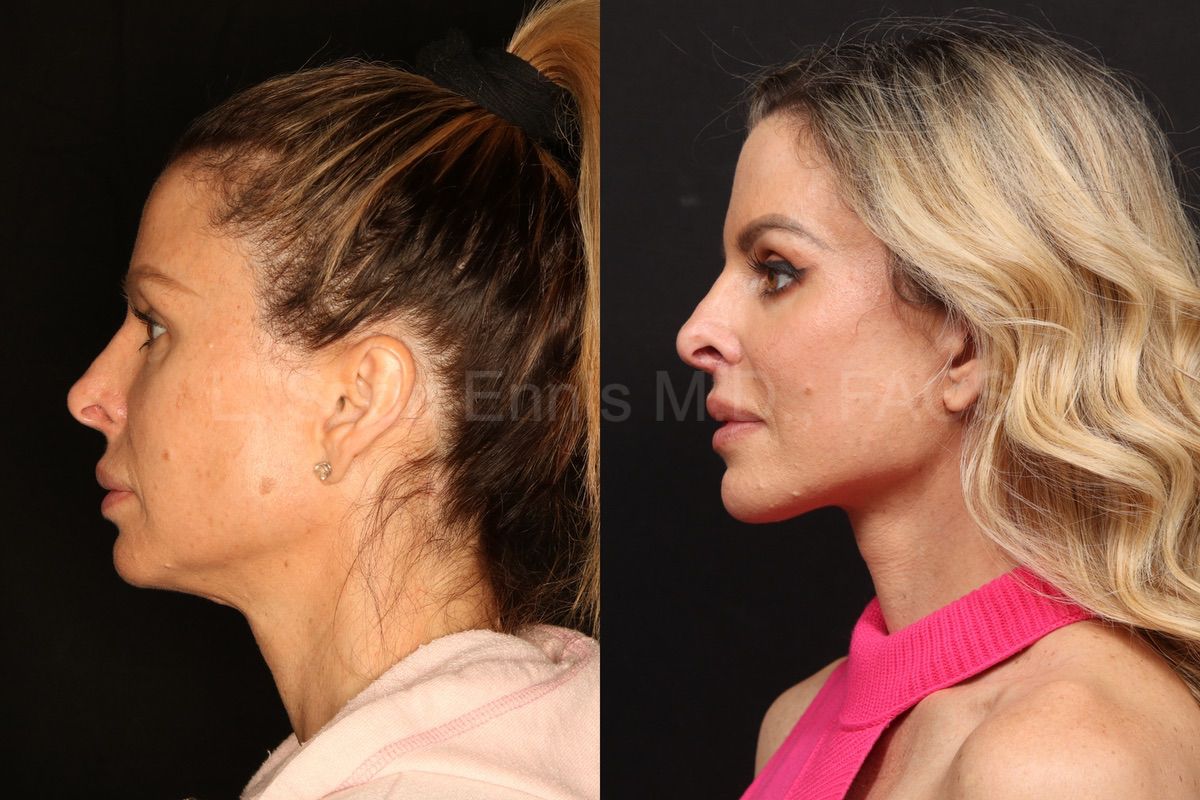
Deep plane facelift & lip lift
Combined with lower blepharoplasty, upper lip lift, nasal filler and an Obagi Blue Peel.
Actual patient of Dr. Scott Ennis
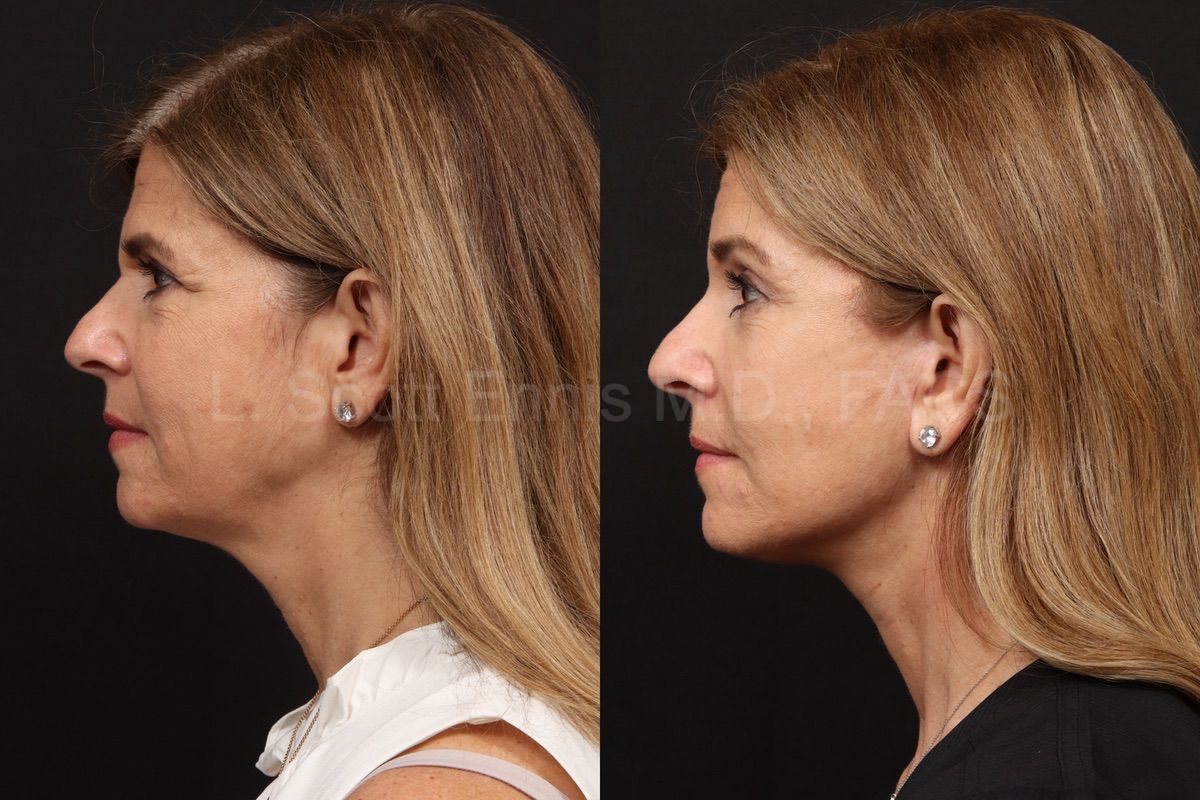
Deep plane facelift & brow lift
Combined with endoscopic brow lift, buccal fat pad removal and an Obagi Blue Peel.
Actual patient of Dr. Scott Ennis

Meet your surgeon
An artist’s perspective.
A personal conversation.
Dr. L. Scott Ennis
Dr. Ennis’s philosophy brings his background in art together with an individualized assessment of facial aging. His approach begins with understanding the changes a patient notices and the result they hope to achieve.
For some patients, he describes a deep plane approach as a way to address deeper facial support. Your consultation is the place to understand why he would recommend that approach for you, what alternatives he would consider, and what its limits may be.
His Florida practitioner profile lists certification by the American Board of Plastic Surgery and plastic-surgery fellowship training at the University of Virginia.
 Meet the Surgeon
Get to know the surgeon behind the consultation. Dr. Ennis introduces his background and approach to patient care.
Your procedure guide
From consultation
through recovery.
A sequence to understand.
A plan made for you.

Consultation
Begin with what you notice and what you hope to change. Dr. Ennis’s published guide describes an assessment of the face and neck, discussion of patient photographs, and a conversation about the proposed surgery. Bring your questions about alternatives, recovery and expectations.
A question to bringWhat would you recommend for my anatomy, and why?
Preparation
Bring an up-to-date medical history and a list of medicines, vitamins and supplements. Discuss previous facial procedures and any concerns about healing. Ask for your individual preparation instructions, including what help you will need after surgery. Do not change prescribed medicines without guidance from your treating clinician.
A question to bringHow should I prepare, and what support will I need?
Surgery
The practice’s published procedure guide describes general anesthesia and incisions around the ear, followed by work on deeper supporting tissues. The extent of surgery and any accompanying procedures should be explained as part of your own plan. Ask how incisions will be placed and closed, and whether drains or dressings are anticipated.
A question to bringWhat does my surgical plan include?
Early recovery
Swelling and bruising can affect how the face and neck look initially. Follow the instructions provided for your surgical sites, medicines, head positioning and follow-up. If dressings or drains are used, ask how to care for them and when the team plans to remove them.
A question to bringWho should I contact with a recovery concern?
Continued healing
Your surgeon will guide your return to work, exercise and other activities. Plan around your procedure and healing, rather than another patient’s timetable. Ask when photographs will be useful for assessing progress and what changes to expect as swelling settles.
A question to bringWhen should we assess my progress together?
Recovery and results
Early healing and the longer-term appearance of a facelift are different stages. Swelling can obscure contours at first, and scars continue to change as they heal. Follow-up is an opportunity to ask about your progress rather than judge it against a photograph or a fixed deadline.
Discuss time away from work, social plans and exercise before scheduling surgery. Ask about wound care, when you may wash your face or use makeup, and the symptoms that should prompt a call to the surgical team.
Explore the Facelift Recovery GuideRisks and limitations
Facelift surgery has risks, including bleeding, infection, anesthesia complications, changes in sensation, facial nerve injury, poor healing and unfavorable scars. Asymmetry or dissatisfaction with the result can also occur.
This is not a complete list. Your surgeon should explain the risks relevant to your health and operation, how complications would be managed, and the limitations of the proposed result. Surgery cannot guarantee a particular appearance or stop future aging.
Read the ASPS risk information Watch the recovery guide
Dr. Ennis explains how the scope of surgery and accompanying procedures affect procedure time and recovery. He distinguishes early healing from the later appearance of results and discusses planning around social events. Your own recovery instructions and follow-up plan should come from your surgical team.
Understanding your options
How do facelift
approaches compare?
Facelift surgery has evolved from early skin-focused lifts to techniques that also address underlying support. Today, “traditional facelift” can refer to more than one operation. A procedure name alone does not tell you exactly what will be done.
Different tissue levels. Different plans.
Some approaches primarily reposition skin; others tighten or reposition the SMAS. Deep plane techniques involve dissection beneath that supporting layer. The extent of release and repositioning varies with the technique and the patient.
Ask how the recommended approach relates to your anatomy, prior treatments and goals. No single technique is automatically the best choice for every person.
A useful question: “What would another approach change about my result, risks or recovery?”
 Explore the differences
Dr. Ennis discusses mini and full facelifts. Use the film to begin a conversation about the scope of your own treatment.
Making an informed choice
Choosing the Best Deep Plane Facelift Surgeon in Florida for You
Look beyond a single title or ranking. The right surgeon for you should be able to explain the recommended approach, show relevant patient results, discuss alternatives and risks, and create a plan based on your anatomy and goals.

Verify the qualifications.
Confirm the surgeon’s relevant board certification and training. Ask about their experience with facial surgery and with the specific technique being recommended.
Look at comparable cases.
Review actual patients with concerns similar to yours. Ask which procedures were performed together and when the photographs were taken. A single image cannot predict your own result.
Understand the recommendation.
Ask the surgeon to connect the proposed approach to your anatomy and goals. A useful consultation should explain alternatives, limitations and the option of postponing treatment.
Ask about safety and aftercare.
Discuss the surgical facility, anesthesia team, risks and follow-up arrangements. Know whom to contact after surgery and how concerns would be assessed.
A foundation of confidence
Dr. L. Scott Ennis.
Credentials & practice recognition.
Clinical credentials
American Board of Plastic Surgery
*Dr. Scott Ennis
Board certification is listed in Dr. Ennis’s Florida Department of Health practitioner profile, together with his surgical training.
View the practitioner profilePublication recognition
Boca Raton Observer Top Docs · 2024
*Dr. Scott Ennis
Dr. Ennis is featured in the publication’s 2024 Top Docs special advertising section.
Read the published featureThe broader conversation
Other procedures
that may be discussed.
Different procedures address different concerns. Brow lift, buccal fat pad removal and chemical peel may be part of that conversation. Your consultation should clarify whether complementary treatment is appropriate, and what each part of a combined plan is intended to do.

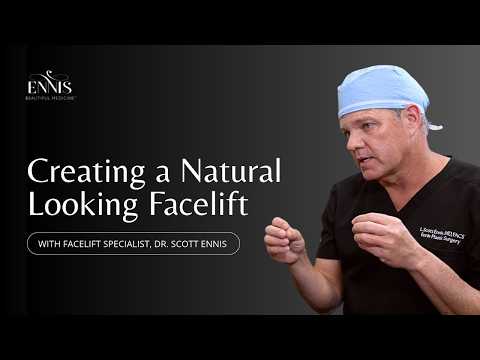 Watch Dr. Ennis explain
Dr. Ennis discusses natural-looking facelift results. This general facelift film complements the deep plane guide above.
Keep learning,
at your own pace.
Explore another perspective on facial surgery, revisit the procedure guide, or make a note of questions for your consultation.
Visit the Learning Room
Your consultation
Room for
your questions.
Discuss what concerns you, review relevant patient photographs, and understand how a recommendation relates to your face and neck. Bring your health history and your questions about options, expectations and recovery.
Traveling to Boca Raton from elsewhere in Florida? Ennis Plastic Surgery offers in-office and virtual consultation requests. Ask which format is appropriate before making travel plans, and discuss the visits and support your care may require.
Explore consultation optionsQuestions worth asking
Understand more.
Decide in your own time.
Deep plane facelift questions to explore before a personal consultation.
What is a deep plane facelift?
It is a facelift approach that works beneath the SMAS, a supporting layer under the skin, to reposition deeper facial tissues. Your consultation should explain which areas the proposed operation would address and how it relates to your goals.
How is it different from a traditional facelift?
“Traditional facelift” is not one standardized operation. Facelift techniques differ in how the skin and supporting layers are treated. Ask your surgeon to explain the actual technique proposed, rather than relying on the procedure name alone.
Who may be a candidate?
Your concerns, health, healing risks and expectations all matter. An assessment is needed to decide whether a deep plane approach, another treatment, or no surgery is appropriate. Interest in a facelift by itself does not establish candidacy.
Does a deep plane facelift address the neck?
Facelift planning may include the face and neck, but the scope varies. Ask Dr. Ennis whether your recommended plan includes neck treatment or whether a separate neck procedure would be discussed.
Where are the incisions, and will there be scars?
The practice’s published guide describes incisions around the ear. The position and extent depend on the surgical plan. Surgery leaves scars; ask where yours would be placed and what factors may affect healing and visibility.
What anesthesia is used?
The existing Ennis Plastic Surgery procedure guide describes general anesthesia. Confirm the anesthesia plan and the clinician responsible for it during your consultation, including considerations related to your health.
When can I return to work or exercise?
There is no single schedule appropriate for every patient. Your operation, accompanying procedures, healing and type of work or exercise affect the plan. Ask for specific guidance and follow your surgeon’s clearance.
How long can facelift results last?
A facelift does not stop aging. How results change over time varies; photographs of another person cannot establish your own longevity. Discuss realistic expectations and ongoing care with Dr. Ennis.
Can a facelift be combined with other procedures?
Yes, complementary procedures may be considered for different concerns. The practice’s guide discusses brow lift, buccal fat pad removal and chemical peel. Ask what each proposed procedure is intended to address, and whether combining them is appropriate for you.
What risks should I understand?
Discuss bleeding, infection, anesthesia complications, changes in sensation, facial nerve injury, healing problems, scarring and unsatisfactory results, among other possible risks. Ask which risks are most relevant to your health and proposed operation. The guide’s risks section provides a starting point for that conversation.
How do I choose the best deep plane facelift surgeon in Florida?
Verify relevant board certification and training, and ask about experience with deep plane facelift surgery. Review actual patient photographs and ask which procedures contributed to the results. The surgeon should explain why the approach fits your anatomy and goals, discuss alternatives, risks and limitations, and outline the surgical facility, anesthesia and postoperative care. A title or ranking alone does not establish the right fit.
Can I start with a virtual consultation?
Ennis Plastic Surgery offers in-office and virtual consultation requests. Ask the practice which format is appropriate for your needs and what information to provide. Submitting a request does not confirm an appointment.
Further reading
Explore patient education from the American Society of Plastic Surgeons and Dr. Ennis’s background. This guide provides general information; a consultation addresses your individual circumstances.
Ennis Plastic Surgery · Beautiful Medicine™
A considered plan starts
with a conversation.
Or call 561-405-9020