

Ennis Plastic Surgery · Boca Raton
Facelift in Florida
Facial rejuvenation & neck contour
Explore facelift approaches with Dr. L. Scott Ennis, with your features, facial balance and natural expression guiding the conversation.
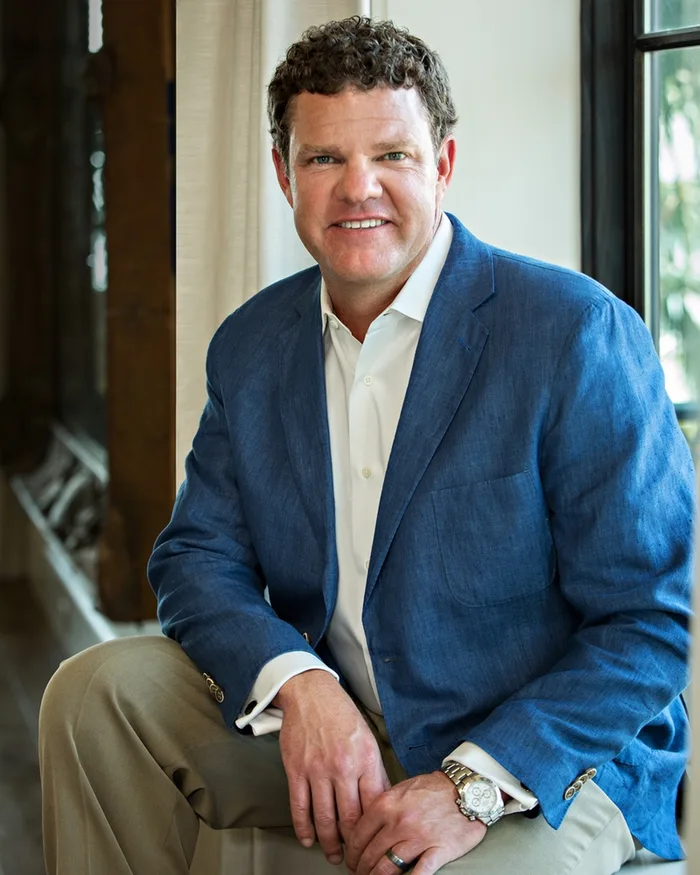
Procedure at a glance
- Surgeon
- Dr. L. Scott Ennis, MD, FACS
- Location
- Boca Raton, Florida
- Approach
- Facelift surgery
- Consultation
- In-office or virtual
Dr. Ennis explains
A lift that considers the whole face.
A facelift, or rhytidectomy, addresses selected changes in facial support, skin and contour. Understanding whether your concern involves the cheeks, jawline, neck or several areas helps clarify which approach may be appropriate.
Dr. Ennis explains the relationship between the supporting tissues and the skin, and why planning involves more than tightening what is visible.
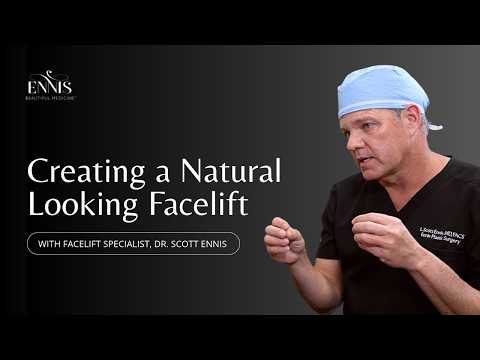 Watch Dr. Ennis explain
In the words of our patients
The experience.
In their own words.
Patients of Dr. Ennis · Individual experiences and results vary.
 Watch patient experience
Patient of Dr. Ennis
One patient’s experience; individual healing and results vary.
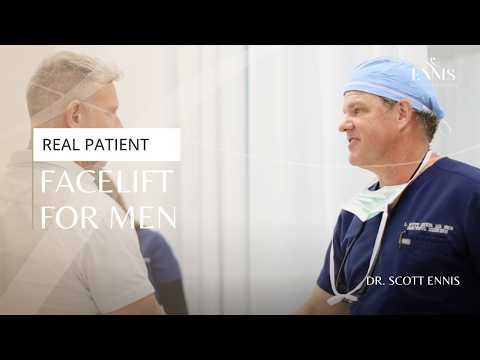 Watch patient experience
Patient of Dr. Ennis
A patient describes his experience with Dr. Ennis.
Actual patient results
Facelift.
Before & after.
Actual patients of Dr. Scott Ennis
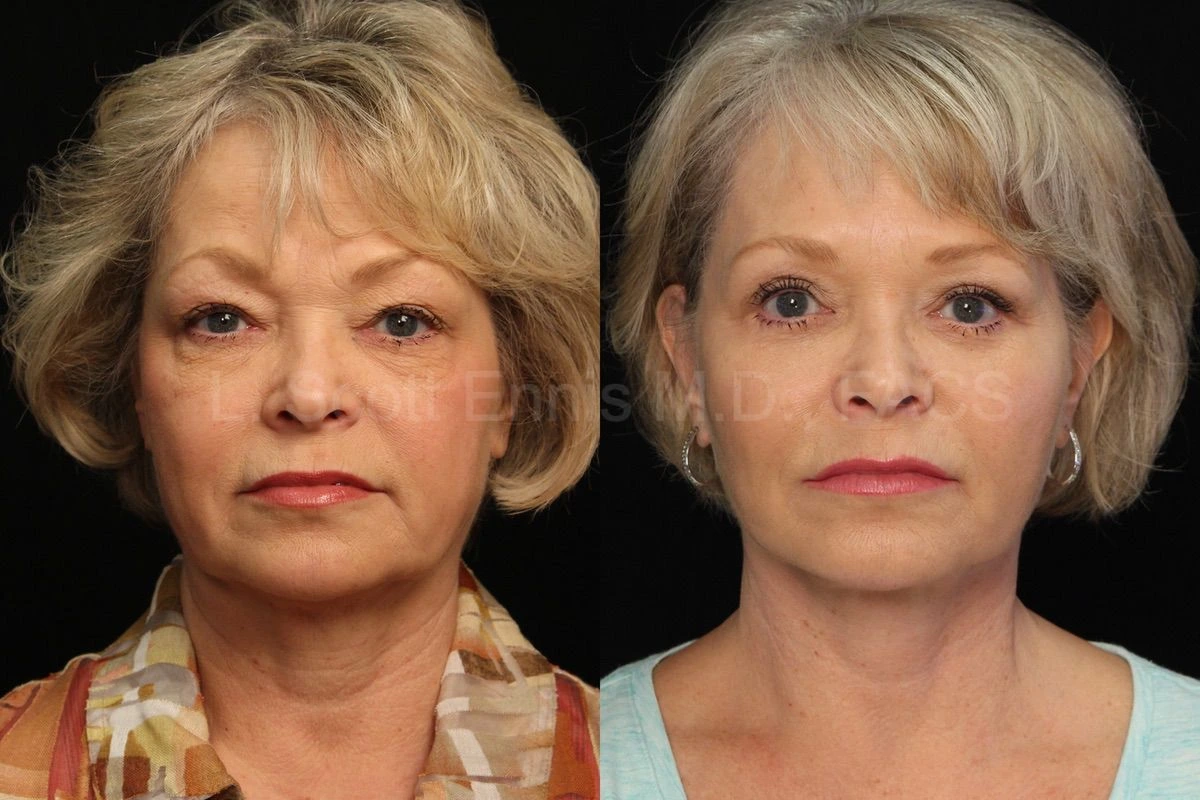
Deep plane facelift & lower eyelid surgery
A combined procedure: deep plane facelift and lower blepharoplasty.
Actual patient of Dr. Scott Ennis
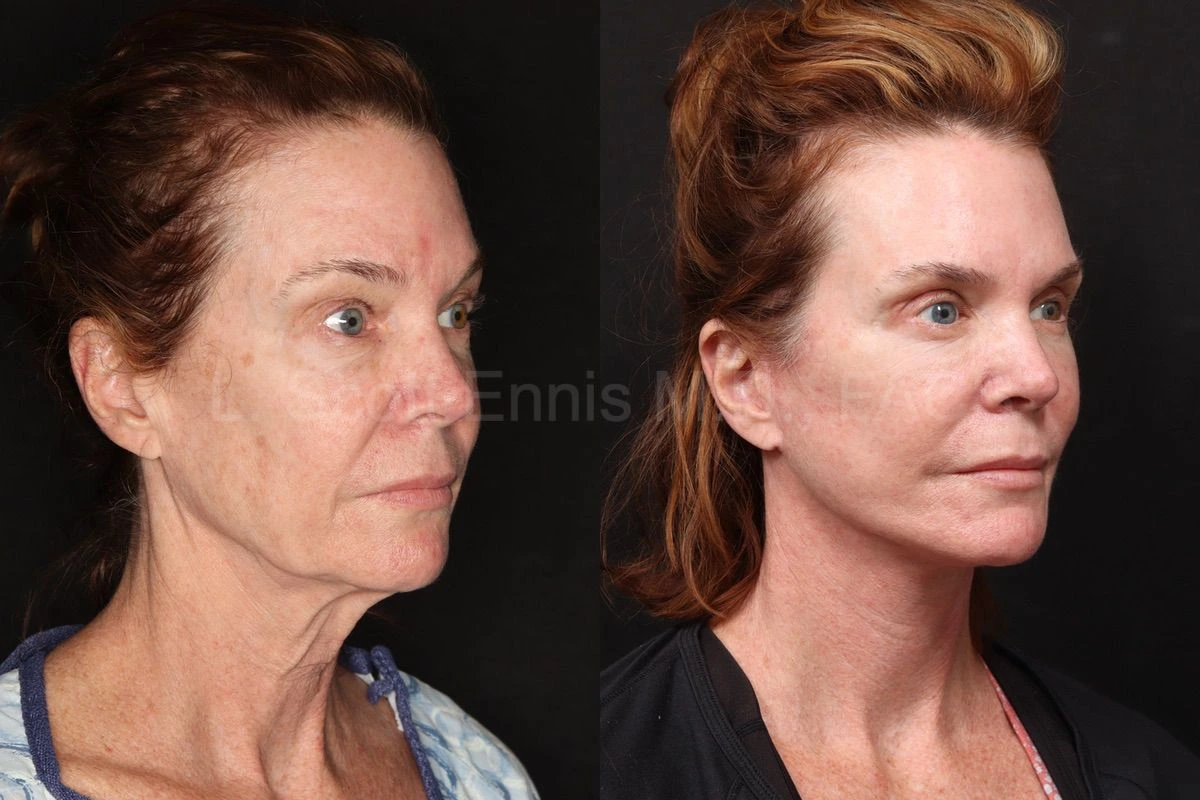
Deep plane facelift & complementary procedures
Combined with buccal fat pad removal, lower blepharoplasty and an Obagi Blue Peel.
Actual patient of Dr. Scott Ennis
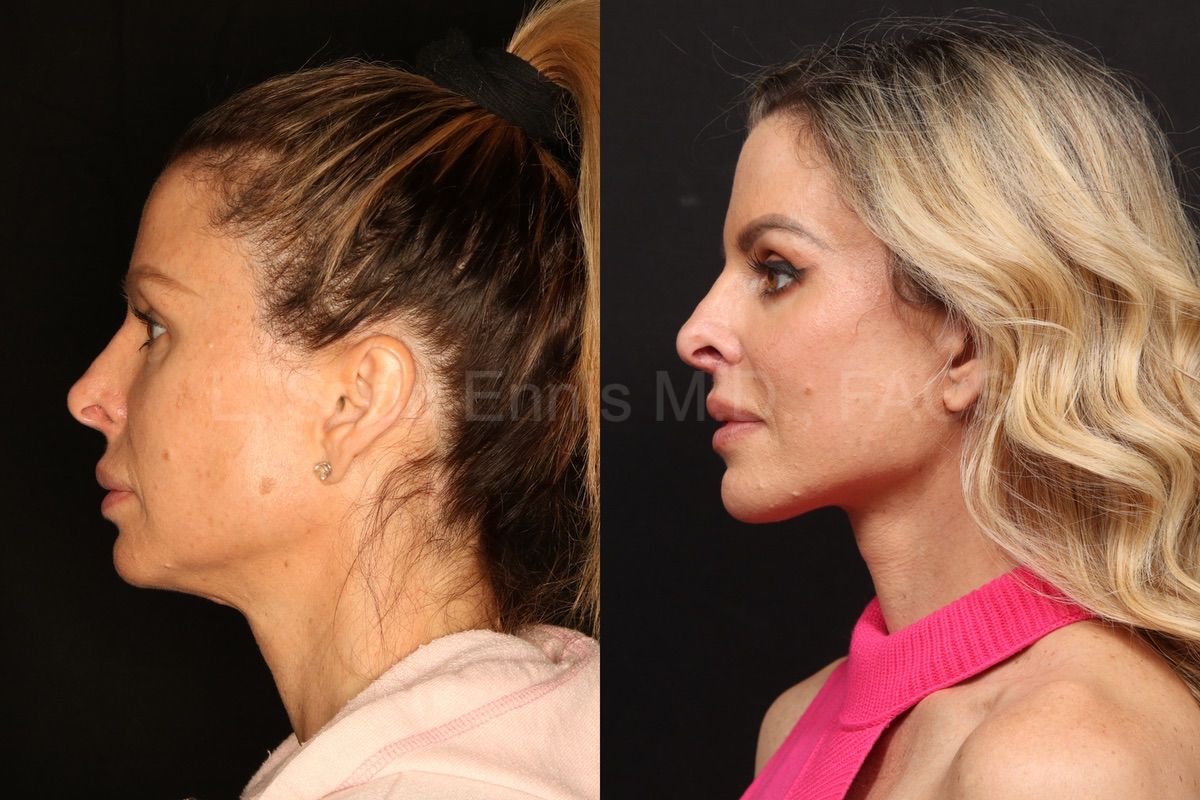
Deep plane facelift & lip lift
Combined with lower blepharoplasty, upper lip lift, nasal filler and an Obagi Blue Peel.
Actual patient of Dr. Scott Ennis
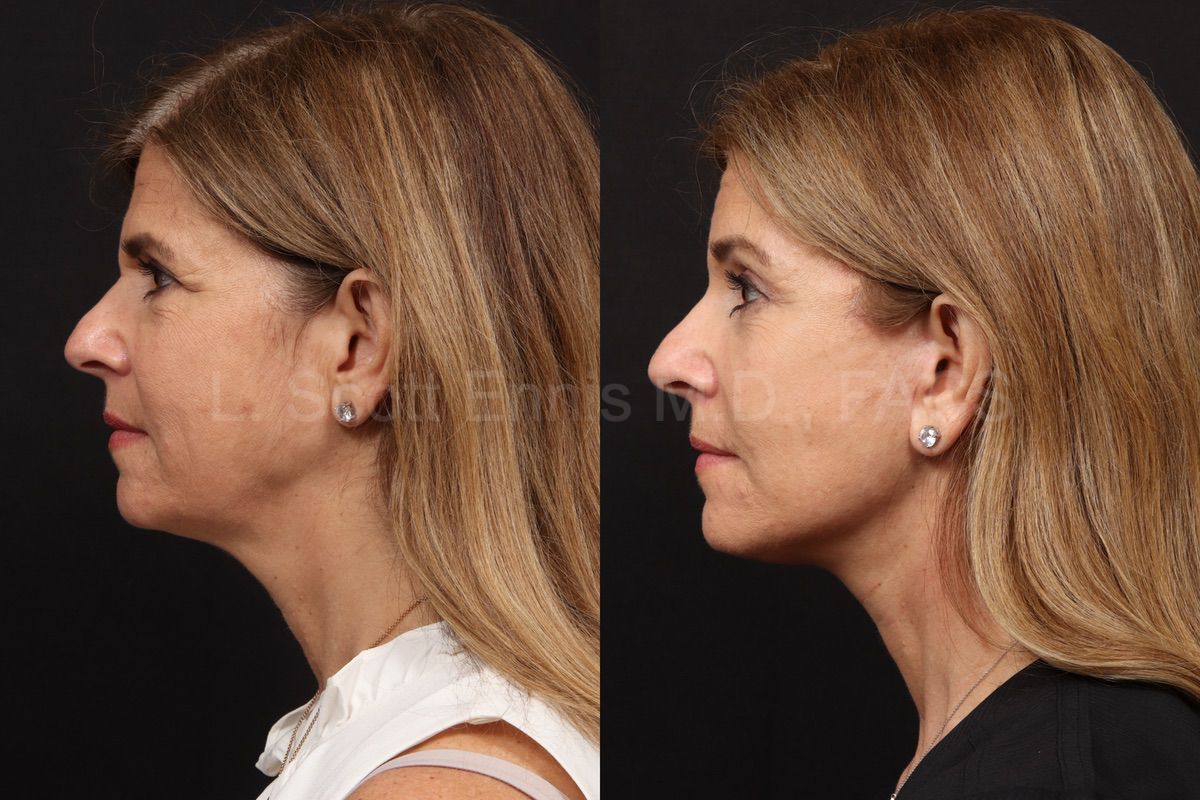
Deep plane facelift & brow lift
Combined with endoscopic brow lift, buccal fat pad removal and an Obagi Blue Peel.
Actual patient of Dr. Scott Ennis


A personal decision
Is a facelift right for you?
You may notice jowling, deeper folds, a change in cheek position or looseness around the neck. A consultation distinguishes these structural concerns from skin texture, isolated fat deposits and volume loss, which may need different approaches.
Health, smoking, previous facial procedures and expectations affect candidacy. A facelift does not change every feature or stop aging; the plan should explain both the change being proposed and what will remain.
Your treatment options
Understand the approach.
Consider the differences.
A facelift considers more than the skin
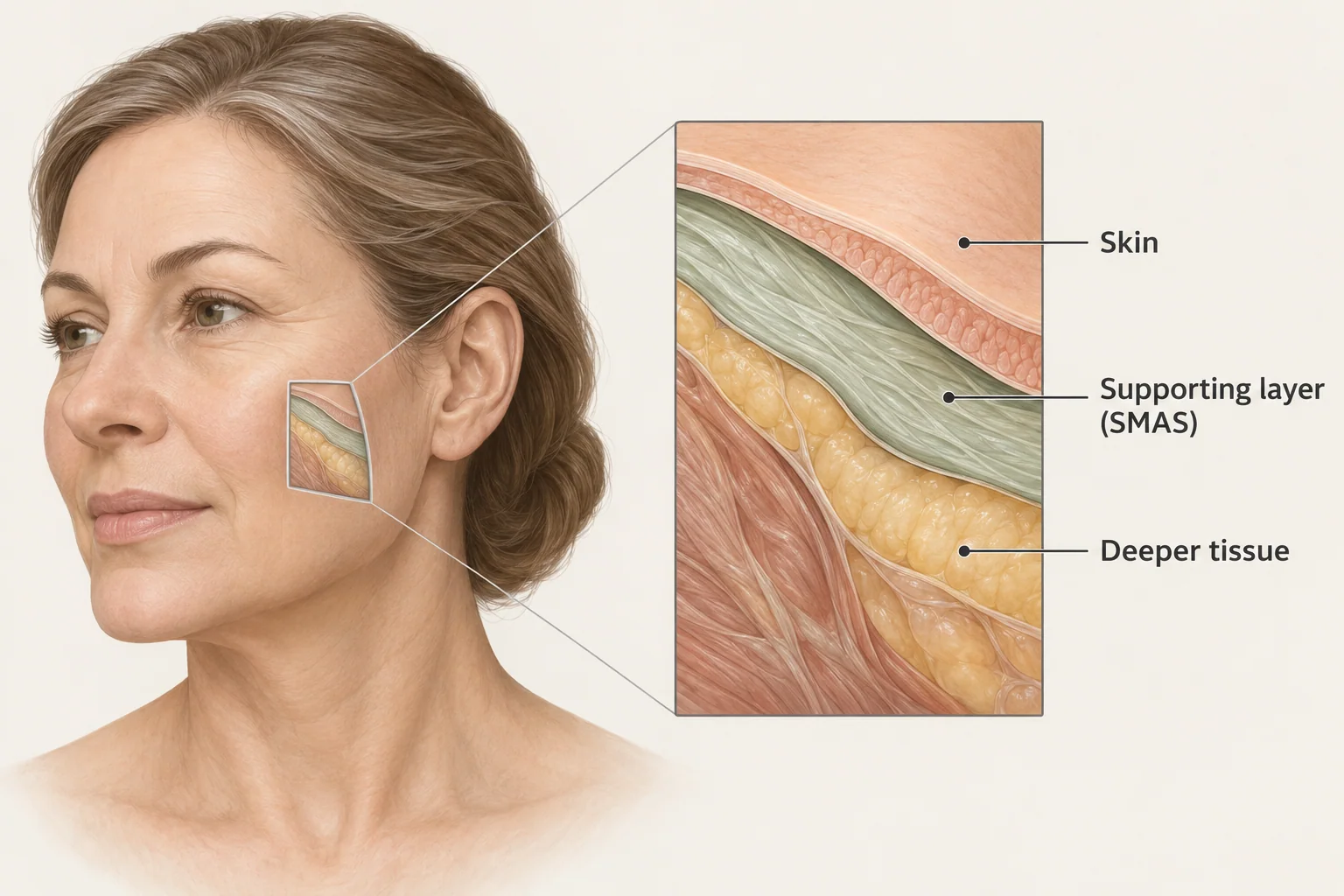
Facelift planning considers skin, the supporting facial layer and the deeper tissues. The technique depends on facial anatomy and any previous surgery.
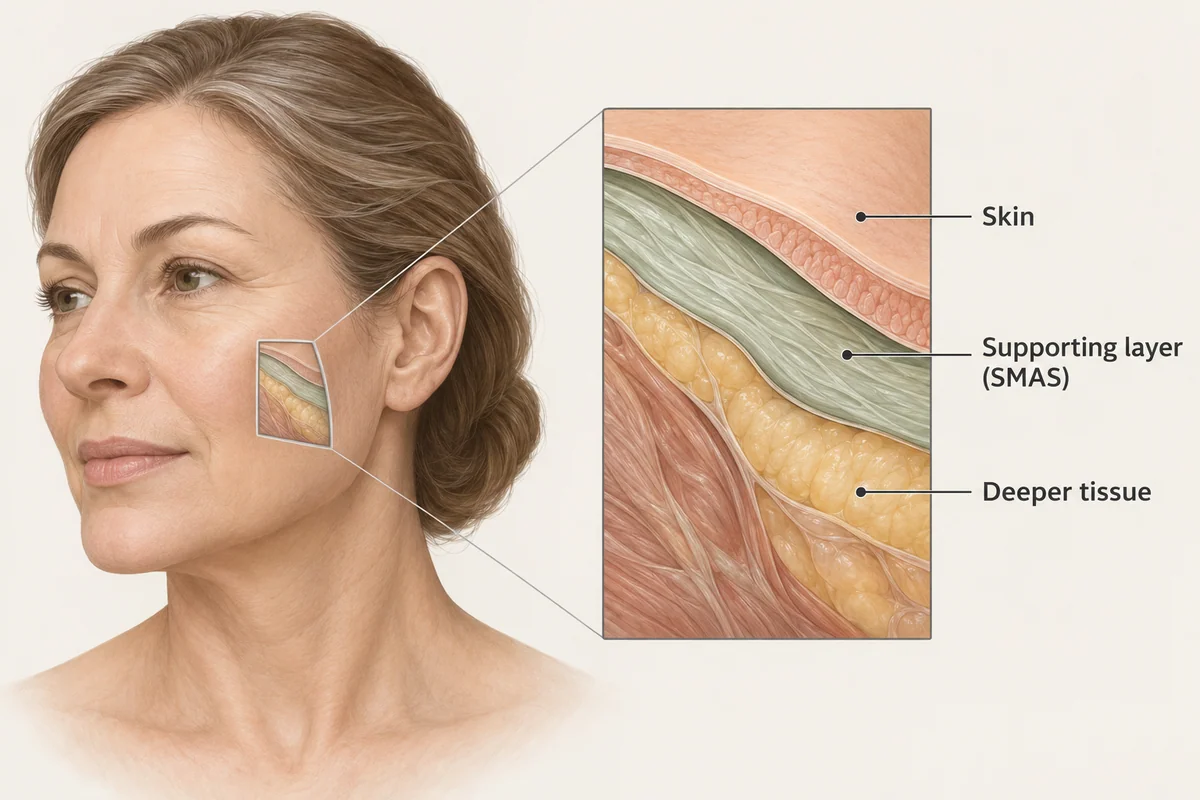
Skin and the supporting layer are separate structures.
The chosen approach determines which tissues are repositioned.
Traditional facelift
A traditional facelift may use incisions beginning near the temples, continuing around the ears and ending in the lower scalp. The surgeon adjusts selected supporting tissues, redistributes or removes fat when appropriate, and redrapes the skin. Excess skin is removed before the incisions are closed.
The term describes a range of operations rather than a single technique. Ask which tissue layers will be treated, how the neck is included and why the proposed extent of surgery fits your anatomy.
Deep plane facelift
A deep plane facelift works beneath the SMAS, a supporting layer below the skin, to release and reposition deeper facial tissues. It may be discussed when cheek descent, folds and jawline changes need a coordinated approach.
Dr. Ennis’s dedicated guide includes patient stories, photographs and a fuller discussion of technique, recovery and limitations. The name of an operation alone does not determine whether it is suitable for you.
Mini or short-scar facelift
Mini facelift, short-scar facelift and S-lift describe more limited approaches, often focused on the lower face. Their scope varies, and shorter incisions do not necessarily mean that only the skin is treated.
A limited operation may suit selected early changes, but it cannot be assumed to replace a more extensive lift. Compare the expected correction, scar placement, recovery and durability of the actual procedures recommended.
Middle or midface lift
A midface lift focuses on the cheeks and their relationship to the lower eyelids. Access and support techniques vary; the published guide discusses temple or intraoral access in selected approaches.
Cheek descent, hollowing and excess lower-eyelid skin are distinct concerns. Lower blepharoplasty, fat transfer or another volume treatment may be discussed alongside or instead of lifting.
The neck, brow & eyelids
A neck lift addresses neck tissues and contour; a brow lift addresses brow position and selected forehead concerns. Neither should be assumed to be included automatically in a facelift.
Dr. Ennis’s guide discusses temporal and endoscopic brow approaches, eyelid surgery and selected resurfacing procedures as complementary options. Each addition should have its own purpose, risk discussion and recovery plan.
Meet your surgeon
Dr. L. Scott Ennis,
MD, FACS.
Board-certified plastic surgeon.
Founder of Ennis Plastic Surgery.
At Ennis Plastic Surgery, the discussion begins with your features and the change you hope to make. Dr. Ennis’s background in art informs his interest in proportion and individual facial character.
Meet Dr. Ennis & explore his credentials Meet the Surgeon
A closer look
Your facelift guide.
Why the face changes
Facial aging reflects changes in skin elasticity, facial volume and the supporting tissues beneath the skin. Gravity, inherited anatomy, sun exposure, smoking and weight changes all influence what a person notices.
Thinking about the upper, middle and lower thirds of the face can make the discussion clearer. The brow and upper eyelids differ from the lower eyelids and cheeks, while the jawline and neck form another related area. A treatment plan should account for those relationships without assuming every area needs surgery.
Support beneath the skin
Skin is only one part of facial contour. A facelift may address deeper tissues so that the skin can be redraped over a changed foundation. The degree and direction of repositioning should respect facial character and the hairline.
Ask how the surgeon plans to treat the SMAS and neck tissues and where tension will be placed. A natural-looking result is a goal, not a guarantee, and no single technique is best for every face.
When a nonsurgical approach may fit
Injectables, skin treatments and resurfacing can address selected lines, texture changes or volume concerns. They do not reproduce every effect of surgery, and adding volume is different from repositioning descended tissues.
A cheek augmentation discussion may include fillers or fat transfer when volume is the main issue. Chemical peels or laser treatments may be considered for the skin surface. Discuss treatment combinations carefully because they change recovery and risk.
Results over time
Early photographs can be affected by swelling, bruising and temporary asymmetry. Incisions and tissue position continue to settle beyond the initial return to daily life. Keep follow-up visits and ask when the team expects a meaningful assessment of your progress.
A facelift does not prevent future aging. If concerns persist after a previous operation, a facelift revision assessment begins with the original procedure, the stage of healing and the underlying cause of the concern.
Learn with Dr. Ennis
More detail.
At your own pace.
 Watch the discussion
 Watch the discussion
 Watch the discussion
 Watch the discussion
From consultation to recovery
Planning & the day of surgery
Your consultation includes facial and neck assessment, medical history, prior procedures and a discussion of photographs and realistic goals. Ask about anesthesia, the facility, incision placement, surgical duration and any combined procedures.
After surgery, dressings and sometimes small drains may be used. Arrange transport and help at home. The team provides instructions for incision care, head elevation, medicines and follow-up; coordinate any changes to prescribed medicines with your treating clinician.

Recovery has stages.
Expect a period of swelling, bruising, tightness and discomfort. The length of the initial recovery depends on the operation and any accompanying procedures. A midface or combined facial operation may require several weeks before you feel ready for social activities.
Work, driving and exercise have different demands. Ask for a personal schedule rather than relying on another patient’s timeline, and follow the team’s instructions about dressings, drains, sleeping position and activity. Contact the team promptly about symptoms they identify as concerning.
Understand the risks.
Risks include bleeding or hematoma, infection, anesthesia complications, poor healing, scarring, hair changes, altered sensation, facial nerve injury, asymmetry and an unsatisfactory result or need for revision. The consultation should address your individual risks and the plan for aftercare.
This is not a complete list. Ask which risks apply to your health and treatment, how concerns would be managed and whom to contact during recovery.
Read ASPS risk informationMaking an informed choice
Choosing the Best Facelift Surgeon in Florida for You
Look for relevant qualifications, a clear explanation of your options and a plan for care before and after treatment.
Dr. L. Scott Ennis, MD, FACS
View credentials & recognition
Board certification
American Board of Plastic Surgery
Listed in Dr. Ennis’s Florida Department of Health profile.
View physician recordSelected recognition · 2024
The Boca Raton Observer
Featured in the publisher’s Castle Connolly Top Docs 2024 special advertising section.
View publisher’s profileVerify the qualifications.
Confirm the surgeon’s relevant board certification and training. Ask about their experience with facial surgery and with the specific technique being recommended.
Look at comparable cases.
Review actual patients with concerns similar to yours. Ask which procedures were performed together and when the photographs were taken. A single image cannot predict your own result.
Understand the recommendation.
Ask the surgeon to connect the proposed approach to your anatomy and goals. A useful consultation should explain alternatives, limitations and the option of postponing treatment.
Ask about safety and aftercare.
Discuss the surgical facility, anesthesia team, risks and follow-up arrangements. Know whom to contact after surgery and how concerns would be assessed.
Questions worth asking
Learn more.
Decide in your own time.
Facelift questions to bring to your consultation.
What is the difference between a facelift and a neck lift?
A facelift focuses on selected facial changes and may include neck work. A neck lift specifically addresses neck contour. Ask which areas are included in your proposed operation; the terms are related but not interchangeable.
Will a facelift also lift my eyebrows?
Not automatically. A brow lift treats a different area and may be discussed separately if brow descent is a concern.
Is a mini facelift easier to recover from?
A more limited procedure may involve a different recovery, but the term alone does not establish downtime. Tissue work, combined treatments and your healing all matter.
How much does a facelift cost?
Request an individualized estimate covering the planned operation, anesthesia, facility and follow-up. The extent of surgery and accompanying procedures affect cost.
Further reading
Explore the American Society of Plastic Surgeons’ procedure guidance and risks and safety information. This guide provides general information; your consultation addresses your individual circumstances.
Keep exploring
Consider the whole picture.

Ennis Plastic Surgery · Beautiful Medicine™
A considered plan starts
with a conversation.
Or call 561-405-9020