

Ennis Plastic Surgery · Boca Raton
Facelift Revision in Florida
Secondary facial surgery & individual planning
Revisit a previous facelift with Dr. L. Scott Ennis through a careful assessment of your concerns, healing and facial anatomy.
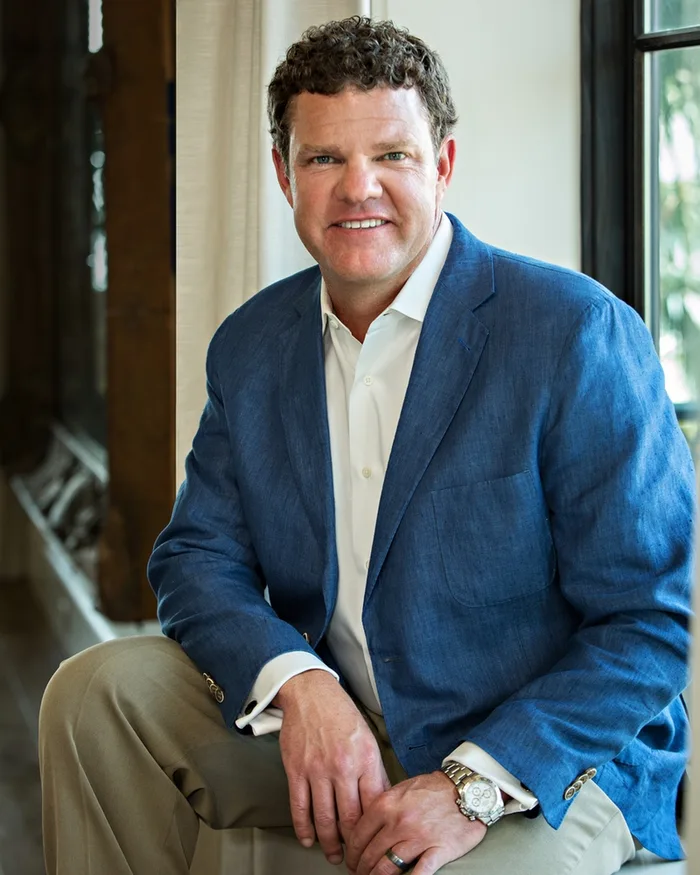
Procedure at a glance
- Surgeon
- Dr. L. Scott Ennis, MD, FACS
- Location
- Boca Raton, Florida
- Approach
- Facelift revision
- Consultation
- In-office or virtual
Dr. Ennis explains
Start with what happened. And what matters now.
A facelift revision is a second operation considered after a previous facelift. It may address a specific concern with the earlier result or changes that have developed with time.
An examination, the original surgical records and the stage of healing help distinguish a problem that may benefit from revision from one that needs more time or a different treatment.
 Watch Dr. Ennis explain
Dr. Ennis discusses facelift incision considerations; revision requires an individual assessment.
Actual patient results
Facelift Revision.
Before & after.
Actual patients of Dr. Scott Ennis
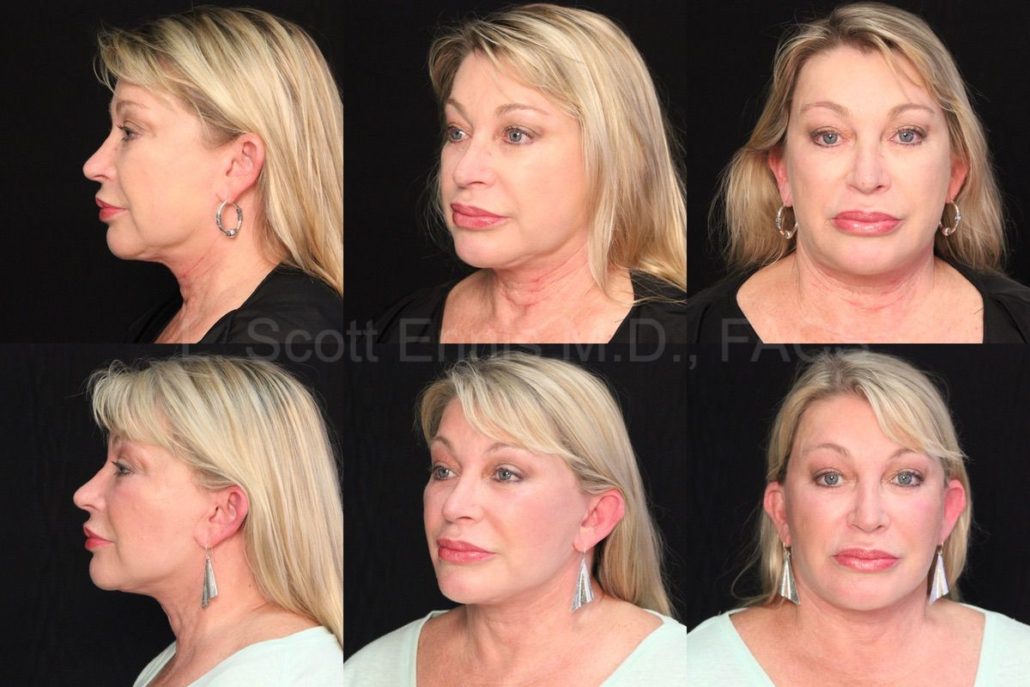
Secondary facelift & buccal fat removal
Case 50479: a combined secondary facelift and buccal fat pad removal.
Actual patient of Dr. Scott Ennis


A personal decision
Is another operation appropriate?
You may be concerned about persistent laxity, uneven contour, scarring or a part of the face that was not addressed by the first operation. Identifying the cause is more useful than assuming another lift is always the answer.
Healing, health, prior incision placement and the tissues available for correction matter. A consultation should explain what can reasonably improve, what may remain and whether waiting is preferable.
Your treatment options
Understand the approach.
Consider the differences.
Previous surgery changes the planning
Revision facelift planning considers the skin, supporting tissues and existing scar tissue. The layer diagram provides orientation; your previous operation influences what can be safely adjusted.
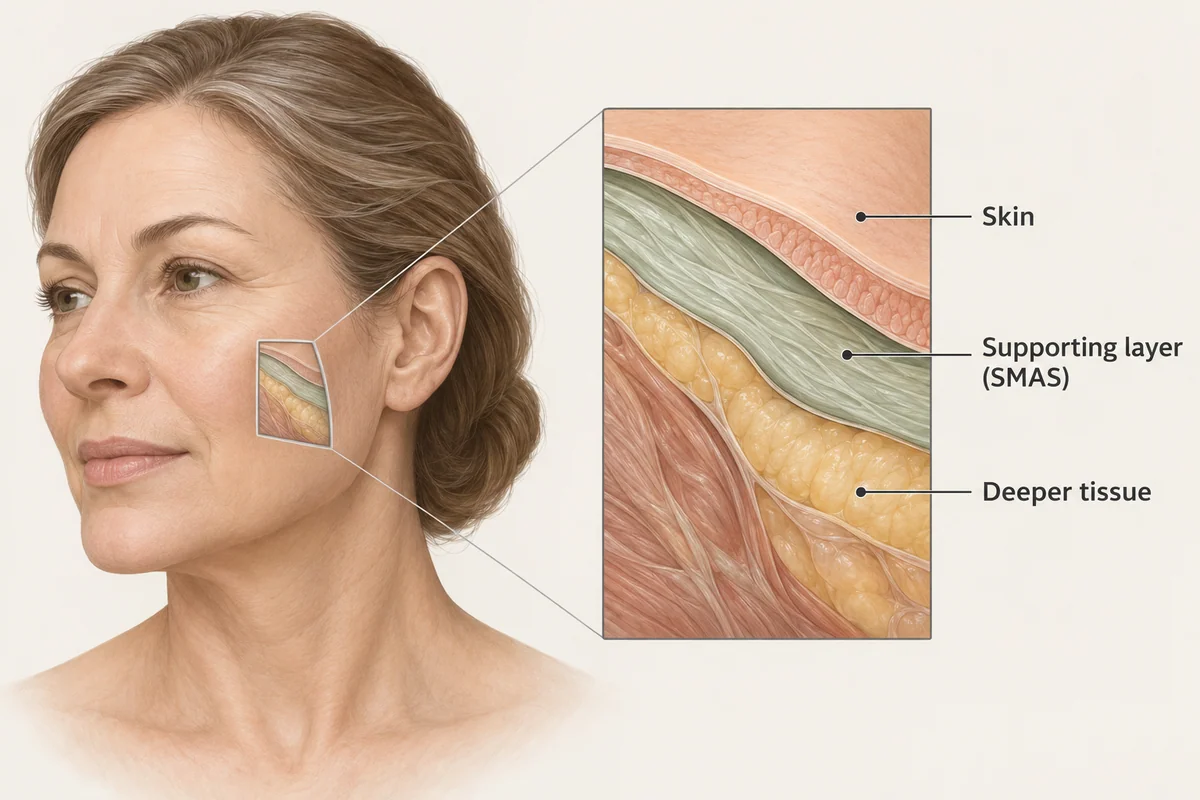
Skin and the supporting layer are separate structures.
The chosen approach determines which tissues are repositioned.
Revision of the lower face & neck
A secondary operation may adjust selected facial or neck tissues, skin and scars. Previous surgery changes the starting point, so the access, support and degree of correction must be planned around your existing anatomy.
The plan may involve a facelift, neck lift or a more limited correction. Ask why the proposed approach fits the concern and how the earlier surgery affects risk.
Midface support & volume
A lower facelift does not necessarily address every change in the cheek and lower-eyelid region. Persistent midface concerns may involve tissue position, lost volume or both.
The existing guide discusses midface lifting, including cable-lift approaches, and nonsurgical volume treatment. Cheek augmentation and facial fat transfer provide further context; none is interchangeable with a revision facelift.
Fillers for selected concerns
The live guide discusses Juvéderm Voluma, a hyaluronic-acid filler, for selected cheek-volume concerns. Injection treatment can be relatively brief, but its suitability depends on the tissues and the cause of the concern.
Published durations of up to two years are not a promise for an individual patient. Fillers have their own risks and do not correct every scar, contour problem or degree of laxity.
Brow & eyelid considerations
A brow lift or eyelid surgery may be discussed when the upper face contributes to the appearance you notice. These procedures address separate structures from a lower facelift.
A balanced assessment should explain whether an additional treatment would help and whether it belongs in the same operation or a separate stage.
Meet your surgeon
Dr. L. Scott Ennis,
MD, FACS.
Board-certified plastic surgeon.
Founder of Ennis Plastic Surgery.
At Ennis Plastic Surgery, the discussion begins with your features and the change you hope to make. Dr. Ennis’s background in art informs his interest in proportion and individual facial character.
Meet Dr. Ennis & explore his credentials Meet the Surgeon
A closer look
Your facelift revision guide.
Review the first operation
Bring previous operative records, photographs and a timeline of healing if available. Describe your original goals, what changed and the specific issues you would like assessed.
Avoid judging a final result during early swelling. The appropriate timing for revision depends on tissue recovery and the nature of the problem.
Set a specific goal
Revision planning should connect each proposed step to an identifiable concern. Discuss scar position, facial balance and the likely limitations, rather than expecting a complete reset of the face.
A second operation can involve altered tissue planes and scar tissue. Ask about the surgeon’s experience with comparable cases, follow-up arrangements and how an unexpected finding would be handled.
Learn with Dr. Ennis
More detail.
At your own pace.
 Watch the discussion
 Watch the discussion
General facelift recovery education; a revision plan may differ.
From consultation to recovery
An individualized surgical plan
Your plan may involve existing scars, additional incisions or a different route of access, depending on the correction. The extent of surgery determines the anesthesia and operating time.
Arrange postoperative support and discuss any previous healing problems. Ask whether dressings or drains will be needed, how medicines should be managed and when follow-up will occur.

Allow time for another recovery.
Swelling, bruising and discomfort can follow revision surgery. The practice’s guide describes recovery over several weeks, but a limited scar adjustment and a more extensive secondary lift have different demands.
Follow the instructions for your own operation, including head position, incision care and return to exercise. Prior surgery and combined procedures can affect healing; maintain contact with the team as tissues settle.
Understand the risks.
Revision surgery may involve bleeding, infection, nerve injury, changes in sensation, poor healing, persistent asymmetry, scarring and further surgery. Scar tissue from earlier procedures can make planning and dissection more complex. Discuss the limits of correction alongside these risks.
This is not a complete list. Ask which risks apply to your health and treatment, how concerns would be managed and whom to contact during recovery.
Read ASPS risk informationMaking an informed choice
Choosing the Best Facelift Revision Surgeon in Florida for You
Look for relevant qualifications, a clear explanation of your options and a plan for care before and after treatment.
Dr. L. Scott Ennis, MD, FACS
View credentials & recognition
Board certification
American Board of Plastic Surgery
Listed in Dr. Ennis’s Florida Department of Health profile.
View physician recordSelected recognition · 2024
The Boca Raton Observer
Featured in the publisher’s Castle Connolly Top Docs 2024 special advertising section.
View publisher’s profileVerify the qualifications.
Confirm the surgeon’s relevant board certification and training. Ask about their experience with facial surgery and with the specific technique being recommended.
Look at comparable cases.
Review actual patients with concerns similar to yours. Ask which procedures were performed together and when the photographs were taken. A single image cannot predict your own result.
Understand the recommendation.
Ask the surgeon to connect the proposed approach to your anatomy and goals. A useful consultation should explain alternatives, limitations and the option of postponing treatment.
Ask about safety and aftercare.
Discuss the surgical facility, anesthesia team, risks and follow-up arrangements. Know whom to contact after surgery and how concerns would be assessed.
Questions worth asking
Learn more.
Decide in your own time.
Facelift Revision questions to bring to your consultation.
How soon can I have a facelift revision?
There is no single interval appropriate for every concern. The team needs to assess healing and the cause of the issue before recommending another operation.
Does every concern after a facelift require surgery?
No. Some changes improve with healing, while selected volume concerns may be discussed in relation to nonsurgical treatment. Other concerns may not be fully correctable.
Can a revision address the cheeks?
It depends on whether the concern involves tissue descent, volume or another structure. A midface approach or volume treatment may be discussed separately.
What should I bring to a revision consultation?
Previous surgical records, before-and-after photographs, a medical history and a clear description of the concern help the surgeon understand your starting point.
Further reading
Explore the American Society of Plastic Surgeons’ procedure guidance and risks and safety information. This guide provides general information; your consultation addresses your individual circumstances.
Keep exploring
Consider the whole picture.

Ennis Plastic Surgery · Beautiful Medicine™
A considered plan starts
with a conversation.
Or call 561-405-9020