
Ennis Plastic Surgery · Beautiful Medicine™
Breast Augmentation in Florida
Explore breast augmentation shaped around your proportions, with an underarm approach that avoids an incision on the breast.
View Actual Patient ResultsDr. L. Scott Ennis · Credentials & practice recognition

International Society of Aesthetic Plastic Surgery

American Society for Aesthetic Plastic Surgery

Castle Connolly

American Institute of Plastic Surgeons

National Academy of Plastic Surgeons

Palm Beach Illustrated

America’s Most Honored Doctors
RealSelf
Dr. Ennis · Your consultation
Breast augmentation. Considered for you.
Breast size and shape can change with age, pregnancy, breastfeeding, weight changes and heredity. Breast augmentation uses implants to add volume or restore fullness, with the plan shaped around your anatomy and the result you hope to achieve.
At Ennis Plastic Surgery, Dr. Ennis discusses saline and silicone implants, incision choices and pocket placement as connected decisions. His endoscopic underarm technique places the incision in an underarm crease rather than on the breast.
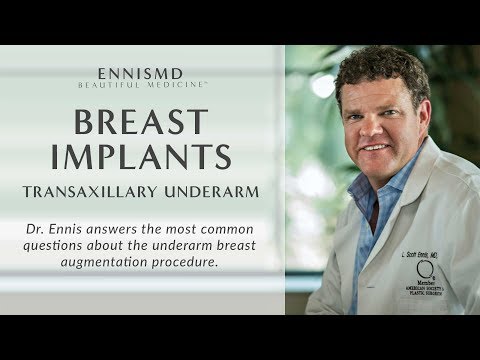 Watch Dr. Ennis explain
Patients of Dr. Ennis
Personal experiences.
In their own words.
Individual experiences and results vary.
 Watch patient experience
Patient of Dr. Ennis
Breast augmentation with Dr. Ennis.
 Watch patient experience
Patient of Dr. Ennis
Her breast augmentation experience.
 Watch patient experience
Patients of Dr. Ennis
Patients share their perspectives on breast augmentation.
Actual patients of Dr. Scott Ennis
Breast augmentation.
Before & after.
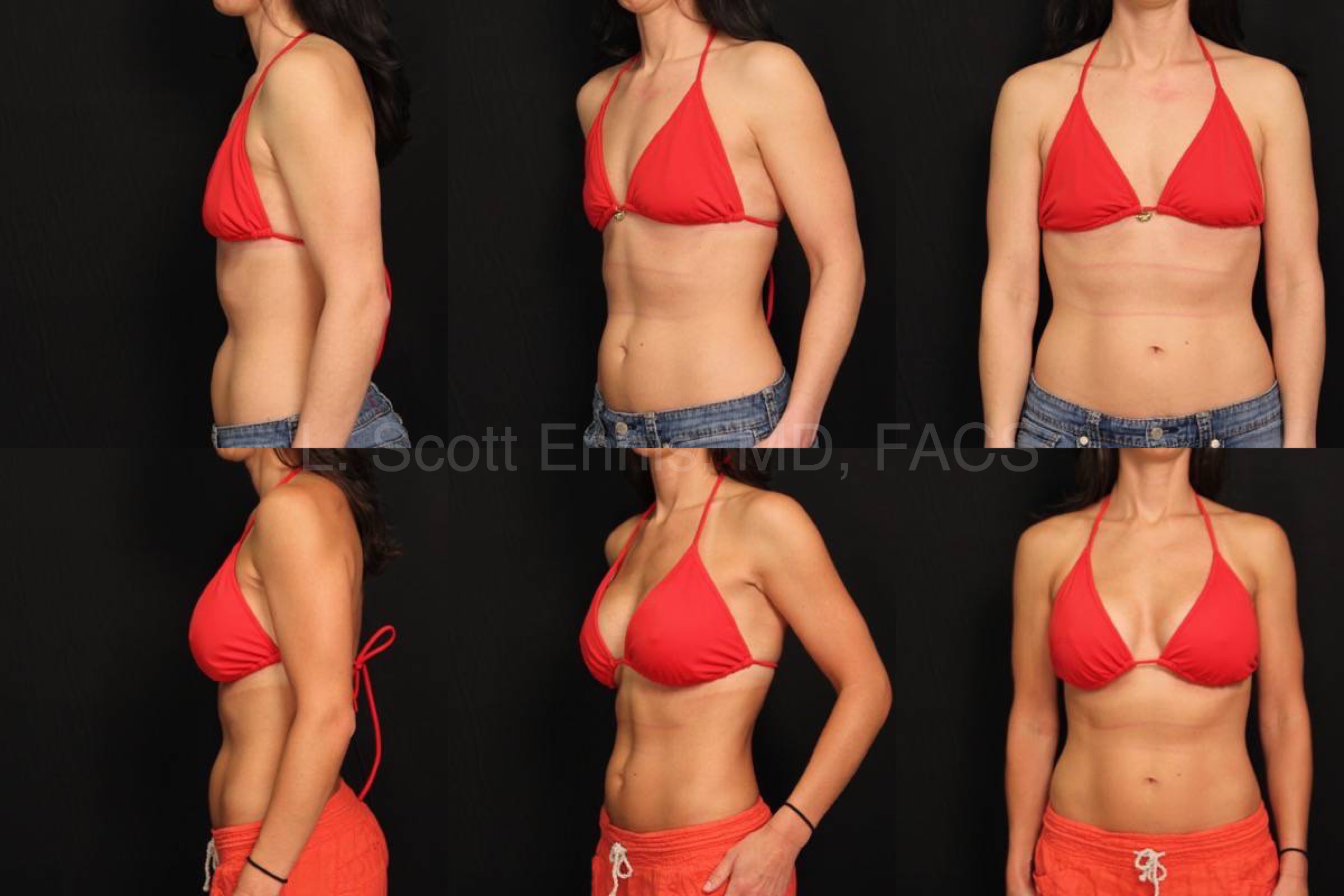
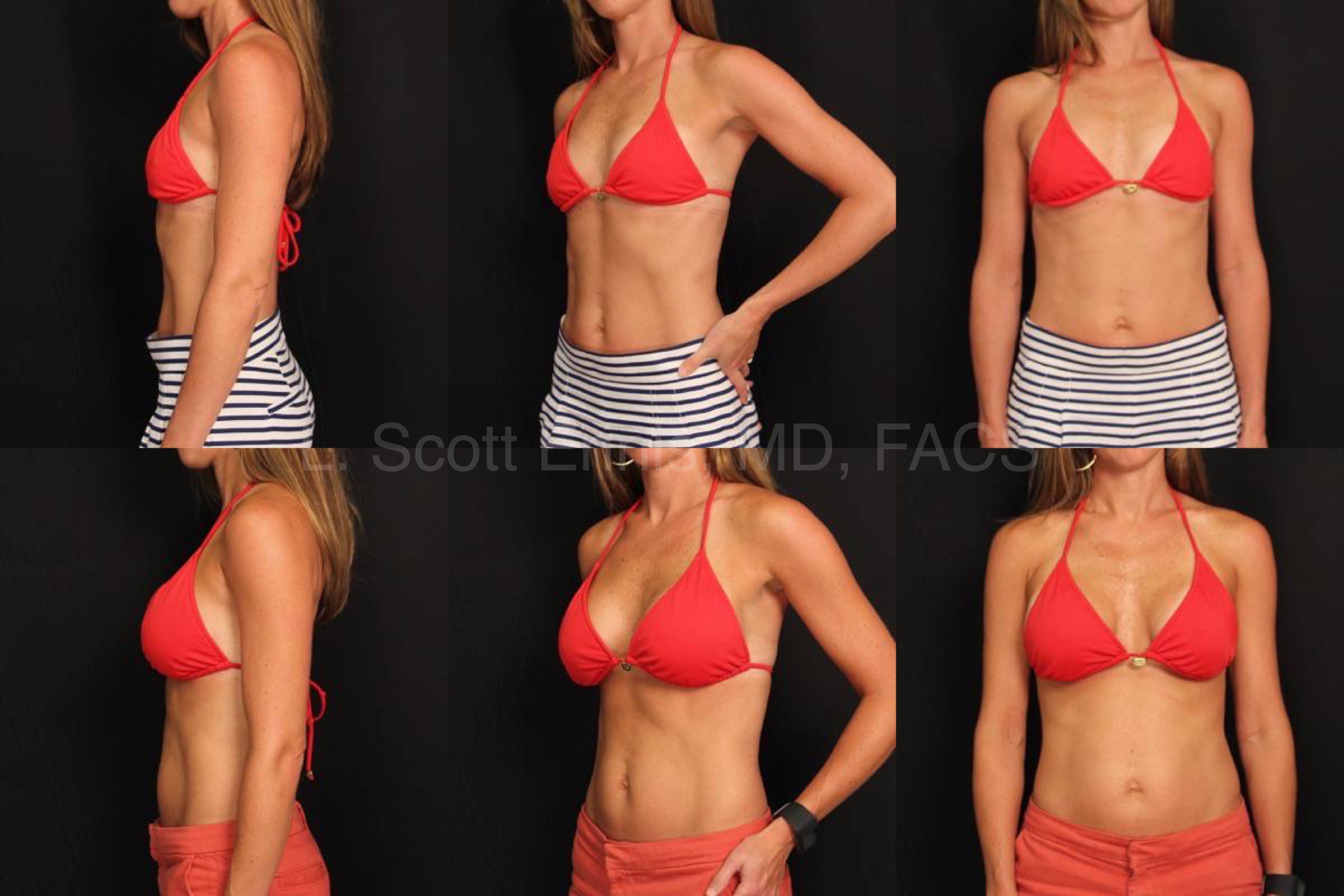
Breast augmentation · Case 01
Sientra implants. Original patient comparison from Dr. Ennis’s breast augmentation gallery.
Actual patient of Dr. Scott Ennis
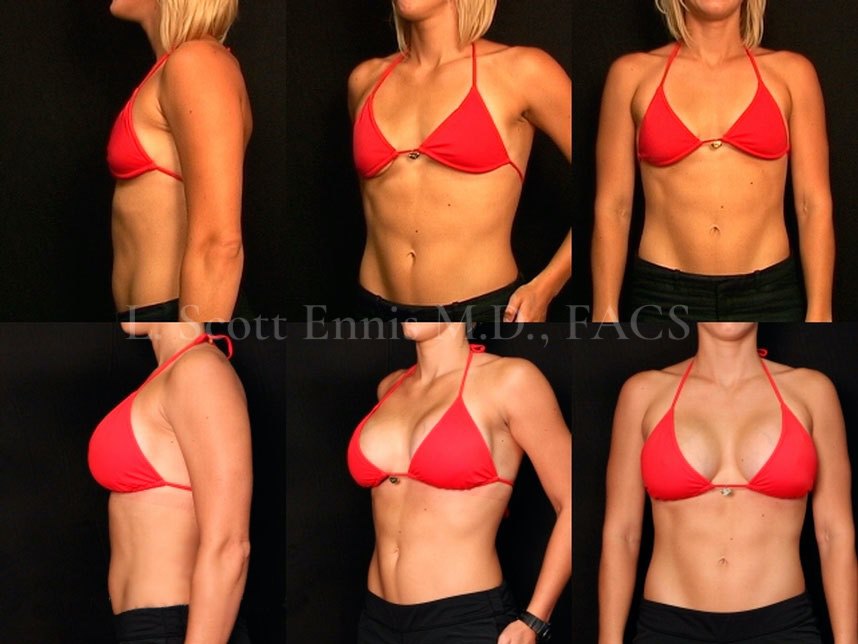
Breast augmentation · Case 02
Mentor implants. Original patient comparison from Dr. Ennis’s breast augmentation gallery.
Actual patient of Dr. Scott Ennis
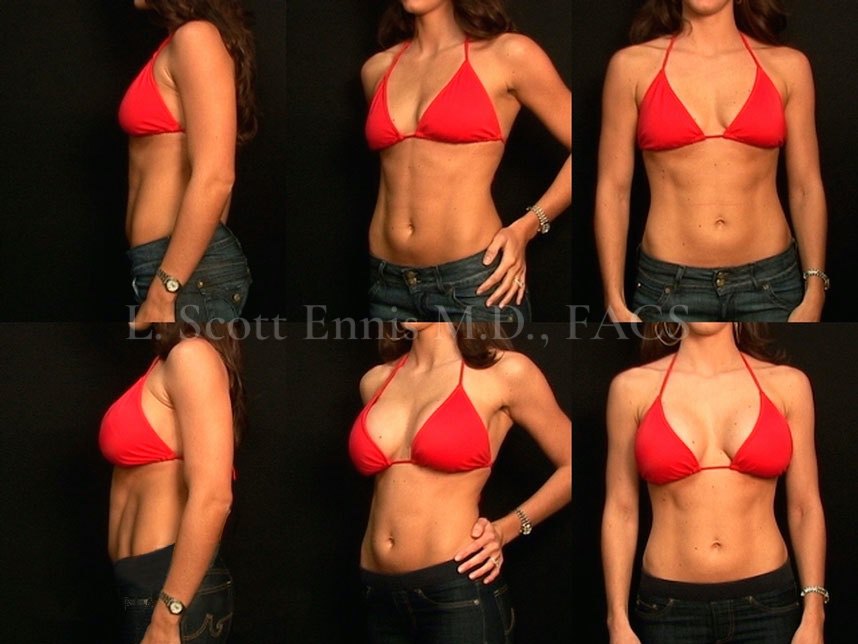
Breast augmentation · Case 03
Silicone implants. Original patient comparison from Dr. Ennis’s breast augmentation gallery.
Actual patient of Dr. Scott Ennis
Breast augmentation · Case 04
Silicone implants. Original patient comparison from Dr. Ennis’s breast augmentation gallery.
Actual patient of Dr. Scott Ennis

A closer look
When might augmentation be right for you?
Patients may seek more volume, a different projection, improved proportion or restored fullness after pregnancy and weight loss. Discuss asymmetry, breast shape and the amount of change you want, rather than cup size alone.
The FDA’s augmentation indications generally start at age 18 for saline implants and age 22 for silicone gel implants. Health, breast development, tissue quality, future pregnancy and realistic expectations also matter.
Pregnancy and breastfeeding can change the result. Allow the breasts to stabilize after breastfeeding, often around six months, and discuss appropriate timing during your consultation.
Implants do not reliably correct significant sagging or a low nipple position. A breast lift with Dr. Riccelli may address those concerns, with or without added volume. Breast reconstruction after mastectomy is a separate treatment discussion.

A closer look
A consultation built around your proportions.
Bring the changes you hope to make, your medical and surgical history, questions about implants and any photographs that help explain your preferences. Dr. Ennis evaluates chest width, existing breast tissue, skin elasticity, nipple position and symmetry before discussing a plan.
The practice uses Vectra 3D imaging to help patients compare sizes and proportions. A simulation supports the conversation; it cannot predict or guarantee a surgical result. Discuss how implant volume, base width and projection fit your frame and activity level.
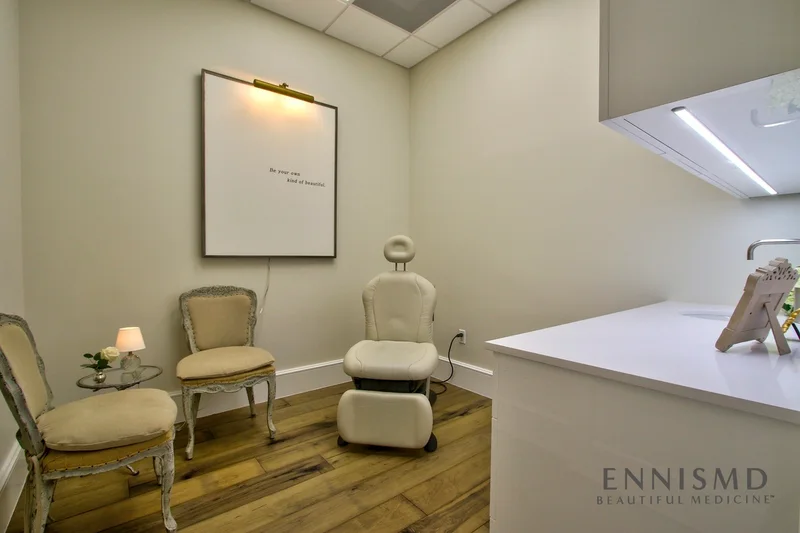
In-office and virtual consultations are available with Dr. Ennis. An in-person assessment is part of final surgical planning. If you are traveling to Boca Raton, allow time for examination, surgery, recovery support and follow-up.
A closer look
Where will the incision be?
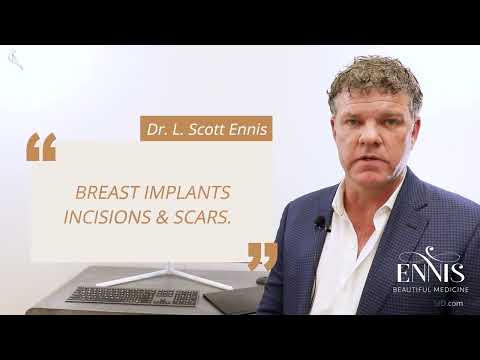
The incision is chosen around your anatomy, implant and any accompanying procedure. Each route leaves a scar, although its location differs.
Transaxillary — in the underarm
An incision in an underarm crease gives access to the implant pocket using endoscopic guidance. It avoids an incision on the breast itself, while leaving an underarm scar. Read the transaxillary breast augmentation guide.
Inframammary — in the breast fold
An incision at the fold beneath the breast provides direct access to the pocket. The scar follows the crease; how visible it is depends on anatomy, healing and position.
Periareolar — at the areola border
An incision along the lower border of the areola gives access through breast tissue. The scar lies where pigmented areola skin meets surrounding skin. Discuss sensation, breastfeeding and scar tradeoffs for each approach.
 Watch film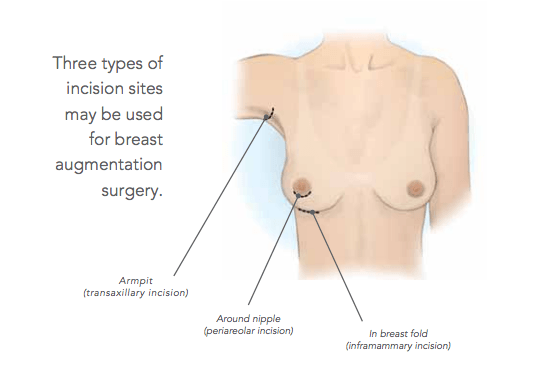
A closer look
Size, shape and a proportionate result.
Implant volume is measured in cubic centimeters, but the same volume can look different on different frames. Chest width, existing tissue, height, breast base and skin capacity influence what is appropriate.
Profile describes projection from the chest. A narrower implant with greater projection can have a similar volume to a wider implant with less projection. Dr. Ennis discusses those dimensions alongside your preferred look.
Active lifestyles, exercise and clothing preferences belong in the conversation. Bring photographs to communicate preferences, then use examination and sizing to understand what is realistic for your own body.
The goal is an informed choice you feel comfortable with. Larger implants are not automatically a better match, and a size simulation is not a guarantee.
 Watch film
A closer look
Over or under the muscle.
The implant pocket may be above the chest muscle, beneath the muscle or in a planned combination of tissue planes. Incision location and pocket location are separate decisions.
Above the muscle — subglandular
The implant sits beneath breast tissue and above the pectoral muscle. Existing tissue must provide enough coverage; thin tissue can make implant edges or rippling more apparent. Discuss recovery, tissue support and imaging implications.
Below the muscle — submuscular
Muscle coverage can be useful when natural breast tissue is limited. Dr. Ennis often considers this approach when additional tissue coverage is useful. It also has tradeoffs, including recovery discomfort and possible movement of the implant when the muscle contracts.
The pocket should suit your anatomy and implant, rather than be chosen from a general promise of a safer or longer-lasting result. Preservé with Motiva implants has its own tissue and pocket-planning considerations.
 Watch film
Learn with Dr. Ennis
Breast implant types.
Filling, gel cohesiveness, profile and surface describe different aspects of an implant. Dr. Ennis explains how these choices influence the discussion about feel, shape and projection.
 Watch Dr. Ennis explain
 Watch Dr. Ennis explain
Mentor & Motiva
Breast implant brands.
At Ennis Plastic Surgery, Dr. Ennis discusses Mentor and Motiva implant options. Compare the specific device, filling, base width, projection, surface and fit for your tissues, as well as its patient labeling.
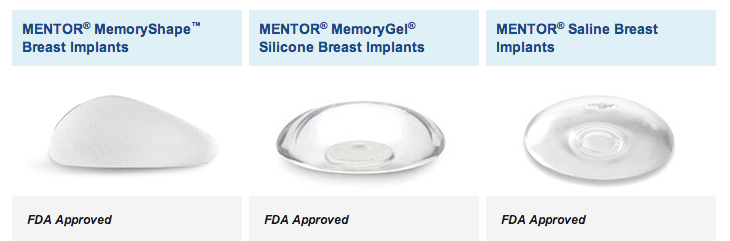
Mentor breast implants
- MemoryShape®: a form-stable silicone gel design with a shaped, teardrop contour. Discuss its surface and the specific risks of textured implants with Dr. Ennis.
- MemoryGel®: silicone gel-filled implants with a range of sizes and profiles for different breast dimensions and desired projection.
- Mentor saline implants: a silicone outer shell filled with sterile saltwater. The filling, feel and behavior after rupture differ from silicone gel implants.
The product illustration shows different Mentor designs. Dr. Ennis will discuss which specific models are currently available and appropriate for your anatomy.
Motiva breast implants
Motiva SmoothSilk Round and SmoothSilk Round Ergonomix silicone gel-filled implants are listed in FDA-approved patient labeling. The Ergonomix design is intended to respond to movement and posture. Ask Dr. Ennis which device and placement are appropriate for your goals.
Motiva’s ProgressiveGel technologies, SmoothSilk surface and BlueSeal barrier are characteristics of particular implant designs. Review the exact model’s current labeling with Dr. Ennis, including its benefits, limitations and risks.
Explore the full breast implant guide for shape, profile, size, material and long-term care, or learn about Preservé breast augmentation.
A closer look
What happens during surgery?
Breast augmentation generally takes approximately one to two hours under general anesthesia; combined procedures may take longer. The anesthesia and surgical plans are discussed before your operation.
Plan and prepare the pocket
Dr. Ennis makes the planned incision and creates a pocket suited to the implant and your tissues. With an endoscopic underarm approach, a small camera helps him view the internal anatomy while working through the incision.
Place and assess the implant
The implant is placed in the pocket. Position, size, shape and symmetry are assessed, including how the breast contour relates to the chest and the other breast.
Close and support
The incisions are closed carefully, and dressings or a support bra are applied as appropriate. You receive instructions for incision care, activity, medicines and follow-up before returning home.
A closer look
Your breast augmentation recovery.
Breasts may be supported with dressings and a surgical bra after surgery. Temporary drains are used when the surgical plan calls for them. Many patients return home the same day after a period of observation, with an adult to drive them and help during early recovery.
Swelling, tightness, bruising and discomfort are expected initially. Dr. Ennis will explain medicines, incision care, sleeping position, support garments and follow-up. Breast shape and softness continue to change as swelling resolves and the tissues settle.
Many patients plan approximately one week before returning to desk work or light household activity, with four to six weeks before strenuous exercise or heavy lifting. These are planning estimates, not a fixed clearance date; your procedure, work demands and healing determine the schedule.
Contact the surgical team promptly about an unexpected change or worsening symptoms, and follow your discharge instructions. Keep follow-up appointments even when you feel well.
 Watch film
A closer look
Implants require long-term care.
Breast implants are not lifetime devices. Complications can require further surgery, and the chance of needing another operation increases over time. Review the specific implant’s patient labeling and decision checklist with Dr. Ennis before deciding.
Risks include infection, bleeding, scarring, pain, changes in sensation, asymmetry, implant displacement, rippling, rupture and capsular contracture. Surgery can affect breastfeeding and breast imaging. Discuss your health, medicines, smoking, future pregnancy and previous breast procedures during consultation.
The FDA identifies breast implant-associated anaplastic large cell lymphoma (BIA-ALCL), which occurs more often with textured implants, and reports of other cancers in the capsule. Some patients report systemic symptoms such as fatigue and joint pain. Ask how these considerations relate to your implant choice and follow-up plan.
Silicone implant rupture can be silent. Follow the implant labeling and your clinician’s imaging recommendations; routine breast cancer screening remains a separate responsibility. New swelling, pain, firmness, a lump or a change in shape warrants medical evaluation.
Read the FDA’s breast implant safety information and approved patient labeling. You can also learn about breast implant screening with Dr. Riccelli.
Meet your surgeon
Dr. L. Scott Ennis, MD, FACS.
Dr. Ennis is a board-certified plastic surgeon and the founder of Ennis Plastic Surgery in Boca Raton. Breast augmentation through the underarm is a particular focus of his practice.
His approach considers proportion, the patient’s existing anatomy and the changes she wants to make. Discuss experience with your proposed procedure, review comparable patient photographs and ask about the limitations of each option.
Meet Dr. Ennis and review his credentials and selected recognition.
 Meet the Surgeon
Questions worth asking
Breast augmentation questions.
Does underarm augmentation leave a scar?
Yes. Transaxillary augmentation leaves a scar in an underarm crease while avoiding an incision on the breast itself. Scar visibility varies with healing.
Do I need a breast lift as well?
Implants add volume; a lift addresses skin excess and nipple position. Your examination determines whether one procedure or a combined plan fits your anatomy.
Can I have a virtual consultation?
Dr. Ennis offers in-office and virtual consultations. An in-person assessment is needed for final surgical planning.
How do I choose the best breast augmentation surgeon for me?
Review relevant board certification, experience with the proposed approach, comparable patient photographs and the plan for follow-up. Ask about risks and alternatives, including choosing not to have surgery.
Keep exploring
Understand your options.