
Rhinoplasty can change the shape, size or projection of the nose and may address selected structural problems affecting breathing. The plan should reflect your own features and goals, including any history of injury or previous surgery.
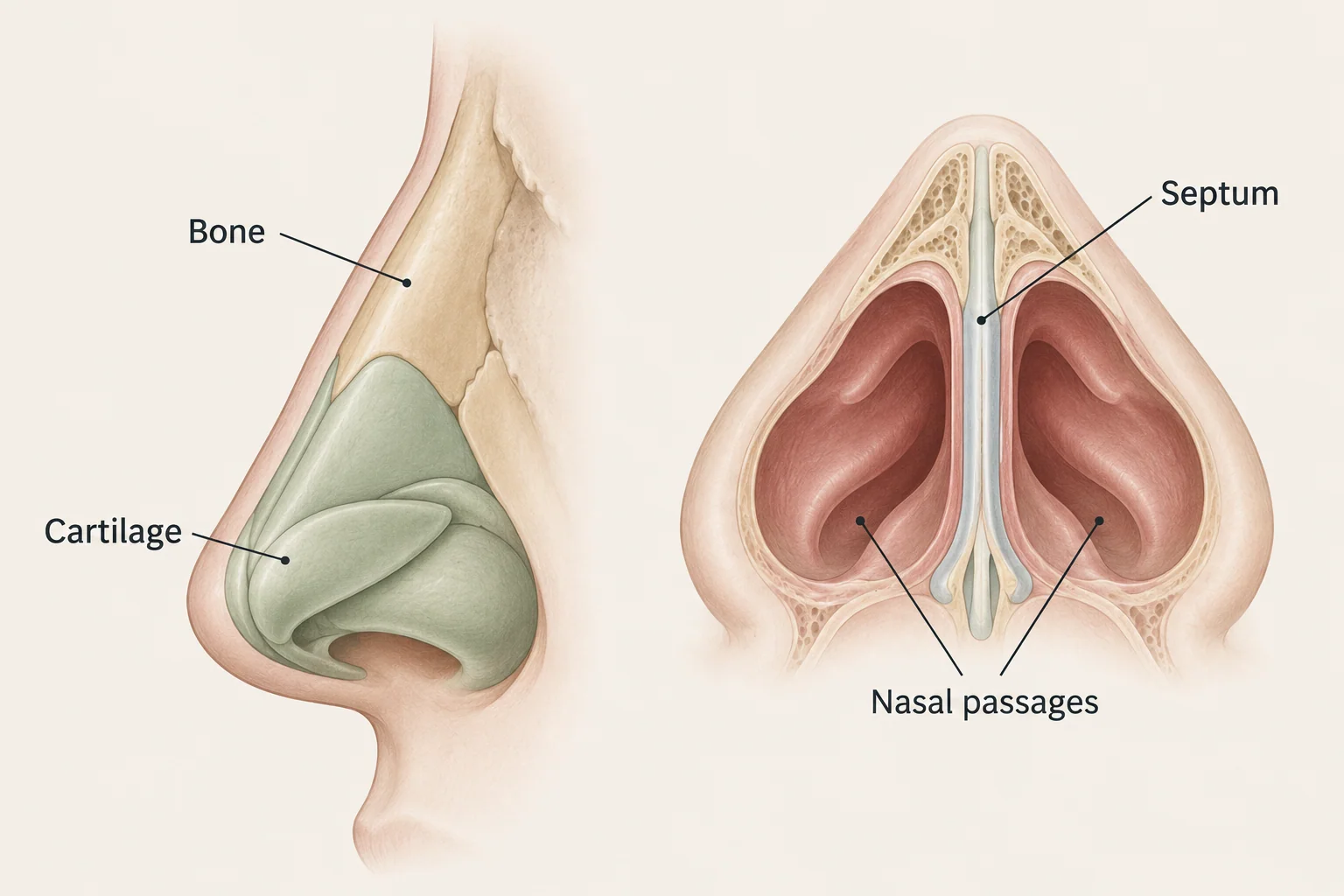
Shape and breathing involve different nasal structures
Rhinoplasty considers the external framework. Septal surgery addresses the internal wall between the nasal passages.
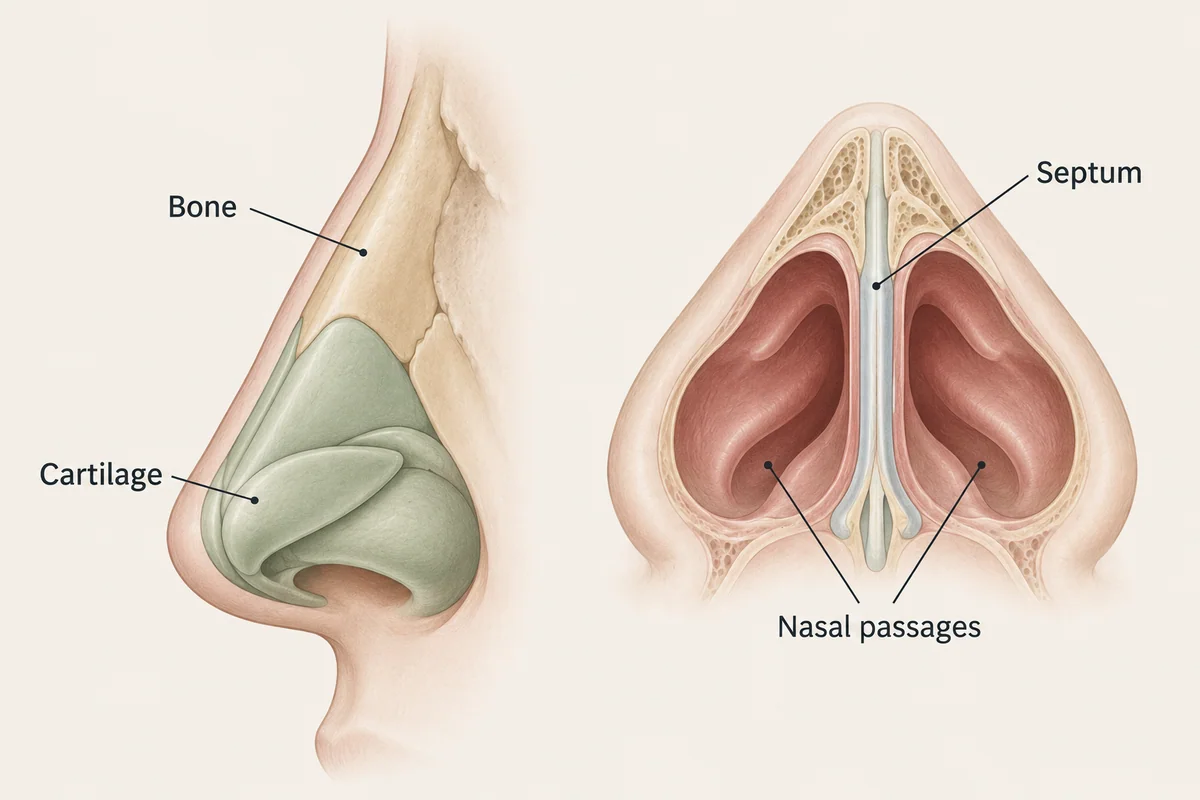
Bone and cartilage support the outer shape.
The septum separates the two nasal passages.
There is no single ideal male nose. Dr. Ennis considers the bridge, tip, nostrils, skin and balance with the rest of the face. Bring examples to explain your preferences, while recognizing that another person’s anatomy cannot be reproduced.
To learn about rhinoplasty, please read the guide below or contact Ennis Plastic Surgery at 561-405-9020 to book a consultation or ask us a question. We are here to help you get the look you desire.
Previous injuries, changes with age and inherited anatomy can affect both appearance and function. Nose and chin proportions are assessed together, but a chin procedure is a separate decision with its own risks and alternatives.
Male Rhinoplasty surgery can address:
- Overall nose size
- Width of the nose bridge
- Profile of the nose, correcting for bumps or ridges
- Size and position of the nasal tip
- Wide or large nostrils
Rhinoplasty Procedure
There are two conventional approaches to rhinoplasty surgery including the open and closed techniques.
Open rhinoplasty
During the open rhinoplasty procedure, the surgeon creates an incision in the shape of an inverted V along the middle column of the patient’s nose, in the area that separates the two nostrils. There are many other incisions made on the inside of the nostrils as well. After the incisions are made, the skin is lifted and the cartilage, bone, and tissue beneath is sculpted and reshaped to produce the desired result. Implants, grafts, and/or cartilage may be used to build up tissue to achieve the desired nose shape. The skin is then re-draped over the newly shaped area and secured with very fine stitches. A nose splint is placed to support the newly shaped nose as it heals.
Closed rhinoplasty
A closed rhinoplasty is performed in the same manner as an open rhinoplasty, except for that it is done without any incisions made on the exterior of the nose. All of the incisions are made inside of the nose, which means that there is no visible scarring. Depending on the extent of the rhinoplasty and the desired outcomes, the surgeon will determine which type of approach is best suited for each individual’s needs.
What to Expect
The rhinoplasty procedure begins with an individualized consultation with Dr. Ennis, in which the patient expresses their desired outcomes and appearance. During this consultation, Dr. Ennis will review the surgical procedure, answer all questions, and aim to fully understand the patient’s desired results. Having a thorough discussion with the utilization of pictures will help ensure that the surgeon skillfully corrects the desired nasal shape.
The surgical procedure for the rhinoplasty does not differ between male or female patients. However, the aesthetic goals and outcomes vary between men and women. For male patients, the surgery aims to create a stronger dorsum without over rotating the tip of the nose.
In addition, more men seek nose surgery to correct for nasal deformities due to injuries.
Previous nasal injuries can result in a crooked nose bridge or a deviated septum. The nasal septum is made of bone and cartilage and separates the two sides of the airway passage in the nasal cavity. When the septum does not align properly, it can block the flow of air through the nasal passages. A deviated septum creates difficulty breathing, poor sinus drainage, headaches, snoring and contributes to allergies. For individuals that have suffered a broken or injured nose, a rhinoplasty can restore the nose to a more pleasing appearance and proper alignment.
Rhinoplasty Recovery
The rhinoplasty procedure can last 1-2 hours. General anesthesia or local anesthesia with sedation is utilized, depending on the extent of the surgical procedure. Once the surgical procedure is completed, a splint is placed to keep the nose in proper alignment during healing. Soft absorbent packing is used inside the nose to provide the nose stability and reduce post-operative bleeding. After approximately one week, the splint and bandaging are removed.
After surgery, the face is puffy and there is visible bruising around the nose and eyes. It usually takes 10-14 days for this swelling and bruising to subside. During the recovery, patients should avoid any strenuous or sports related activities in order to allow for proper healing. Pain medications may be prescribed to reduce any post-surgical discomfort.