
Ennis Plastic Surgery · Boca Raton
Rhinoplasty in Florida
Nose surgery · Shape, proportion & function
Explore rhinoplasty with Dr. L. Scott Ennis through the relationship between your nose, your features and your breathing.
Procedure at a glance
- Surgeon
- Dr. L. Scott Ennis, MD, FACS
- Location
- Boca Raton, Florida
- Approach
- Rhinoplasty
- Consultation
- In-office or virtual
Dr. Ennis explains
Your nose. In balance with your face.
Rhinoplasty changes selected structures of the nose to address shape or proportion. Planning may also include breathing concerns, a previous injury or a deviated septum.
Dr. Ennis discusses nasal shape in the context of the entire face, rather than a single ideal nose.
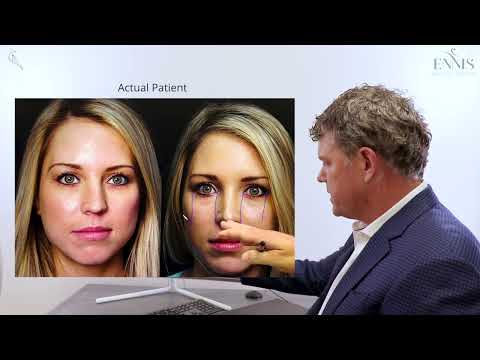 Watch Dr. Ennis explain
Actual patient results
Rhinoplasty.
Before & after.
Actual patients of Dr. Scott Ennis
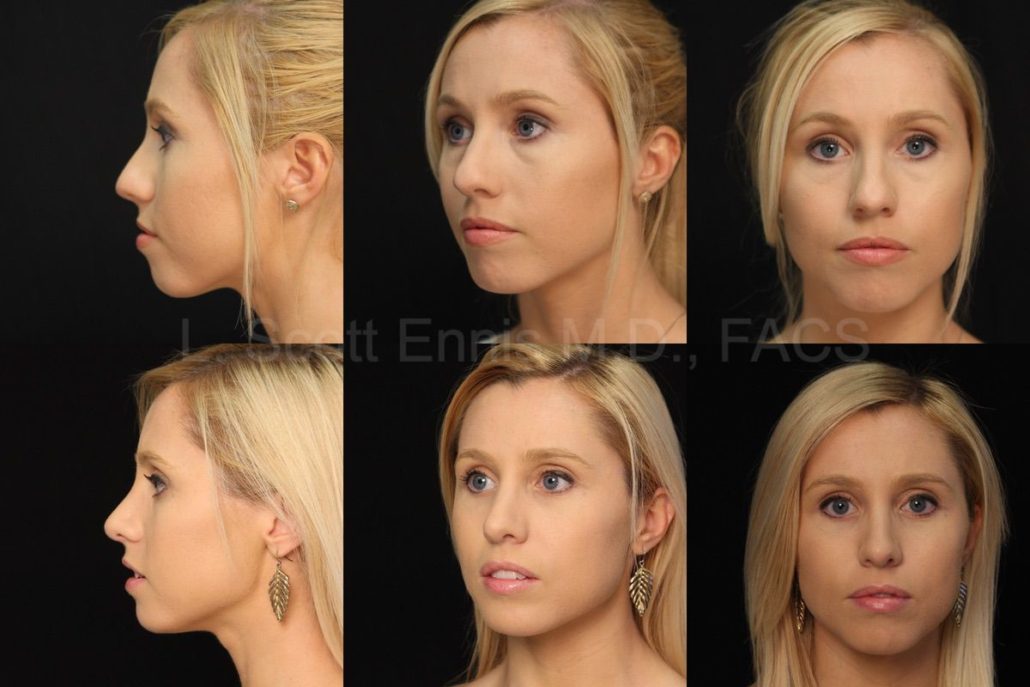
Rhinoplasty
Case 41217: three-angle comparison.
Actual patient of Dr. Scott Ennis
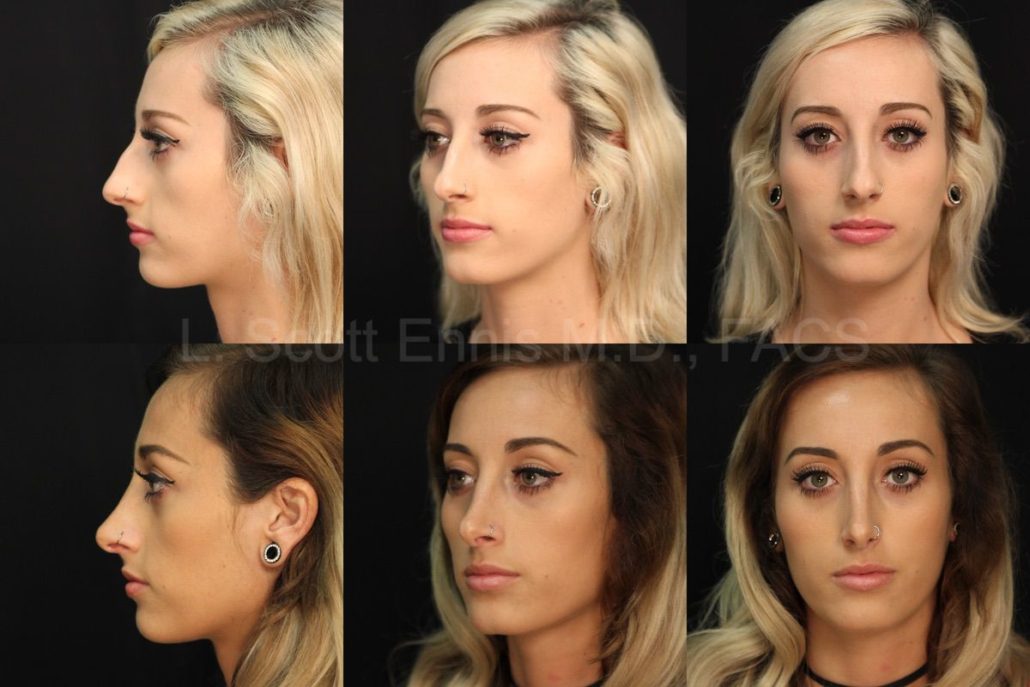
Rhinoplasty
Case 37624: three-angle comparison.
Actual patient of Dr. Scott Ennis
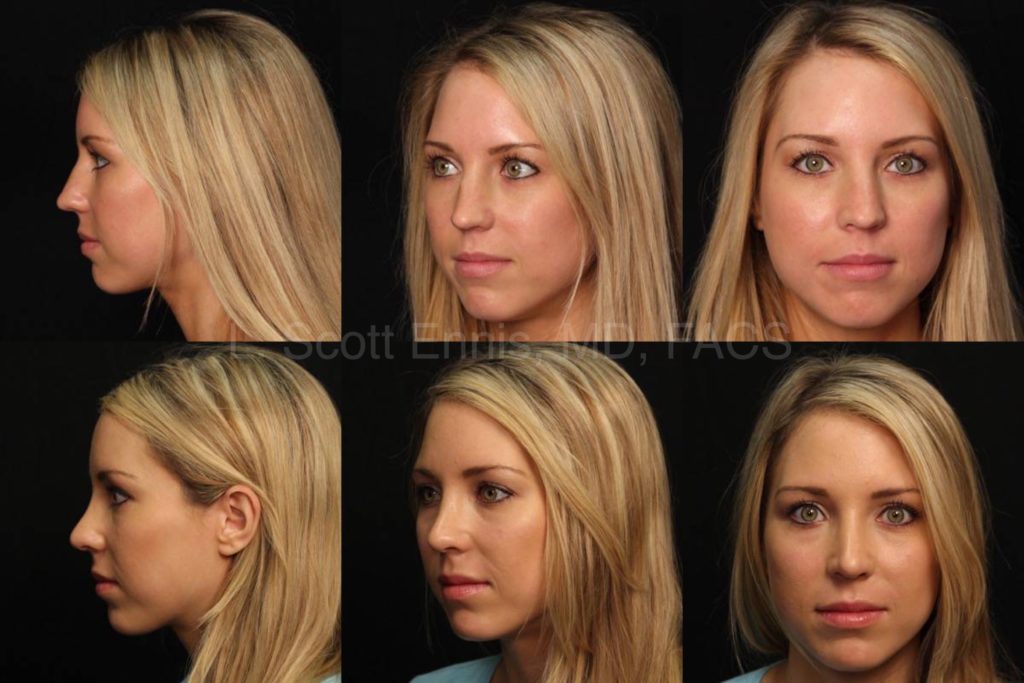
Rhinoplasty
Case 27198: three-angle comparison.
Actual patient of Dr. Scott Ennis
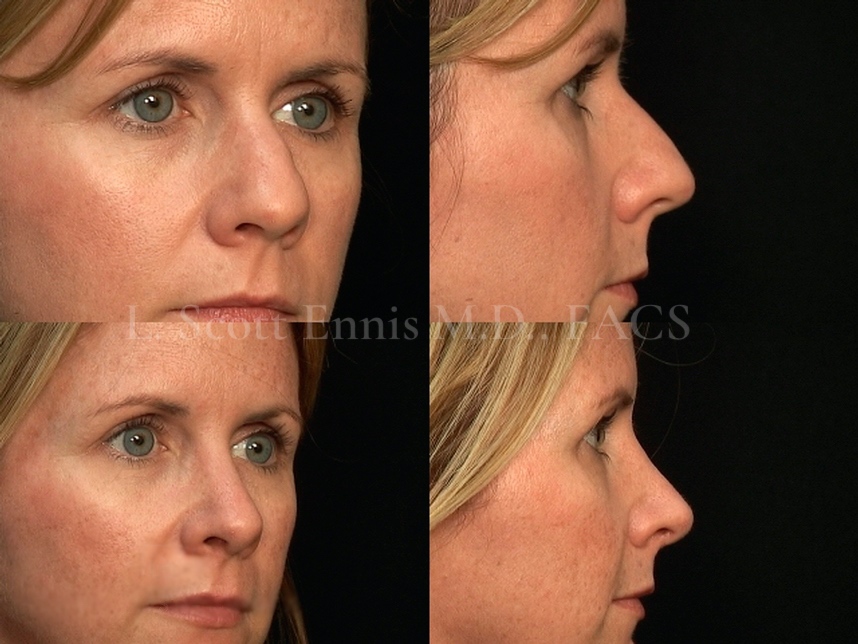
Rhinoplasty
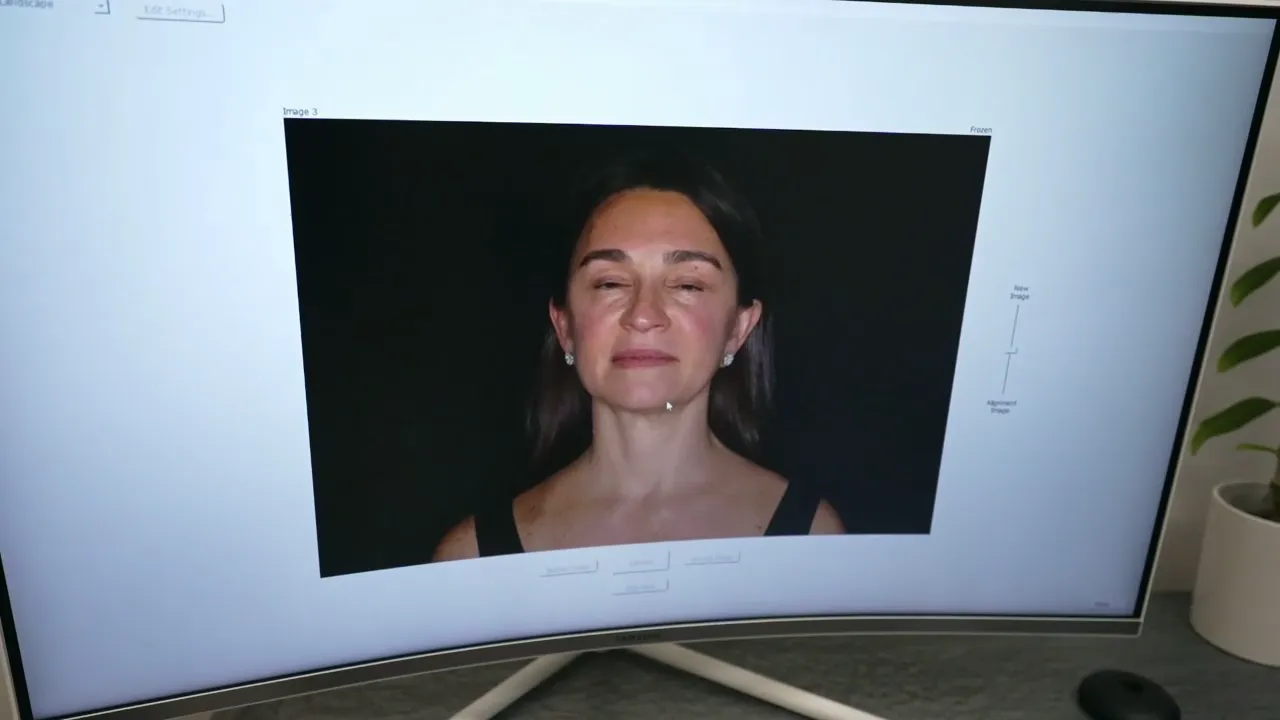
Two close-up views from the practice’s published nose-surgery gallery.
Actual patient of Dr. Scott Ennis

A personal decision
Is rhinoplasty right for you?
You may want to discuss the bridge, tip, nostrils, asymmetry or the size of the nose in relation to your other features. A history of injury or breathing difficulty should be part of that conversation, even when your main concern is appearance.
Facial growth, health and readiness matter. The published guide discusses the later teenage years as a possible starting point, but age alone does not establish candidacy. A consultation should confirm development and realistic expectations.
Your treatment options
Understand the approach.
Consider the differences.
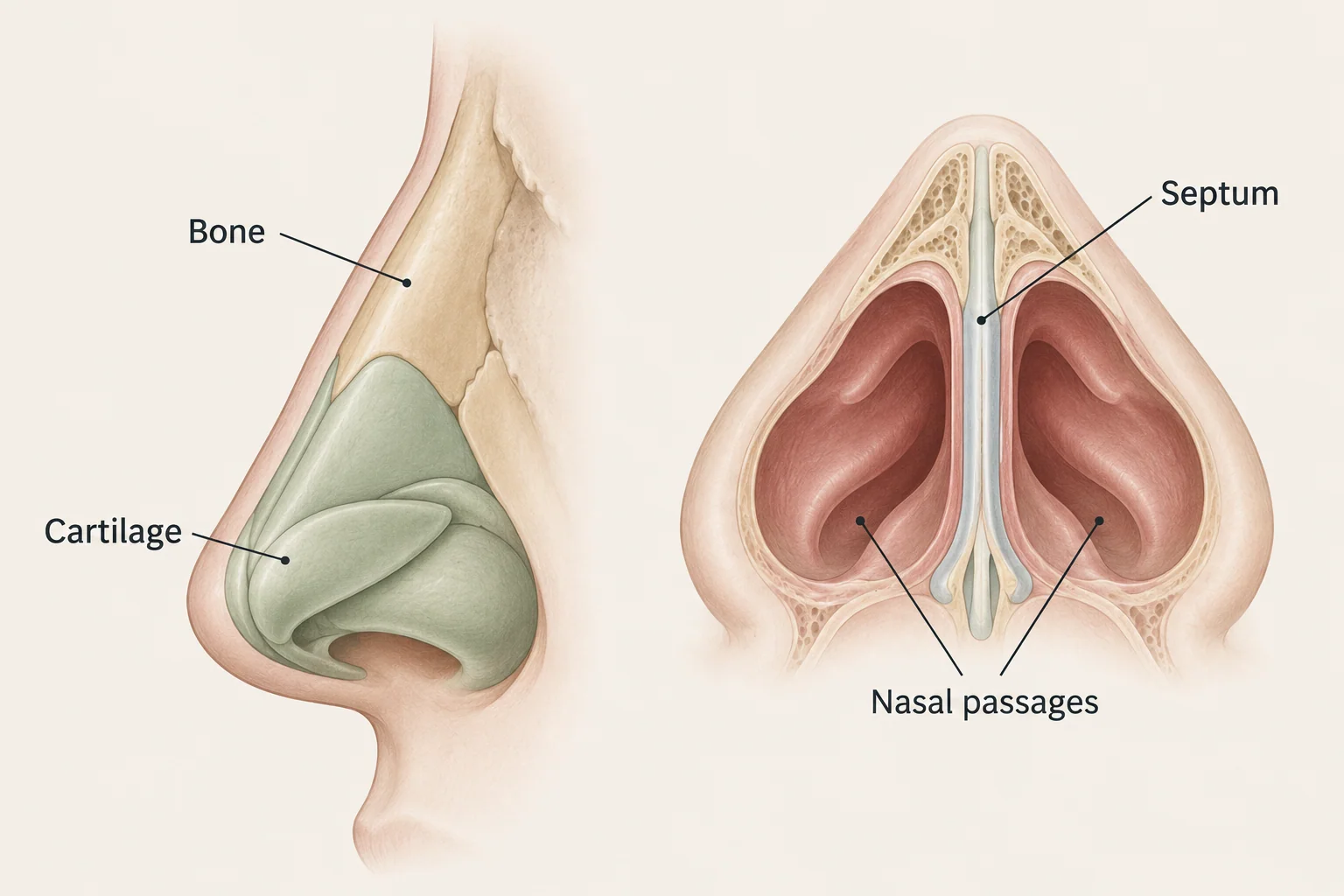
Shape and breathing involve different nasal structures
Rhinoplasty considers the external framework. Septal surgery addresses the internal wall between the nasal passages.
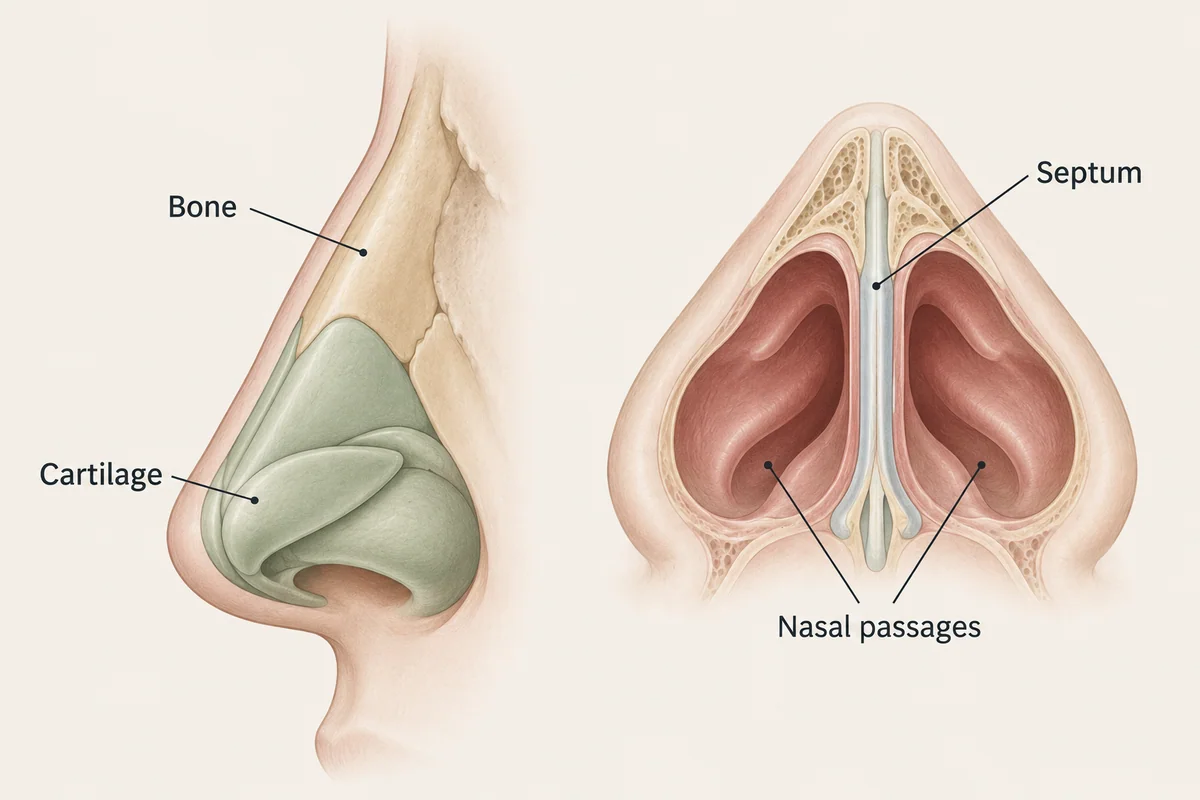
Bone and cartilage support the outer shape.
The septum separates the two nasal passages.
Open rhinoplasty
An open approach uses an incision across the columella, the strip of tissue between the nostrils, together with internal incisions. This provides access to the cartilage and bone for selected reshaping.
Depending on the plan, the surgeon may adjust the bridge or tip, reposition structures or use cartilage grafts for support. Incisions are closed and a splint may help protect the nose during early healing.
Closed rhinoplasty
A closed approach uses incisions inside the nostrils. It can be suitable for selected changes, depending on the anatomy and the work required.
Internal access still involves surgery and healing. Ask why an open or closed approach is recommended for you, including its limitations and the visibility of any scars.
Septoplasty & combined surgery
The septum separates the nasal passages and provides structural support. If a deviation contributes to obstruction, septoplasty may be considered.
Rhinoplasty and septoplasty have different primary goals. A combined septorhinoplasty may address both form and function, but cosmetic photographs cannot demonstrate an improvement in airflow.
Meet your surgeon
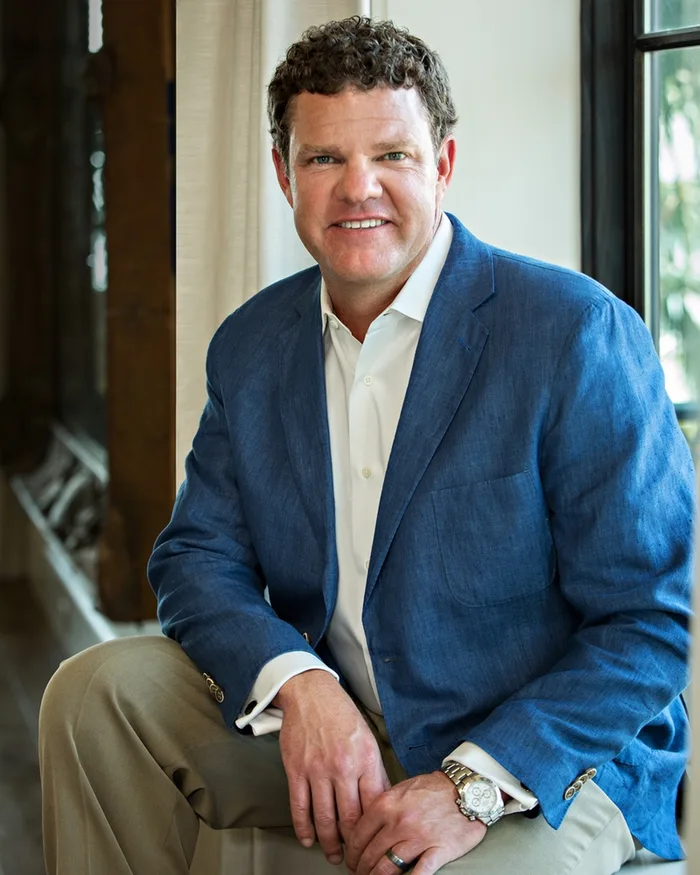
Dr. L. Scott Ennis,
MD, FACS.
Board-certified plastic surgeon.
Founder of Ennis Plastic Surgery.
At Ennis Plastic Surgery, the discussion begins with your features and the change you hope to make. Dr. Ennis’s background in art informs his interest in proportion and individual facial character.
Meet Dr. Ennis & explore his credentials Meet the Surgeon
A closer look
Your rhinoplasty guide.
Which features can be addressed?
The published guide discusses overall nasal size, bridge width, humps or depressions, tip shape and position, nostril width and asymmetry. The changes appropriate for one feature depend on the surrounding structures.
A nose that fits the face is not defined by one measurement. The chin, cheeks, forehead and natural differences between the two sides all affect proportion. Chin augmentation may be part of a separate discussion when projection contributes to profile balance.
Understanding nasal anatomy
The upper nose is supported by bone, while cartilage contributes to the lower nose and tip. Skin thickness, cartilage strength, septal shape and previous trauma influence the surgical possibilities.
The septum includes cartilage toward the front and bone farther back. Deviation can be present from development or follow an injury. Breathing symptoms require examination because more than one structure or condition may be involved.
Healing & long-term change
An early change in shape may be visible after splint removal, but swelling can hide fine detail for much longer. The tip and other areas may continue to settle over months.
Rhinoplasty changes structure, but aging and later injury still affect the nose. No specific degree of symmetry or appearance can be guaranteed; progress should be assessed with the surgical team over time.
Learn with Dr. Ennis
More detail.
At your own pace.
 Watch the discussion
 Watch the discussion
From consultation to recovery
What happens during rhinoplasty?
The consultation includes your concerns, medical history, examination and a discussion of the proposed changes. Review prior injuries and surgery, medications, allergies and breathing symptoms. Ask what is included in the operation and whether functional treatment is planned.
The live guide describes an outpatient procedure often lasting one to two hours, depending on complexity. Anesthesia is individualized. After the cartilage and bone work, incisions are closed; splints and sometimes packing support the early recovery plan.

Give the details time to settle.
The published guide describes splint or packing care in the first week and an initial period of puffiness and bruising of about two weeks. The exact timing of removal depends on the technique and your healing.
Avoid pressure or trauma to the nose and follow the team’s instructions about nose care, exercise and return to work. Initial social recovery is different from final refinement; swelling can persist beyond the first weeks.
Understand the risks.
Possible risks include bleeding, infection, anesthesia complications, altered sensation, breathing difficulty, septal perforation, poor healing, scarring, persistent swelling, an unsatisfactory appearance and revision surgery. Discuss how these relate to your proposed operation.
This is not a complete list. Ask which risks apply to your health and treatment, how concerns would be managed and whom to contact during recovery.
Read ASPS risk informationMaking an informed choice
Choosing the Best Rhinoplasty Surgeon in Florida for You
Look for relevant qualifications, a clear explanation of your options and a plan for care before and after treatment.
Dr. L. Scott Ennis, MD, FACS
View credentials & recognition
Board certification
American Board of Plastic Surgery
Listed in Dr. Ennis’s Florida Department of Health profile.
View physician recordSelected recognition · 2024
The Boca Raton Observer
Featured in the publisher’s Castle Connolly Top Docs 2024 special advertising section.
View publisher’s profileVerify the qualifications.
Confirm the surgeon’s relevant board certification and training. Ask about their experience with facial surgery and with the specific technique being recommended.
Look at comparable cases.
Review actual patients with concerns similar to yours. Ask which procedures were performed together and when the photographs were taken. A single image cannot predict your own result.
Understand the recommendation.
Ask the surgeon to connect the proposed approach to your anatomy and goals. A useful consultation should explain alternatives, limitations and the option of postponing treatment.
Ask about safety and aftercare.
Discuss the surgical facility, anesthesia team, risks and follow-up arrangements. Know whom to contact after surgery and how concerns would be assessed.
Questions worth asking
Learn more.
Decide in your own time.
Rhinoplasty questions to bring to your consultation.
What is the difference between rhinoplasty and septoplasty?
Rhinoplasty addresses nasal shape and proportion, while septoplasty addresses the septum. They may be combined when both appearance and function need assessment.
Will there be a visible scar?
An open approach includes an incision across the columella; a closed approach uses internal incisions. Healing varies, and no incision should be described as scarless.
When can teenagers consider rhinoplasty?
Facial development, health, motivation and readiness all need assessment. A birthday alone is not enough to decide whether surgery is appropriate.
How long until the final result?
Early swelling improves before all of the finer changes settle. Your surgeon will explain the likely course for your operation and the follow-up schedule.
Can rhinoplasty improve breathing?
Selected functional problems may be addressed as part of a surgical plan, but the cause of obstruction must first be established. Cosmetic reshaping alone is not a promise of better breathing.
Further reading
Explore the American Society of Plastic Surgeons’ procedure guidance and risks and safety information. This guide provides general information; your consultation addresses your individual circumstances.
Keep exploring
Consider the whole picture.

Ennis Plastic Surgery · Beautiful Medicine™
A considered plan starts
with a conversation.
Or call 561-405-9020