
About The NeoGraft Difference with Dr. Ennis.
From a donor area to an area of thinning
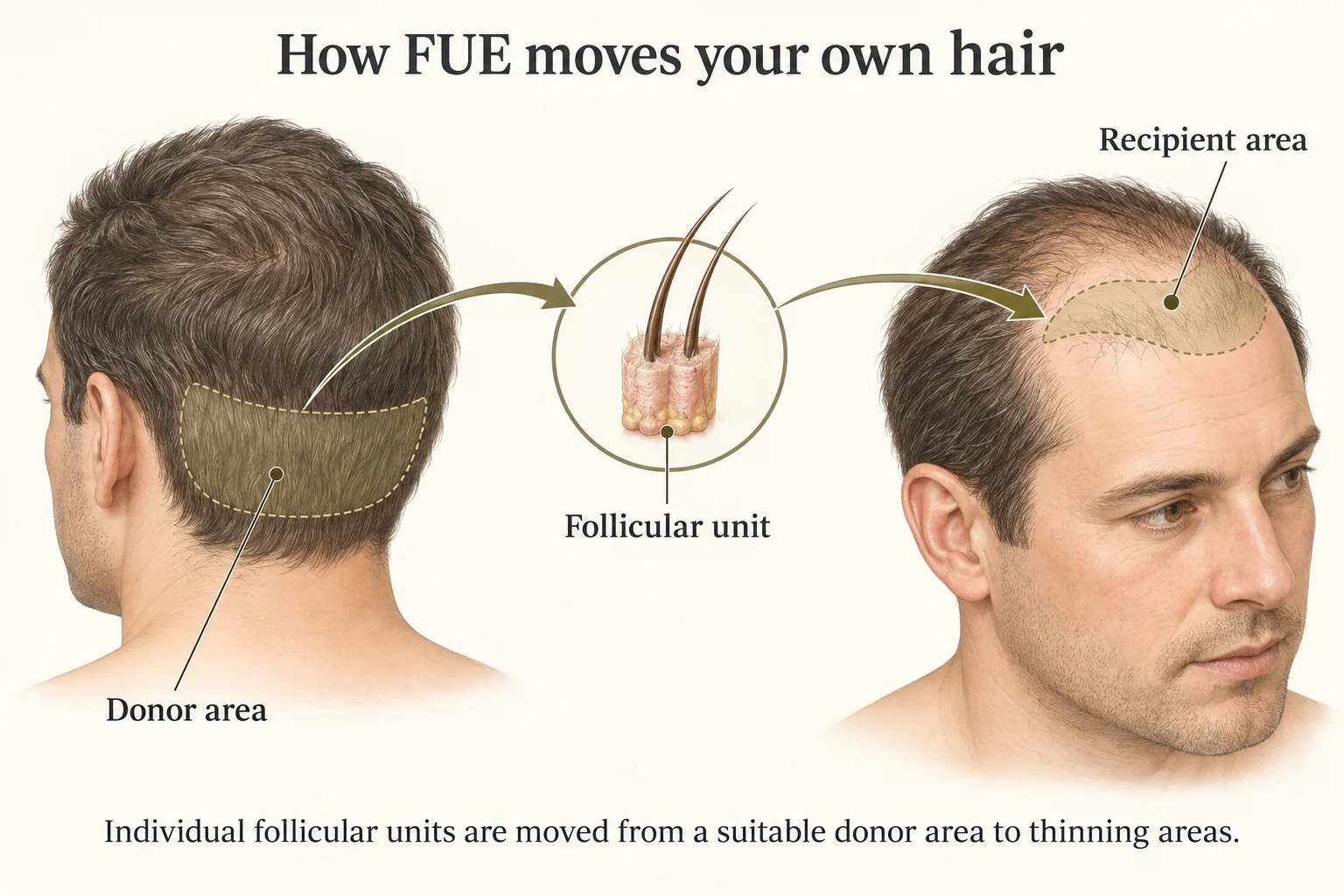
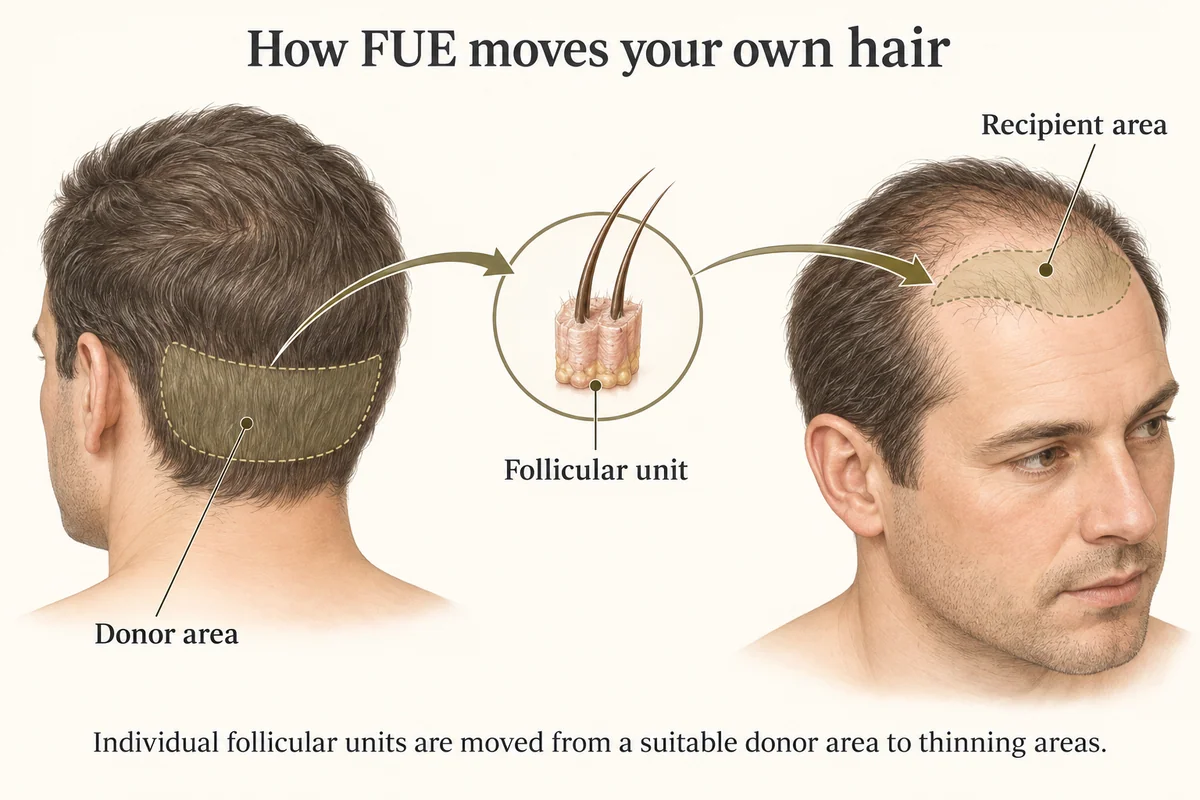
FUE moves your own follicular units. This diagram shows the relationship between a donor area and a recipient area; the actual zones and graft count are individually planned.
Donor hair is a limited resource.
Growth direction and graft placement shape the result.
The Hair Transplant Decision
NeoGraft assists follicular unit extraction (FUE), which moves individual follicular units from a donor area to areas of hair loss. It avoids a strip incision but still creates small wounds and may leave tiny scars. Anesthesia and the treatment plan are discussed during consultation.
Minimally Invasive Grafting
NeoGraft assists follicular unit extraction (FUE), which moves individual follicular units from a donor area to areas of hair loss. It avoids a strip incision but still creates small wounds and may leave tiny scars. Anesthesia and the treatment plan are discussed during consultation.
Where you Need it most
FUE harvests individual follicular units rather than a strip of scalp. The donor sites need time to heal and leave small scars. Graft numbers and the size of the treated area are planned individually.
The NeoGraft Procedure
Dr. Ennis assesses the donor area, pattern of hair loss and likely progression before recommending surgery. Transplanting hair redistributes an existing supply; it does not create new follicles or guarantee that future hair loss will stop.
NeoGraft Hair Transplant Results
Recovery depends on the number of grafts and your healing response. Follow the team’s instructions about washing, protecting the grafts, activity and follow-up. Hair growth develops gradually over the months after treatment.
Explore hair restoration for men and women with Dr. Ennis. Discuss the potential benefits, limitations, small donor scars and recovery before deciding on treatment.
Understanding FUE hair restoration
NeoGraft assists follicular unit extraction (FUE), which moves individual follicular units from a donor area to areas of hair loss. It avoids a strip incision but still creates small wounds and may leave tiny scars. Anesthesia and the treatment plan are discussed during consultation.