
Ennis Plastic Surgery · Boca Raton
Septoplasty in Florida
Deviated septum & nasal breathing
Understand the role of the nasal septum and explore an individualized assessment of form and function with Dr. L. Scott Ennis.
Procedure at a glance
- Surgeon
- Dr. L. Scott Ennis, MD, FACS
- Location
- Boca Raton, Florida
- Approach
- Septoplasty
- Consultation
- In-office or virtual
Dr. Ennis explains
Begin with the cause of obstruction.
The nasal septum divides the two nasal passages. When its shape contributes to impaired airflow, septoplasty may be discussed to reposition or adjust selected parts of that structure.
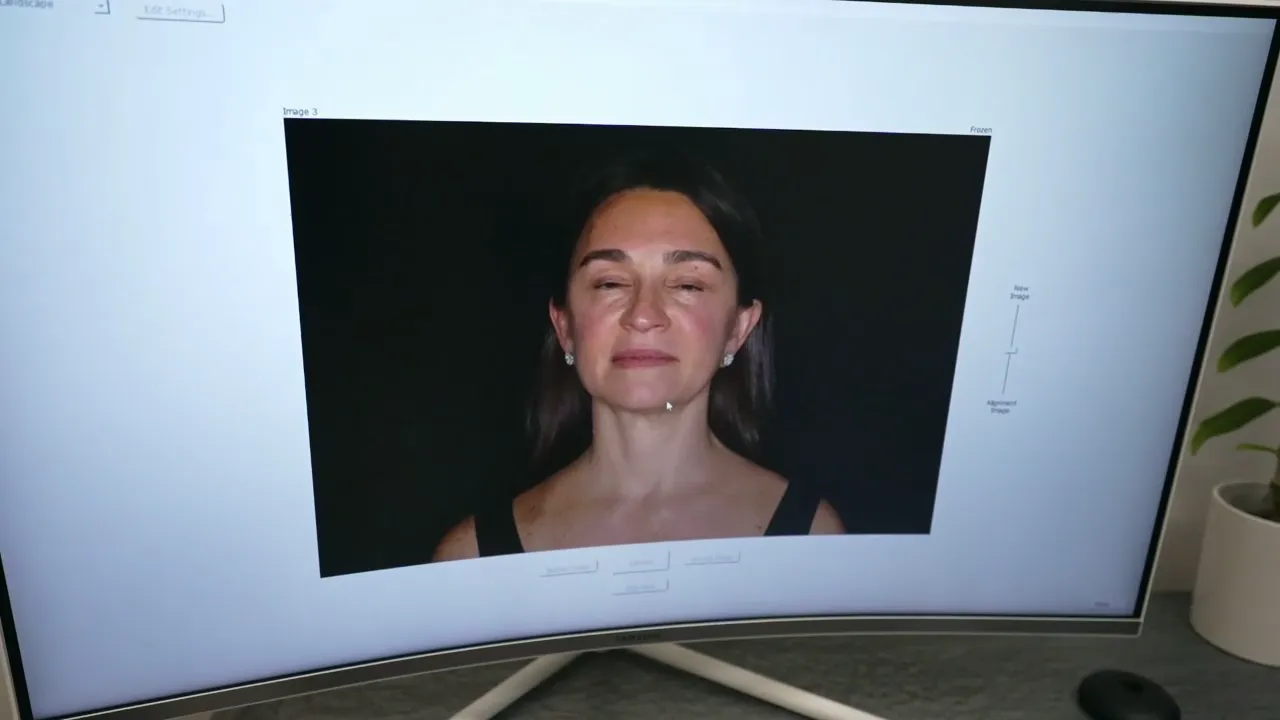
Dr. Ennis’s nasal-anatomy film provides context for the examination. Breathing symptoms need assessment beyond how the outside of the nose looks.
 Watch Dr. Ennis explain
An introduction to nasal structure and its role in planning.

A personal decision
Could a deviated septum be contributing?
Persistent blockage, a history of nasal injury or differences in airflow between the two sides may prompt an evaluation. Symptoms described in the published guide also include snoring, sinus concerns, nosebleeds and changes in smell.
These symptoms do not establish the diagnosis. Allergies and other nasal conditions can contribute, and sleep-apnea concerns require appropriate evaluation. Septoplasty should not be presented as a universal solution for snoring or sleep apnea.
Your treatment options
Understand the approach.
Consider the differences.
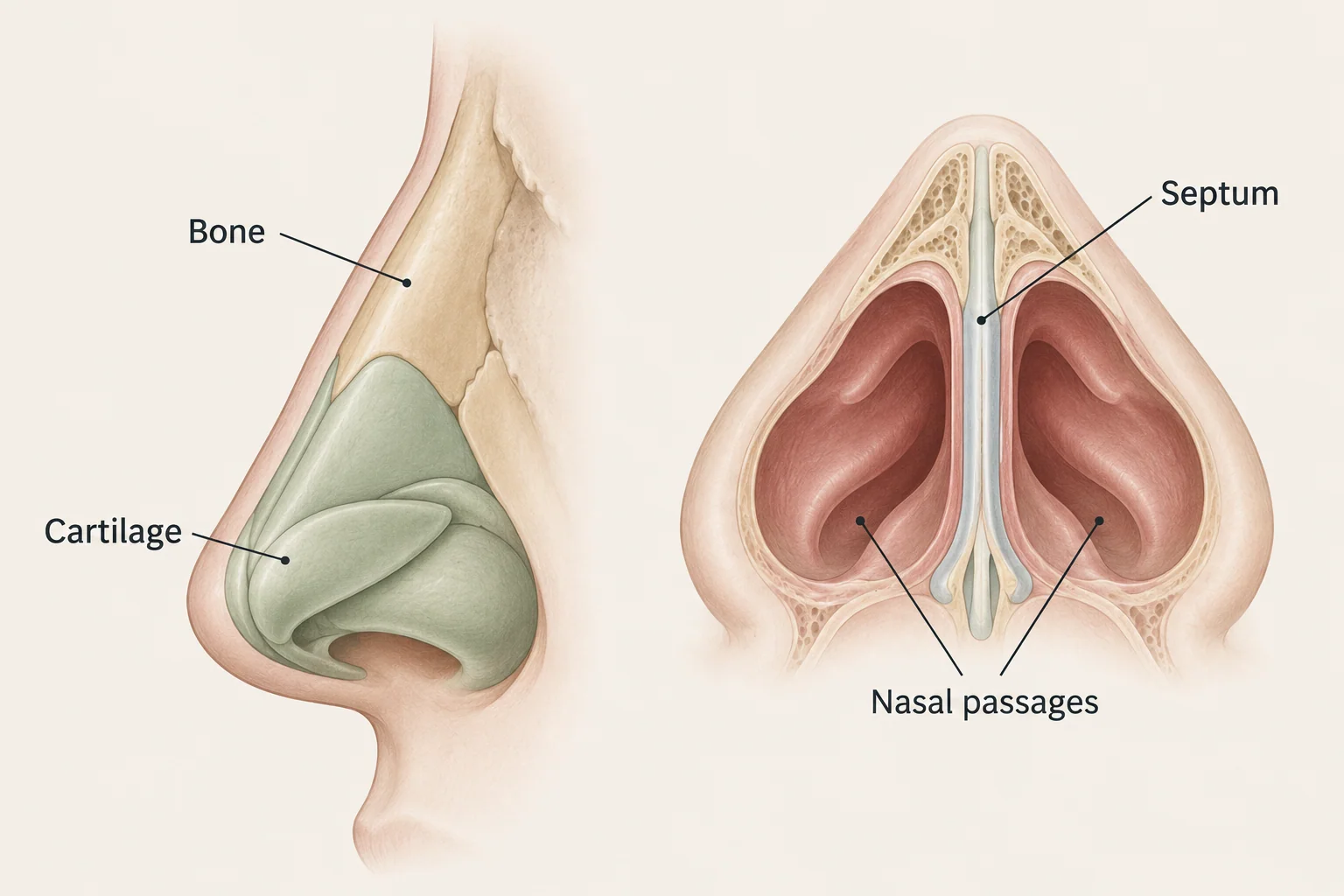
The septum divides the two nasal passages
A deviated septum is a bend or displacement in the internal dividing wall. Assessment focuses on airflow and the structures inside the nose; external reshaping is a separate consideration.
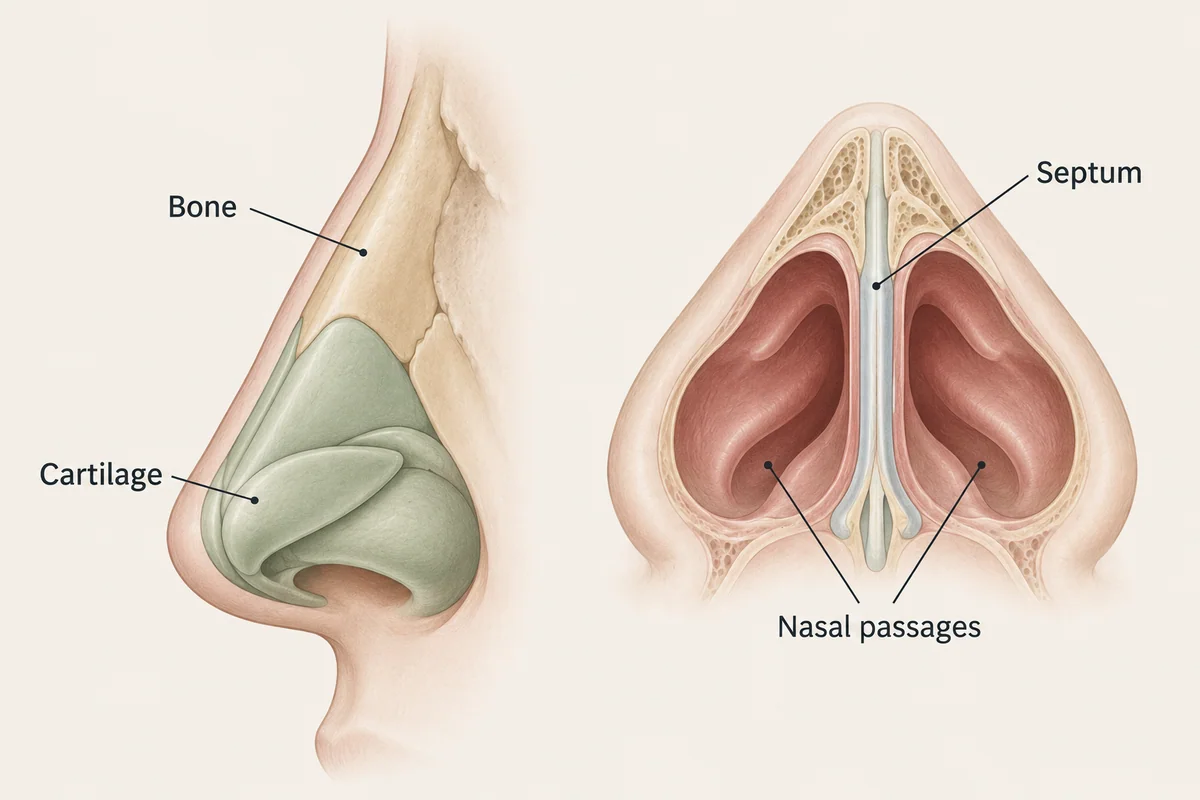
Bone and cartilage support the outer shape.
The septum separates the two nasal passages.
Septoplasty
Septoplasty focuses on the internal septum. Through an incision inside the nose, the surgeon lifts the lining and adjusts selected cartilage or bone while maintaining necessary support.
The location and extent of deviation influence the plan. A single bend and a more complex deviation may require different adjustments; ask what is causing the obstruction and what the proposed surgery can reasonably change.
Septorhinoplasty
When both the external shape and septum need treatment, a combined septorhinoplasty may be considered. Rhinoplasty addresses nasal form, while the septal component addresses an internal structural concern.
Discuss cosmetic and functional goals separately. A change in appearance does not itself confirm a change in airflow, and the recovery depends on the complete operation.
Meet your surgeon
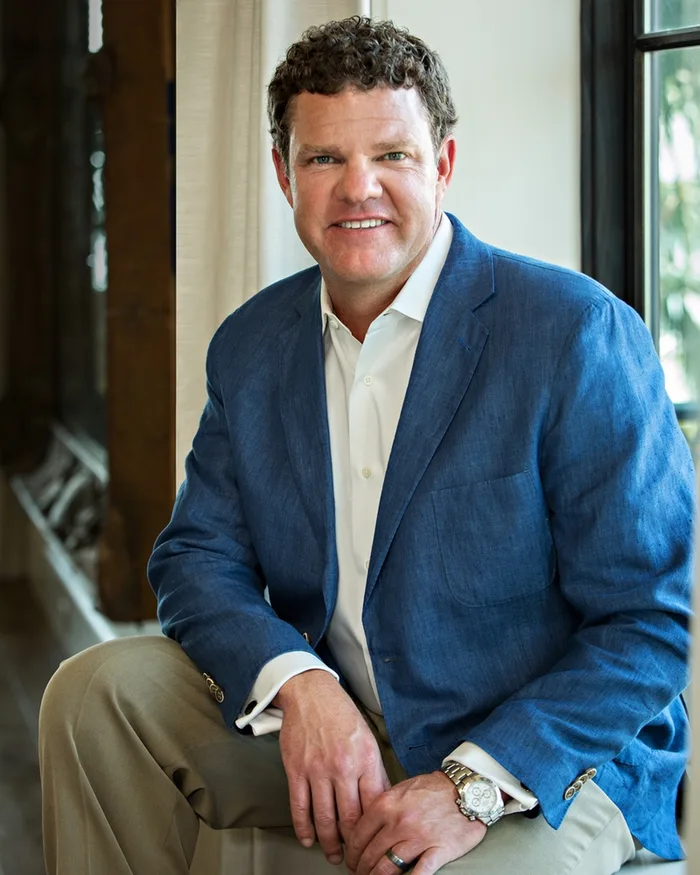
Dr. L. Scott Ennis,
MD, FACS.
Board-certified plastic surgeon.
Founder of Ennis Plastic Surgery.
At Ennis Plastic Surgery, the discussion begins with your features and the change you hope to make. Dr. Ennis’s background in art informs his interest in proportion and individual facial character.
Meet Dr. Ennis & explore his credentials Meet the Surgeon
A closer look
Your septoplasty guide.
The structure of the septum
The septum is made of cartilage toward the front and bone farther back. It helps support the nose as well as separate the passages. A deviation may be present from development or result from trauma.
The published guide describes deviations affecting the tip region, bridge or a larger part of the nose. Examination establishes where the deviation lies and whether other structures also contribute to obstruction.
Your consultation
Describe when the breathing problem occurs, whether one or both sides are affected and any history of injury, surgery or recurrent nasal symptoms. Bring your medical history and information about current treatment.
Dr. Ennis assesses the nose and discusses whether septal surgery, combined nose surgery or further evaluation is appropriate. Explain any appearance concerns as well, so that the plan reflects both priorities without assuming they are the same.
Assessing the outcome
The goal is to address the structural problem identified during examination. Swelling can temporarily affect breathing during recovery, so immediate congestion does not establish the final outcome.
Keep follow-up appointments and report persistent symptoms. Not every source of obstruction is corrected by septoplasty, and additional evaluation or treatment may be necessary.
Learn with Dr. Ennis
More detail.
At your own pace.
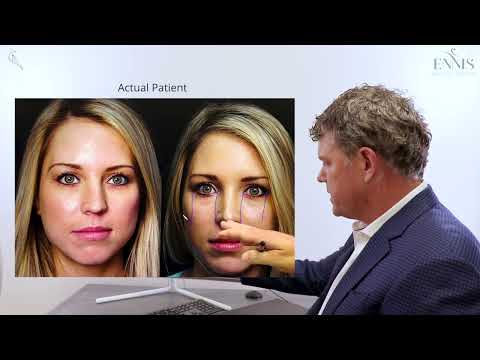 Watch the discussion
Related education for people discussing combined shape and septal surgery.
From consultation to recovery
Inside the procedure
The practice’s guide describes surgery often taking one to two hours, depending on the work planned. After anesthesia, access is usually through an internal incision, followed by elevation of the lining and adjustment of selected septal cartilage or bone.
The lining is returned to position. Packing or splints may be used, and the team will explain their care and removal. Combined rhinoplasty adds separate structural work and may change the duration and aftercare.

A gradual return to comfortable breathing.
The published guide describes possible packing removal after a few days, splint care around the first week and an initial period of swelling or bruising of about two weeks. These are estimates; the actual schedule depends on your operation.
Follow instructions about nasal care, activity and avoiding injury. Strenuous activity usually requires a separate clearance from a return to routine work. Improvement is assessed as healing progresses, rather than at a fixed day.
Understand the risks.
Potential risks include bleeding, infection, anesthesia complications, changes in sensation or smell, persistent obstruction, septal perforation, changes in nasal shape and the need for further surgery. Your consultation should explain the risks of the specific correction proposed.
This is not a complete list. Ask which risks apply to your health and treatment, how concerns would be managed and whom to contact during recovery.
Making an informed choice
Choosing the Best Septoplasty Surgeon in Florida for You
Look for relevant qualifications, a clear explanation of your options and a plan for care before and after treatment.
Dr. L. Scott Ennis, MD, FACS
View credentials & recognition
Board certification
American Board of Plastic Surgery
Listed in Dr. Ennis’s Florida Department of Health profile.
View physician recordSelected recognition · 2024
The Boca Raton Observer
Featured in the publisher’s Castle Connolly Top Docs 2024 special advertising section.
View publisher’s profileVerify the qualifications.
Confirm the surgeon’s relevant board certification and training. Ask about their experience with facial surgery and with the specific technique being recommended.
Look at comparable cases.
Review actual patients with concerns similar to yours. Ask which procedures were performed together and when the photographs were taken. A single image cannot predict your own result.
Understand the recommendation.
Ask the surgeon to connect the proposed approach to your anatomy and goals. A useful consultation should explain alternatives, limitations and the option of postponing treatment.
Ask about safety and aftercare.
Discuss the surgical facility, anesthesia team, risks and follow-up arrangements. Know whom to contact after surgery and how concerns would be assessed.
Questions worth asking
Learn more.
Decide in your own time.
Septoplasty questions to bring to your consultation.
Does a deviated septum always need surgery?
No. Treatment depends on symptoms, examination and the role of the deviation compared with other causes of obstruction.
Will septoplasty change the shape of my nose?
Septoplasty is primarily an internal procedure. Discuss any possible shape changes and whether a separate rhinoplasty component is planned.
Can it stop snoring or treat sleep apnea?
Septal obstruction may contribute to nasal breathing problems, but snoring and sleep apnea have multiple possible causes. They need appropriate assessment, and a cure should not be assumed.
Can septoplasty and rhinoplasty be done together?
A combined operation may be considered when both functional and appearance concerns are present. Each goal should be assessed and explained separately.
Keep exploring
Consider the whole picture.

Ennis Plastic Surgery · Beautiful Medicine™
A considered plan starts
with a conversation.
Or call 561-405-9020